Ministry of Health and Welfare Checks Regional General Hospital Operations
Changwon Hanmaeum Hospital Sees 36% Surge in Critically Ill Emergency Patients
Hospital Voices Concern: "Medical Reform May Limit General Hospital Roles"
"We couldn't schedule my father's surgery at a hospital in Seoul, so he had to undergo surgery at a hospital in Changwon where my parents live. At first, I was a bit worried, but fortunately, the surgery went well."
On the afternoon of the 20th, Park (41), a guardian of a cancer patient met at Changwon Hanmaeum Hospital in Changwon, Gyeongnam, answered the reporter's question about the background of having his father's surgery at this hospital. Park added, "There are actually more people than I expected who came down here after failing to schedule appointments while receiving treatment in Seoul, just like us."
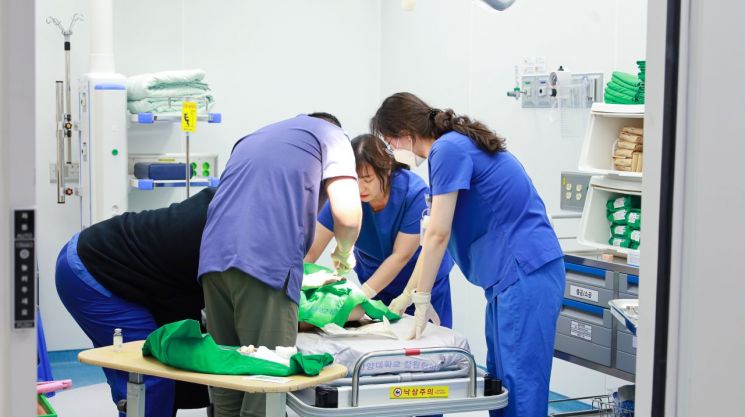 A man transported to the emergency room of Changwon Hanmaeum Hospital is receiving emergency treatment from medical staff. Changwon Hanmaeum Hospital
Due to the prolonged medical policy conflicts causing a medical vacuum, disruptions in treatment and surgery at tertiary general hospitals have increased the roles and responsibilities of regional general hospitals like this one. On the day the reporter visited, Changwon Hanmaeum Hospital was bustling with doctors and nurses moving busily between patients and their guardians, making it difficult to find a moment of calm.
In particular, in the Cardiovascular Thoracic Center ward, more than a dozen critically ill patients lay weakly with tubes attached to their bodies. Few responded even while nurses were changing IV fluids. This indicates the high number of critically ill patients. Medical staff frequently checked patients' conditions and administered necessary treatments while moving through the ward. The atmosphere in other wards and the emergency room was similarly intense.
The Ministry of Health and Welfare visited Changwon Hanmaeum Hospital that day to check the operational status and achievements of regional general hospitals on-site. Changwon Hanmaeum Hospital is a representative secondary general hospital in the Gyeongnam region with 765 beds. It operates 34 departments and 31 medical centers. There are 111 specialists, 7 general practitioners, and 1,021 nurses working there. In September last year, it was also designated as a regional emergency medical center.
According to the Ministry, due to the medical crisis, the number of critically ill emergency patients (KTAS levels 1 to 3) visiting Changwon Hanmaeum Hospital last year increased by nearly 40%. The number of critically ill emergency patients was 19,214 last year, up more than 36% from 14,127 the previous year. During this period, the number of adult intensive care unit beds was expanded from 54 to 61 to increase critical care capacity. The number of specialists in charge of the ICU also increased to six, and a 24-hour specialist ICU staffing system is currently in operation.
The number of patients and surgeries also increased. The number of inpatients visiting the hospital last year was 264,333, an 8.3% increase from 243,987 the previous year. The number of surgeries also rose by 7% to 13,473.
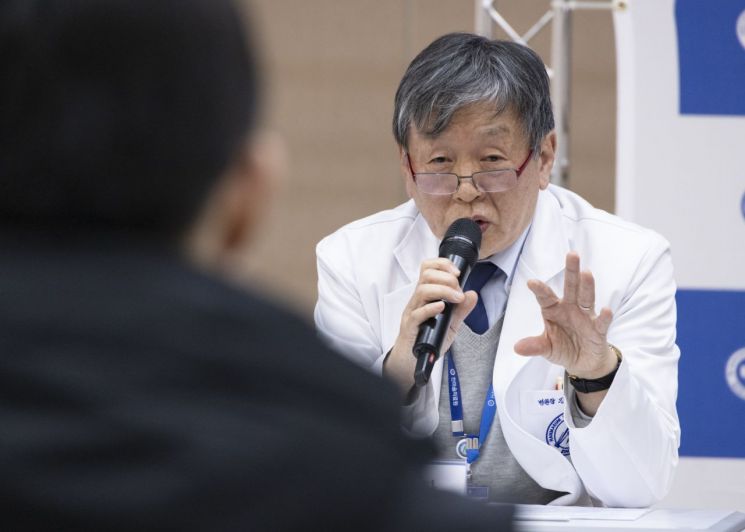 Kim Myunghwan, director of Changwon Hanmaeum Hospital, is explaining the necessity of a regional general hospital at a press conference on the 20th. Ministry of Health and Welfare
At a press conference that day, Changwon Hanmaeum Hospital stated that these achievements were possible through building trust with local residents. Hospital Director Kim Myunghwan said, "Patients from provinces go to the Big 5 (Samsung Seoul, Seoul Asan, Seoul National, Severance, Seoul St. Mary's Hospitals) because they lack trust in regional general hospitals. Patients need to receive good treatment and be discharged so that word of mouth spreads. We are striving to make sufficient investments for this."
Medical Director Ha Changhoon of Changwon Hanmaeum Hospital also said, "One of the reasons we gained trust from local residents was because we conducted extensive COVID-19 testing during the pandemic. Recently, people who came here because it was difficult to receive treatment at tertiary general hospitals said that the care they received here was no different from that in the metropolitan area."
There were also suggestions that institutional improvements are necessary for the maintenance and development of regional general hospitals. Ha Choongsik, Chairman of the Hanmaeum International Medical Foundation at Changwon Hanmaeum Hospital, said, "Currently, even for the same treatment, the fees are higher at tertiary general hospitals. To enable regional general hospitals to fulfill their roles, the same fees should be applied for the same treatments."
Director Kim also said, "Even for the same pancreatic cancer surgery, the treatment differs. If discrimination occurs simply because it is a general hospital, development will be difficult. We need to provide definite benefits to capable general hospitals so they can offer the best care to patients." He added, "If they receive fair compensation and provide the best care, a virtuous cycle will form where patients' trust in general hospitals increases."
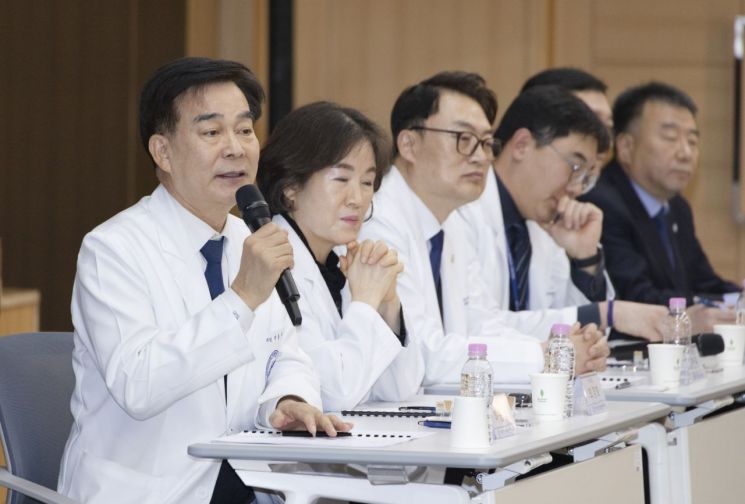 Ha Chung-sik (far left), Chairman of Changwon Hanmaeum Hospital and Hanmaeum International Medical Foundation, is advocating for the need for system improvements to advance regional general hospitals at a press conference held on the 20th. Ministry of Health and Welfare
However, concerns were raised that the role of general hospitals might be limited due to government medical reforms. Director Kim said, "The government is emphasizing the establishment of a medical delivery system and trying to increase the proportion of severe cases treated at tertiary general hospitals. Our hospital already has comprehensive treatment capabilities for severe diseases such as cancer, brain, and heart conditions, but if all severe patients must be sent to tertiary general hospitals, only the shell will remain."
A Ministry of Health and Welfare official said, "While surgeries at tertiary general hospitals have decreased by nearly half due to the departure of residents, regional general hospitals have performed their roles well. As part of the second phase of medical reform implementation, we will collect opinions to ensure regional general hospitals can fulfill their roles and convey them to the Medical Reform Special Committee." Changwon = Reporter Choi Taewon
© The Asia Business Daily(www.asiae.co.kr). All rights reserved.
![Clutching a Stolen Dior Bag, Saying "I Hate Being Poor but Real"... The Grotesque Con of a "Human Knockoff" [Slate]](https://cwcontent.asiae.co.kr/asiaresize/183/2026021902243444107_1771435474.jpg)


















