25% Additional Tariffs on Steel and Aluminum to Take Effect Next Month on the 12th
Semiconductor, Aircraft, and Machinery Parts Also Included
"Unavoidable Impact Even If Limited to Aluminum Materials"
As the United States prepares to implement a 25% additional tariff policy on steel and aluminum starting next month on the 12th, reports have emerged expressing concerns that the inclusion of derivative products such as semiconductor manufacturing equipment parts and materials, as well as aircraft parts, in the aluminum additional tariff targets could weaken the competitiveness of Japanese companies.
Japan's Nihon Keizai Shimbun (Nikkei) reported on the 21st, citing U.S. Department of Commerce statistics, that Japan's exports to the U.S. of materials related to parts and manufacturing used in semiconductor manufacturing equipment exceed 200 billion yen (1.92 trillion KRW). Aircraft parts exports amount to 230 billion yen (2.2 trillion KRW), and computer-related parts reach 7 billion yen (70 billion KRW). Although the U.S. government’s policy is to impose additional tariffs limited to aluminum materials, it is expected that the impact will be unavoidable.
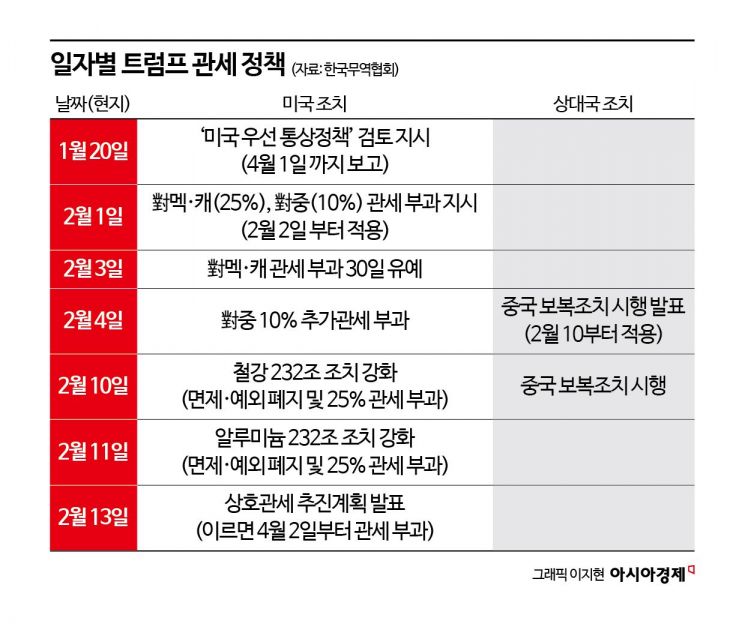
Earlier, on the 18th (local time), the United States published an annex to President Donald Trump's proclamation in the Federal Register. This annex includes a total of 167 steel derivative products and 123 aluminum derivative products added to the tariff target items. Although aluminum is classified under HS code 76, the scope was expanded to include other derivative products such as electrical, electronic, machinery, automobile, aircraft, and semiconductor parts that do not fall under this classification.
However, since the export value of aluminum is not as large compared to steel, the impact was expected to be relatively limited. Currently, the export value of aluminum ingots, plates, and foils from Japan to the U.S., which are subject to a 10% tariff, is about 30 billion yen (29 billion KRW), which is smaller compared to steel at 300 billion yen (2.88 trillion KRW). With the expansion of the target items this time, Japan’s Ministry of Economy, Trade and Industry is identifying the specific items and investigating the export performance and impact on domestic companies, Nikkei reported.
There is also a possibility that the list of items could be further expanded at the request of the U.S. industry. The presidential proclamation left room for designating steel and aluminum derivative products not included in this annex as tariff-applicable items in the future. The proclamation states, "The Secretary shall establish procedures within 90 days from the date of this declaration to include additional derivative aluminum articles within the specified tariff scope," and "If requested by domestic producers or industry associations, a decision on inclusion must be made within 60 days from the date of the request."
The Korean industry is equally concerned. Han Areum, a senior researcher at the Korea International Trade Association, noted in a recent report, "The possibility of expanding tariff target items at the request of local U.S. companies cannot be ruled out," and emphasized, "Continuous monitoring is necessary regarding the trend of expanding tariff target items."
© The Asia Business Daily(www.asiae.co.kr). All rights reserved.

















