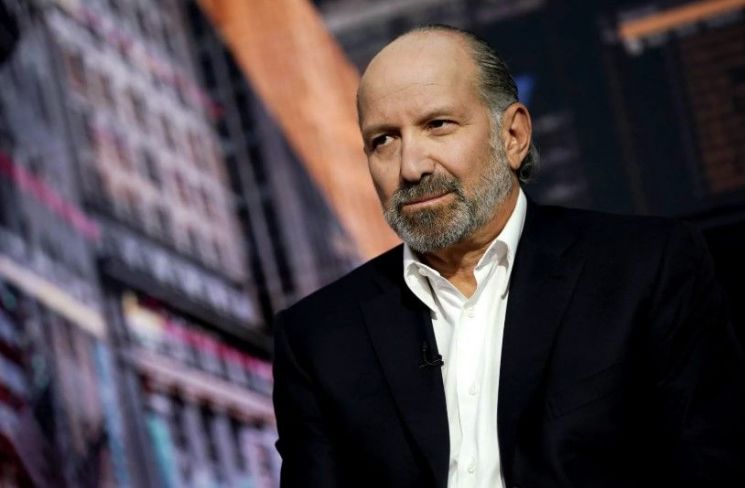
The confirmation of Howard Lutnick, the nominee for U.S. Secretary of Commerce who will oversee trade and commerce policy, was approved by the U.S. Senate on the 18th (local time), raising expectations that high-level trade negotiations between South Korea and the U.S. will soon be actively pursued. Our trade authorities are coordinating negotiation strategies in response and showing busy movements such as strengthening public-private cooperation.
Coordinating High-Level Visit to the U.S.... Starting with the Minister of Industry?
According to the Ministry of Trade, Industry and Energy on the 20th, the government is currently coordinating the schedule for a high-level visit to the U.S. for Korea-U.S. trade negotiations. Earlier, on the 17th, Park Jong-won, Deputy Minister for Trade, headed to Washington D.C. to meet with senior officials from the U.S. Department of Commerce and the U.S. Trade Representative (USTR). Before departure, Deputy Minister Park said, "Not only myself but also my superiors may soon have opportunities for consultations," hinting at the possibility of a high-level meeting.
The Minister of Industry and the Chief Trade Negotiator each have counterparts in the U.S. Secretary of Commerce and the USTR Representative, respectively. Currently, Lutnick has completed Senate confirmation, while the nominee for USTR Representative, Jamison Greer, has not yet completed the confirmation process.
Accordingly, the visit schedule of Minister Ahn Deok-geun of the Ministry of Trade, Industry and Energy is likely to take precedence over that of the Chief Trade Negotiator. An official from the Ministry said, "We are currently reviewing the respective visit schedules of the Minister and the Chief Trade Negotiator, and it is highly likely to take place as early as the end of February or at the latest in early March."
Minister Lutnick’s Negative Stance on the CHIPS Act and IRA Subsidies
At the previous confirmation hearing, Minister Lutnick pressured the expansion of domestic production in the U.S., citing Japan’s steel and South Korea’s home appliance industries. He stated that allies have used the U.S. in trade and expressed a policy to induce foreign companies to produce locally in the U.S. He argued, "Our allies have taken advantage of our goodwill. In cases like Japan’s steel and South Korea’s home appliances, they merely used us," adding, "Now it is time for them to cooperate with us and bring that production back to the U.S."
In particular, he has shown a negative view toward subsidies under the CHIPS Act and the Inflation Reduction Act (IRA), increasing the likelihood that Korean companies such as Samsung Electronics and SK Hynix will need to adjust their existing investment plans.
An industry insider said, "Minister Lutnick prioritizes building semiconductor and battery supply chains within the U.S., so Korean companies are highly likely to have to adjust their existing investment plans," emphasizing, "A sophisticated negotiation strategy at the government level is essential."
Government Strengthens Public-Private Cooperation... Busy Discussions on U.S. Trade Strategy
Considering this situation, the government is accelerating the preparation of its trade strategy toward the U.S. On the same day, Jung In-kyo, Chief Trade Negotiator, discussed U.S. trade policies and tariff response measures with heads of nine private research institutions and think tanks, including Samsung, Hyundai, LG, and POSCO.
The meeting focused intensively on response strategies by key industries such as semiconductors, batteries, and steel, as well as negotiation directions related to the IRA and the CHIPS Act. Participants shared their institutions’ research directions on U.S. trade and agreed on organizing logical arguments and messages to respond effectively to the U.S. side.
Chief Negotiator Jung stated, "In preparation for the realization of U.S. trade measures, the government is fully activating negotiation channels with the U.S.," adding, "We will refine our response strategies more precisely through cooperation with private research institutions."
Also, the Ministry of Trade, Industry and Energy held the '2nd Industry Policy Public-Private Council' chaired by Lee Seung-ryeol, Director of Industrial Policy, to review the status of responses to major domestic investment projects and changes in U.S. tariff policies.
Industry representatives attending the meeting requested more aggressive government policy support, saying, "Extension of investment tax credits, expansion of tax support for national strategic technology facility investments, and establishment of a direct refund system for investment tax credits are needed." They also suggested legislative support for exceptions to the 52-hour workweek system.
© The Asia Business Daily(www.asiae.co.kr). All rights reserved.
![Clutching a Stolen Dior Bag, Saying "I Hate Being Poor but Real"... The Grotesque Con of a "Human Knockoff" [Slate]](https://cwcontent.asiae.co.kr/asiaresize/183/2026021902243444107_1771435474.jpg)
















