Cadastral Resurvey Conducted as Part of Dongmyeong-dong New Deal Project
Only 2.5 Billion Won Collected Out of 5.65 Billion Won in Adjustment Payments
Frequent Lawsuits Citing Procedural Flaws
"Land Boundaries Are Sensitive... Forced Collection Is Difficult"
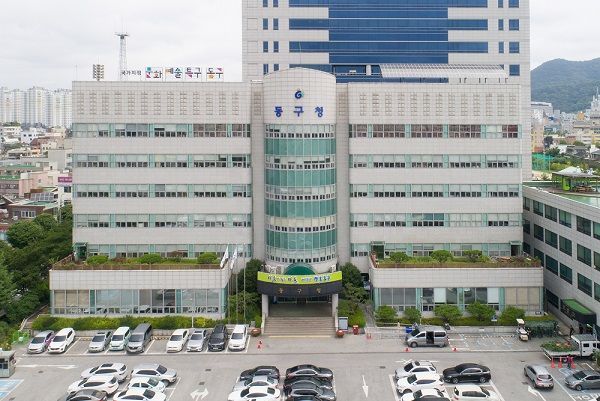
Gwangju Dong-gu is struggling with the collection of adjustment payments resulting from changes in land area following a cadastral resurvey project conducted as part of the Dongmyeong-dong New Deal initiative.
The purpose of the project is to efficiently manage land by surveying boundaries and updating cadastral maps. However, residents who have lived on their land for decades are slow to pay the suddenly imposed adjustment payments.
As a result, only about half of the adjustment payments have been collected over the past year and six months, and some residents are filing administrative lawsuits, claiming infringement of property rights, leading to a backlash.
According to Gwangju Dong-gu on the 20th, the district invested about 200 million won in national funds and carried out the cadastral resurvey project for about three years until August 2023 as part of the Dongmyeong-dong New Deal project.
The cadastral resurvey was conducted to resolve discrepancies in cadastral records and establish a digital cadastral system prior to the construction of new buildings and the opening of roads for the New Deal project.
After the cadastral resurvey, the district imposed 233 adjustment payments (totaling 5.65 billion won) for changes in land area and paid 228 cases (5.257 billion won) for decreased land. However, even after a year and a half, only 2.5 billion won has been collected, less than half of the total.
Many residents, having lived in the same area for decades, were unable to pay the adjustment payments immediately when they were suddenly imposed. Some residents have also filed administrative lawsuits, citing procedural flaws in the cadastral resurvey project, leading to legal disputes.
In fact, resident A from Dongmyeong-dong filed an administrative lawsuit in November last year, claiming that "Dong-gu's cadastral resurvey has procedural defects." A's land is involved in disputes due to illegal buildings encroaching on the boundaries, and he argues that the resurvey started based on the current physical boundaries. According to the Special Act on Cadastral Resurvey, if there is a dispute over the ground boundary, the boundary should be set based on the survey records at the time of registration.
A stated, "The cadastral resurvey that began in 2020 only changed the measurement to the original boundary after I filed a civil lawsuit in January 2023 claiming infringement of property rights," and added, "I've lived here for decades without issue, so I can't understand why adjustment payments were suddenly imposed."
The district explained that since most cadastral maps were created during the Japanese colonial period, the resurvey is being conducted to match current measurements, and even if there is no visible change on the map after the resurvey, numerical changes can result in adjustment payments.
Therefore, even when adjustment payments are imposed, it is difficult to forcibly collect them due to residents' circumstances, and legal disputes are frequent as land boundaries are a sensitive issue.
The district also added that the cadastral resurvey is initially conducted based on the actual boundaries, and in cases of disputed land, including A's, the boundaries are changed to those recorded in previous surveys.
A district official stated, "Currently, only about half of the adjustment payments have been collected, but payments are being made gradually, so we expect to collect all of them in the long term. For adjustment payments over 10 million won, if not paid within a year, we will issue two reminders and then proceed with legal measures such as land seizure."
© The Asia Business Daily(www.asiae.co.kr). All rights reserved.
![Clutching a Stolen Dior Bag, Saying "I Hate Being Poor but Real"... The Grotesque Con of a "Human Knockoff" [Slate]](https://cwcontent.asiae.co.kr/asiaresize/183/2026021902243444107_1771435474.jpg)















