January FOMC Minutes Released
"Trade and Immigration Policies Could Hinder Disinflation Process"
Further Progress on Inflation Needed Before Additional Rate Cuts
Members of the U.S. Federal Reserve (Fed) have expressed concerns that President Donald Trump's trade policies, known as the 'Tariff Man,' could hinder progress in reducing inflation. They also agreed that interest rate cuts should be withheld until inflation declines further.
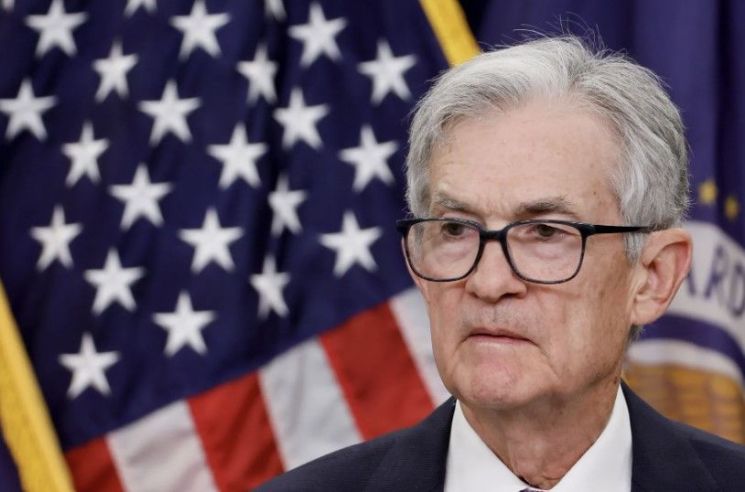
The minutes of the January Federal Open Market Committee (FOMC) meeting released by the Fed on the 19th (local time) stated that "potential changes in trade and immigration policies, along with strong consumer demand, were mentioned as factors that could impede the disinflation process (the slowing of price increases)."
The minutes noted, "Businesses in several regions indicated that companies would likely try to pass on increased input costs caused by potential tariffs to consumers," and policy officials "generally pointed to upside risks to the inflation outlook."
The minutes reflected Fed members' concerns about 'Trumflation,' where President Trump's policies such as tariff hikes and bans on illegal immigration push prices higher. Shortly after taking office, President Trump announced an additional 10% tariff on all imports from China and a 25% tariff on all steel and aluminum products entering the U.S., and he has also warned of new tariffs of 25% on automobiles and over 25% on semiconductors and pharmaceuticals starting April 2.
In this context, where the risk of inflation rebounding remains, the minutes reaffirmed a cautious monetary easing stance.
The minutes stated that current policy is "considerably less restrictive" than before the rate cuts, allowing time to assess the situation before taking further action. They added, "Participants expressed a desire for further progress in inflation before adjusting the federal funds rate target range again if the economy remains close to maximum employment," and "many participants noted that if the economy remains strong and inflation stays elevated, the policy rate could be maintained at a restrictive level."
Earlier, the Fed began cutting rates in September last year, lowering them by a total of 1 percentage point over three consecutive cuts, before holding steady at 4.25-4.5% in January this year. According to the minutes, a majority of Fed members believe that rate cuts should resume only after inflation shows further progress toward the 2% target. This aligns with Fed Chair Jerome Powell's monetary policy stance, expressed last week before Congress, that "there is no need to rush into further rate cuts," which was reaffirmed in last month's FOMC minutes.
The inflation cited by the Fed as the reason for its cautious monetary easing has recently shown signs of rebounding. Last month, the Consumer Price Index (CPI) rose again into the 3% range due to increases in housing costs, food, and energy prices. It rose 3% year-over-year, exceeding both the previous month's figure and expectations (both 2.9%).
Additionally, the minutes noted that some Fed members expressed concerns about the possibility of repeated debates over raising the federal government's debt ceiling amid worsening fiscal deficits.
The market currently prices in more than a 50% chance that the Fed will either hold rates steady or cut them once this year. According to the Chicago Mercantile Exchange (CME) FedWatch tool, the federal funds futures market on this day reflected a 16.6% chance of the Fed holding rates steady, a 35.8% chance of one rate cut, and a 30.6% chance of two rate cuts this year.
© The Asia Business Daily(www.asiae.co.kr). All rights reserved.
![Clutching a Stolen Dior Bag, Saying "I Hate Being Poor but Real"... The Grotesque Con of a "Human Knockoff" [Slate]](https://cwcontent.asiae.co.kr/asiaresize/183/2026021902243444107_1771435474.jpg)















