"Many teachers involved in question trading are concentrated in private education hotspots such as Daechi and Mokdong"
Board of Audit and Inspection: "Korea Institute for Curriculum and Evaluation’s inadequate verification worsened the situation"
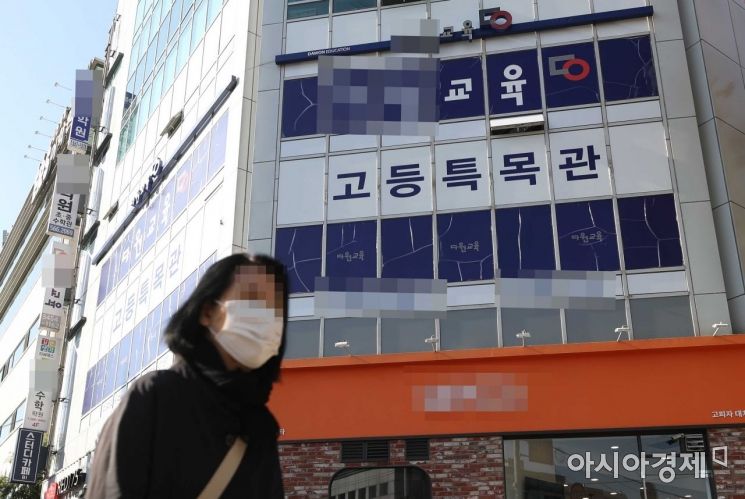
On the 18th, the Presidential Office stated regarding the Board of Audit and Inspection's findings that 249 teachers received a total of approximately 21.3 billion KRW through question trading with private education companies, saying, "The reality of the private education interest cartel has been fully revealed."
A senior official from the Presidential Office said, "Amid the Yoon Seok-yeol administration's strong determination to respond, the reality of killer questions and the private education interest cartel, which had only been surrounded by suspicions until now, has been fully exposed," adding, "Correcting the college entrance exam, which should be the fairest, is the top priority for educational reform for future generations."
He continued, "This audit is only the starting point, and more persistent reform efforts must follow."
"Many teachers involved in question trading are concentrated in private education hotspots such as Daechi and Mokdong"
The Board of Audit and Inspection disclosed the results of the audit titled ‘Inspection of the Service Status Related to Teachers’ Participation in the Private Education Market’ and stated that it focused on checking teachers who received more than 50 million KRW from private education companies between 2018 and 2022 for question trading activities.
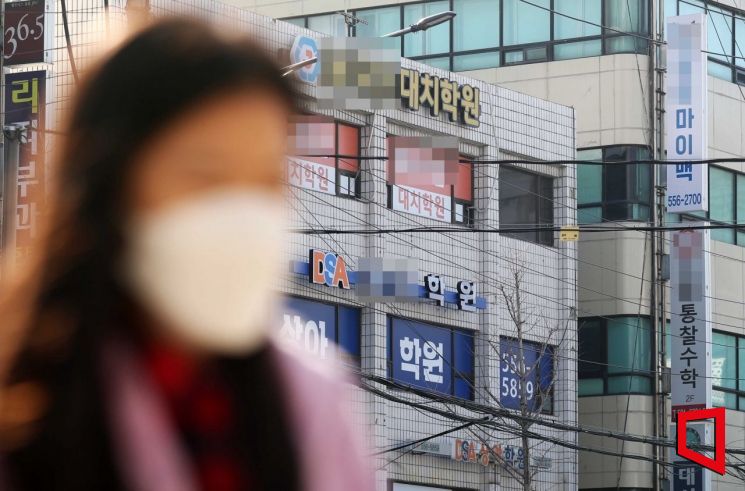
According to the Board, 249 teachers subject to measures who were confirmed to have engaged in question trading received a total of 21.29 billion KRW through such transactions. The scale of question trading with private education companies in Seoul and Gyeonggi Province amounted to 19.88 billion KRW, accounting for 93.4%, and especially in Seoul, many teachers at schools located in areas with large private education companies such as Daechi-dong and Mokdong were involved in question trading.
They were found to have continued question trading mainly in key college entrance exam subjects such as Science (6.62 billion KRW, 31.1%) and Mathematics (5.71 billion KRW, 26.8%).
The audit also uncovered that an active high school teacher formed a question supply organization, sold questions to private education companies and instructors, and received about 660 million KRW. These teachers, while still in service, engaged in organized question trading or participated as examiners for the college entrance exam and included questions sold to private education companies in school exams.
In particular, teacher A, an active high school teacher, recruited a total of eight teachers with experience as examiners and reviewers in 2019 to form a question supply organization. From that year until May 2023, they sold about 2,000 questions to private education companies and instructors, receiving 660 million KRW, according to the audit results.
Also, teacher B, a high school teacher, formed a question production team of 36 active teachers when their spouse established company C in 2019. By selling questions to private education companies, company C’s sales reached nearly 1.9 billion KRW from 2019 to 2022, of which teacher B received 300 million KRW and 110 million KRW was recorded as company operating profit.
Another teacher, D, who participated as a writer for EBS college entrance exam-linked textbooks since 2015, sold 8,000 questions to instructor E from that year until 2021 and received 580 million KRW, the audit revealed.
The Board of Audit and Inspection stated, "Among the 249 teachers confirmed to have traded questions with private education companies, 220 were notified to the Ministry of Education to take appropriate measures in consultation with metropolitan and provincial education offices. For 29 teachers judged to have committed serious misconduct, disciplinary action requests (8 teachers) or misconduct notifications (21 teachers) were issued to hold them strictly accountable."
Board of Audit and Inspection: "Korea Institute for Curriculum and Evaluation’s inadequate verification worsened the situation"
Additionally, the Board announced the disciplinary results for those involved in the '2023 College Scholastic Ability Test (CSAT) English question duplication controversy.'
A national university professor who was an English question setter for the 2023 CSAT used questions from the EBS textbook he reviewed in 2022 as question 23 in the English section, fueling the 'private education cartel' controversy. The Korea Institute for Curriculum and Evaluation’s inadequate verification also exacerbated the situation.
The Board requested the national university to issue a warning to the professor’s affiliated institution and demanded disciplinary actions (dismissal, suspension, or light penalties) against three officials at the Institute who improperly handled question setting and objection review tasks.
The Board stated, "The Institute failed to properly verify overlaps with private mock exams during the CSAT question setting process and unjustly handled objections. It also confirmed cases of question setting that did not comply with the curriculum and appropriate difficulty levels," adding, "We demanded disciplinary actions against those who improperly handled objections and urged the Institute to thoroughly manage future CSAT question setting tasks."
© The Asia Business Daily(www.asiae.co.kr). All rights reserved.



















