Industry Welcomes the Bill
But Calls for Effective Follow-Up Support
As the K-Chips Act (Amendment to the Restriction of Special Taxation Act) passed the Tax Subcommittee of the National Assembly's Strategy and Finance Committee, domestic semiconductor companies such as Samsung Electronics and SK Hynix are expected to receive large-scale tax credit benefits. A simple calculation applying the amendment suggests that Samsung Electronics could save about 2 trillion KRW annually, and SK Hynix about 500 billion KRW in taxes.
The K-Chips Act, aimed at strengthening the competitiveness of the semiconductor industry, passed the Tax Subcommittee of the National Assembly's Strategy and Finance Committee on the 18th. The industry expects that if the bill is finalized, the burden on research and development (R&D) and facility investments will be reduced, creating a favorable environment for global competition. However, voices are also raised that to maximize the practical effects, the method of applying tax credits and follow-up support measures must be clearly established.
The core of this amendment is that the semiconductor sector, currently included in national strategic technologies, will be separated, and the tax credit rates for large and medium-sized enterprises will be raised by 5 percentage points (p) from the existing 15% to 20%, and for small and medium enterprises from 25% to 30%, respectively.
The tax credit period for semiconductor R&D is also extended by 7 years until the end of 2031. Eligible expenses include labor costs, material costs, facility rental fees, and commissioned research and personnel development costs incurred at company-affiliated research institutes and R&D departments.
The application period for R&D tax credits for national strategic technologies other than semiconductors, as well as new growth and original technologies, is also extended by 5 years. As currently, large and medium-sized enterprises will receive a 15% credit, and small and medium enterprises 25%, until the end of 2029.
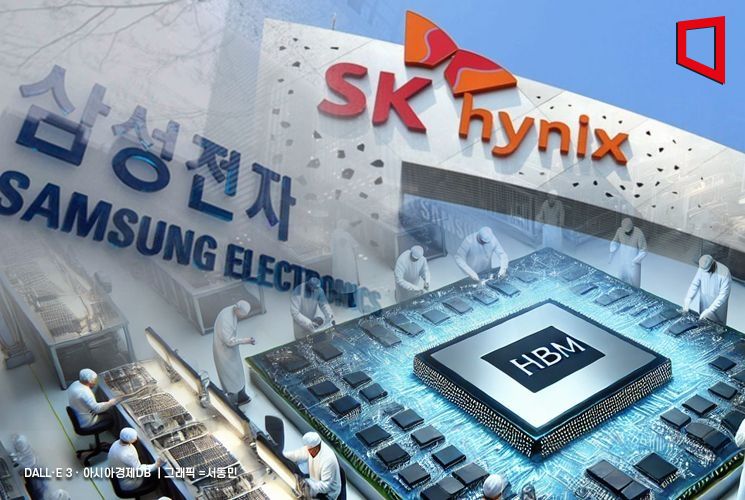
The semiconductor industry insists that expanding tax benefits is essential due to the large-scale investment costs required. With major countries such as the United States, Japan, and the European Union (EU) providing large subsidies and tax benefits to foster the semiconductor industry, domestic companies need policy support to maintain competitiveness. An industry official said, "Because the semiconductor industry has a very large initial facility investment burden, expanding tax credits will be a key factor in promoting companies' investment decisions."
While welcoming the passage of the bill, the industry emphasizes that detailed implementation plans must be clear to realize practical effects. A semiconductor industry official expressed concern, saying, "Although the K-Chips Act's passage is expected to reduce the burden of R&D and facility investments, if the scope or procedures for applying tax credits are complicated, companies may find it difficult to utilize them properly."
To maximize investment incentives, it is also pointed out that infrastructure support such as semiconductor cluster construction, workforce training, and power and water supply should be provided alongside tax credits. An industry official stressed, "Compared to the direct subsidies provided by the United States and Japan, Korea's main support measure is tax reduction, so additional support measures need to be considered."
The government plans to implement various support measures in parallel, including expanding tax credits, building semiconductor infrastructure, supporting R&D, and training specialized personnel. However, the industry continues to demand that follow-up support measures that companies can practically feel be prepared even after the bill passes the plenary session. Since the K-Chips Act has passed the Tax Subcommittee, it is expected to be submitted to the full Strategy and Finance Committee and the Legislation and Judiciary Committee before being presented to the plenary session.
© The Asia Business Daily(www.asiae.co.kr). All rights reserved.
![Clutching a Stolen Dior Bag, Saying "I Hate Being Poor but Real"... The Grotesque Con of a "Human Knockoff" [Slate]](https://cwcontent.asiae.co.kr/asiaresize/183/2026021902243444107_1771435474.jpg)















