Selected for Ministry of Health and Welfare's 'Long-term Care Home Medical Pilot Project'
Proactively implementing the 'Hyo Sarang Health Primary Care Physician' home health management project since 2017
Expanding coverage to seniors with long-term care grades living at home
Home medical team of doctors, nurses, and social workers provides up to one year of home visits
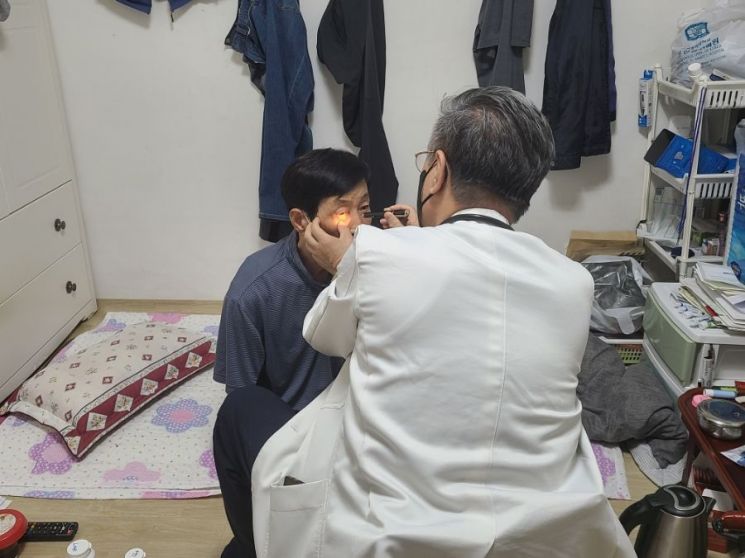
Seongdong-gu (Mayor Jung Won-oh) announced that it will implement the ‘Hyo Sarang Health Primary Care Physician Long-term Care Home Medical Pilot Project’ starting in March.
The ‘Long-term Care Home Medical Pilot Project’ is a Ministry of Health and Welfare-led public contest project in which a team of doctors, nurses, and social workers visit the homes of long-term care insurance beneficiaries to provide medical services and connect necessary community care services.
In the third pilot project of 2025, following the first in 2023 and the second in 2024, 135 sites were selected across 91 cities, counties, and districts. Among the autonomous districts of Seoul, excluding private medical institutions, Seongdong-gu was the only district selected.
Accordingly, from March, the district will actively promote the ‘Hyo Sarang Health Primary Care Physician Long-term Care Home Medical Pilot Project’ (hereinafter referred to as the ‘Hyo Sarang Home Medical Project’), based on the ‘Hyo Sarang Health Primary Care Physician Project.’
Since 2017, Seongdong-gu has proactively operated the ‘Hyo Sarang Health Primary Care Physician’ project, a representative home health care service in Seongdong-gu where dedicated primary care physicians and community nurses visit seniors aged 65 and older and vulnerable health groups within the district to provide medical care. It plays a leading role in senior health management by offering chronic disease treatment, medical consultations, blood pressure and blood sugar measurement and management, as well as elderly depression and dementia prevention services.
Since 2020, smart health management services based on artificial intelligence (AI) and IoT have been introduced to strengthen seniors’ self-directed health management capabilities. Since 2022, special efforts have been made to provide focused chronic disease management for seniors after discharge from hospitalization due to illness.
The ‘Hyo Sarang Home Medical Project’ expands and strengthens the ‘Hyo Sarang Health Primary Care Physician Project’ into a ‘Long-term Care Home Medical Project,’ extending the target beneficiaries to include seniors with long-term care grades.
The project broadens support to all mobility-impaired seniors in the area who have received long-term care grades, who were previously excluded from the ‘Hyo Sarang Health Primary Care Physician’ project, and is expected to play a significant role in eliminating medical blind spots.
Specifically, it targets seniors who have received long-term care grades (cognitive support grades 1 to 5) but live at home without admission to facilities and require medical services. The National Health Insurance Service connects eligible individuals, or they can apply for the service themselves or through others (family, etc.) upon discharge.
After confirmation of eligibility by the responsible social worker and a medical staff meeting, the service begins in earnest. The ‘Hyo Sarang Home Medical Center’ home medical dedicated team, composed of doctors, nurses, and social workers, provides medical treatment, nursing, and welfare support services for up to one year.
After the service ends, continued management is decided through re-evaluation, and welfare services are linked and supported if necessary. The provided examination, prescription, and nursing services are covered by long-term care insurance and can be used without out-of-pocket expenses (however, if additional nursing fees apply, out-of-pocket expenses may occur).
Jung Won-oh, Mayor of Seongdong-gu, said, “The ‘Hyo Sarang Health Primary Care Physician Long-term Care Home Medical Pilot Project’ will play a key role in establishing the ‘Seongdong-type Integrated Senior Care System.’ We will continue to organically support customized medical and care services that meet seniors’ needs so that they can live healthily and comfortably in their own homes in this super-aged era.”
Jungnang-gu Mental Health Welfare Center Operates Recovery Program ‘Annyeong’
Recovery program held every third Wednesday of the month for a warm farewell
Supports psychological recovery and stable return to daily life for bereaved families
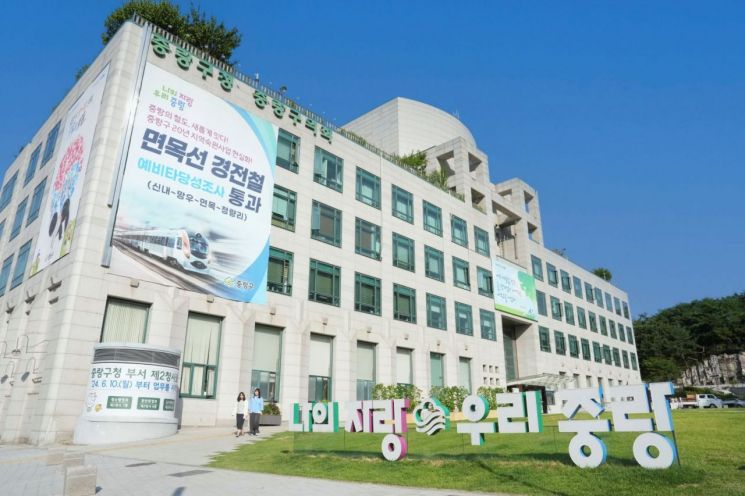
Jungnang-gu (Mayor Ryu Kyung-gi) Mental Health Welfare Center operates a recovery program called ‘Annyeong’ for residents who have lost close ones to suicide.
The recovery program ‘Annyeong’ for suicide bereaved families is held from February to November on the third Wednesday of each month at 7 p.m. at the 5th floor of Jungnang-gu Mental Health Welfare Center in the second building of Jungnang-gu Office. The first session will start on February 19 and continue until November 19.
It is known that one suicide deeply affects about 5 to 10 people including family, friends, lovers, coworkers, and neighbors. Bereavement due to suicide differs from other types of bereavement as it is accompanied by negative emotions such as guilt, anger, and depression about the death, but often those affected do not seek help due to guilt over not being able to protect the deceased.
Therefore, Jungnang-gu Health Welfare Center conducts psychological education for healthy mourning and operates self-help groups to share bereavement experiences in the suicide bereaved family recovery program ‘Annyeong.’ Through the program, it supports suicide bereaved families to overcome psychological difficulties and return to daily life stably.
Residents of Jungnang-gu who are suicide bereaved and wish to participate in the program can contact the Jungnang-gu Mental Health Welfare Center.
Ryu Kyung-gi, Mayor of Jungnang-gu, said, “The pain of losing a close person is a deep wound that is not easily healed, but I believe that recovery is possible little by little through sharing and empathy. We will continue to prepare various support measures so that bereaved families can receive psychological support and recover their daily lives within a warm community.”
Gwanak-gu Strengthens Social Networks to Move from ‘Social Isolation’ to ‘Community Connection’
From February this year, dedicated care workers for high-risk solitary death groups, ‘Annyeong Salpimi,’ begin activities at all community service centers
According to the ‘Ministry of Health and Welfare Solitary Death Mortality Survey’ in October 2024, the average annual increase rate of solitary death mortality over the past five years is 5.6%, showing a continuous upward trend. In particular, middle-aged men in their 50s and 60s accounted for 53.9% of all solitary deaths in 2023.
In response, Gwanak-gu (Mayor Park Jun-hee) will fully operate ‘Annyeong Salpimi,’ dedicated care workers for high-risk solitary death groups, to convey warmth among neighbors and alleviate social isolation.
‘Annyeong Salpimi’ is a project that forms intimacy through continuous face-to-face contact with high-risk solitary death households to foster warm connections among neighbors and links various welfare services such as meal support and social network formation programs.
The district has expanded the ‘Annyeong Salpimi’ project to all community service centers since last year to eliminate welfare blind spots.
Last year alone, the district confirmed the well-being of high-risk solitary death households through 78,000 visits and phone calls, identifying 4,300 crisis households and linking them to public and private welfare services, achieving significant results.
As a result, in last year’s project satisfaction survey, 90.5% of participants gave positive evaluations of ‘Annyeong Salpimi,’ proving its effectiveness.
This year, the district will deploy ‘Annyeong Salpimi’ to all community service centers starting in February to discover and monitor high-risk solitary death households.
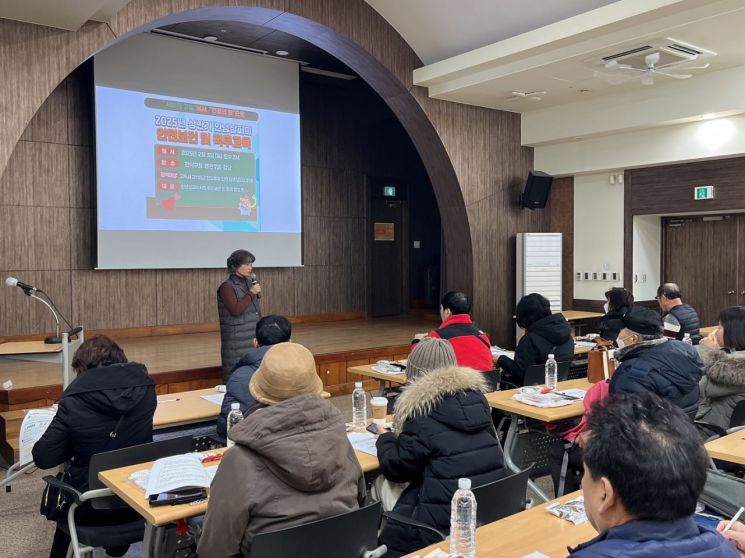
Prior to this, job training will be conducted to strengthen the professionalism of Annyeong Salpimi, covering topics such as understanding social isolation and solitary death, detecting risk signs, and safety rules for visits.
Especially, since middle-aged men tend not to seek help despite lack of care and economic difficulties, the role of Annyeong Salpimi is emphasized. This year, the project will focus more on home visits and counseling to discover and support isolated households.
Meanwhile, ‘Annyeong Salpimi’ also supports welfare blind spot surveys using 47 types of crisis information managed by the district and conducts field surveys on 2,300 households excluded from or suspended from basic livelihood security benefits.
Additionally, through ‘Smart Well-being Checks’ using Internet of Things (IoT) devices, it promptly visits the site when crisis signs are detected in target households to respond to emergency situations. Park Jun-hee, Mayor of Gwanak-gu, said, “Happiness comes from relationships with people, and even in difficult situations, hope can be found through bonds with family, friends, and colleagues. This year, we will do our best to strengthen the social networks of vulnerable groups at risk of social isolation to improve their quality of life and happiness index.”
© The Asia Business Daily(www.asiae.co.kr). All rights reserved.



















