Securing Annual Adjustment Grants from Seoul through Implementation of the Local Finance Act Reflecting Mapo District’s Request
Mapo District Enacts Special Account Ordinance for Regional Resource Facility Tax to Ensure Systematic Management
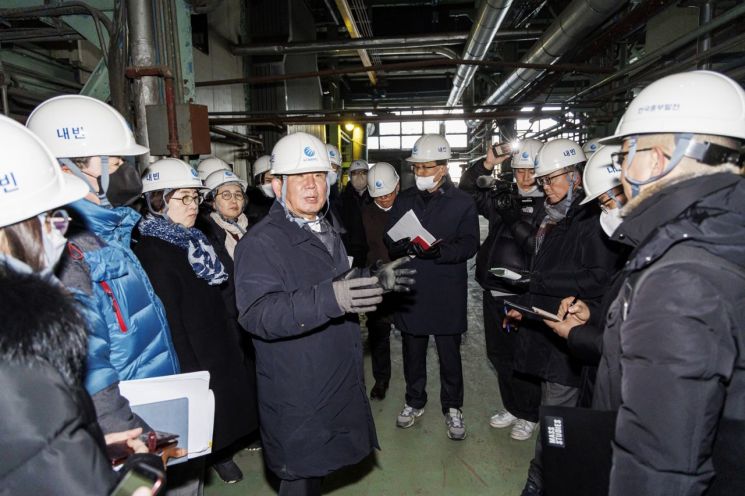
Mapo District (Mayor Park Gangsu) has secured approximately 1.9 billion KRW annually from the regional resource facility tax collected at the Danginri Seoul Thermal Power Plant as an adjustment grant from the Seoul Metropolitan Government.
This achievement is the result of Mapo District's active push for an amendment to the Local Finance Act, which passed the National Assembly plenary session and took effect on April 1, 2024.
The regional resource facility tax is an environmental restoration fund based on the polluter-pays principle, designed to address air pollution and safety issues caused by power plants. Until now, adjustment grants from this tax were distributed only to cities and counties.
Although Seoul Metropolitan Government had been collecting the regional resource facility tax from the Seoul Thermal Power Plant each year, Mapo District, where the plant is actually located, had not received any benefits.
In response, Mapo District continued to hold discussions with relevant ministries to expand compensation for environmental damage and inconvenience. In April 2023, the district formally requested the Ministry of the Interior and Safety to amend the Local Finance Act so that autonomous districts would also be eligible for the regional resource facility tax grants.
Following the passage of the amendment in the National Assembly, Mapo District has been able to secure adjustment grants for residents living near the power plant starting in 2024.
In addition, Mapo District is currently enacting an ordinance to establish and operate a special account for the regional resource facility tax for the Seoul Thermal Power Plant area in Mapo District, Seoul, in order to systematically manage the adjustment grants and efficiently implement related projects.
Mayor Park Gangsu stated, “I am very pleased that we can now provide practical and effective support measures for residents who have suffered for so long near the power plant,” and added, “Mapo District will make every effort to ensure that the adjustment grants are used to improve the environment and the welfare of residents in the areas surrounding the power plant.”
Furthermore, Mapo District is accelerating efforts to secure additional legal grounds for supporting the development of areas near the power plant and improving residents’ quality of life, including submitting a proposal to the Trade, Industry, Energy, SMEs, and Startups Committee to amend the Act on Support for Areas Surrounding Power Plants.
Jungnang District’s Junghwa Majung Village Vitality Center Relocates and Expands... Improved Accessibility in Taeneung Alley Market
Four Village Vitality Centers Operated in the District... Offering Diverse Spaces and Amenities
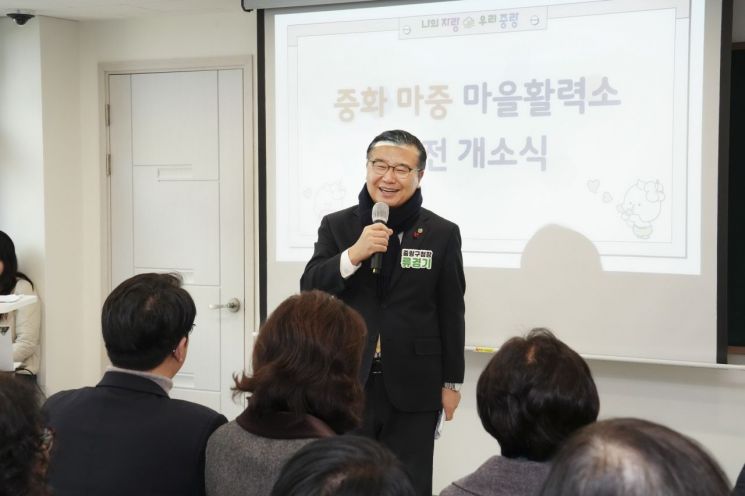
Jungnang District (Mayor Ryu Kyunggi) held a relocation and opening ceremony for the Junghwa Majung Village Vitality Center on February 14.
More than 60 local residents attended the event, with special performances by long-time users of the Junghwa Majung Village Vitality Center adding to the festive atmosphere.
The ‘Majung Village Vitality Center’ is a shared space available for rent to residents who need a venue for small gatherings, educational programs, or various events. The center was established to provide a place where local residents can gather, participate in activities, and interact with one another.
The newly expanded Junghwa Majung Village Vitality Center serves as a local community hub, attracting more than 3,000 residents annually. The number of meeting spaces has been increased from one (82.63㎡, 25 pyeong) to two (133.44㎡, 40 pyeong), allowing the facility to accommodate more than 45 people at once. Its new location in the Taeneung Alley Market has also enhanced accessibility.
Currently, there are a total of four Majung Village Vitality Centers in the district, including Junghwa Majung. Starting with the opening of Gyeomjae Majung Village Vitality Center in 2021, Junghwa Majung and Mangwoo Majung followed in 2022, and Sagajeong Majung Village Vitality Center opened in 2023. More than 30,000 residents used the centers last year, and the number of users continues to grow annually.
Mangwoo Majung Village Vitality Center is a comprehensive community facility offering various spaces. In addition to rental halls, it houses the ‘Mangwoo Jaram Cooperative Childcare Room,’ the ‘Gender Equality Activity Center,’ and the ‘Jungnang Village Support Center,’ supporting a wide range of community activities.
Sagajeong Majung Village Vitality Center is the only one among the centers to feature a shared kitchen, reflecting residents’ wishes for more shared facilities beyond meeting rooms. The shared kitchen is widely used not only by residents but also by local organizations and groups, playing a key role in community networking. Additionally, both Mangwoo and Sagajeong Village Vitality Centers offer evening (Wednesday to Friday, until 9 p.m.) and weekend (Saturday) rentals for residents’ convenience.
Mayor Ryu Kyunggi stated, “Village Vitality Centers are open spaces where residents can freely gather, communicate, and bring vitality to their lives,” adding, “I hope the expanded Junghwa Majung Village Vitality Center will become a convenient venue for communication and exchange for even more residents.”
Children Enjoy Themselves and Parents Feel Secure: Nowon-Style Community-Based Childcare Policy
Thirteen Cooperative Childcare Centers, Twenty-Nine I-Hyu Centers, and Twenty-Two Community Child Centers Form a Robust Childcare Network
Meals During School Breaks? Sudden Illness? A Well-Prepared, Comprehensive Childcare System
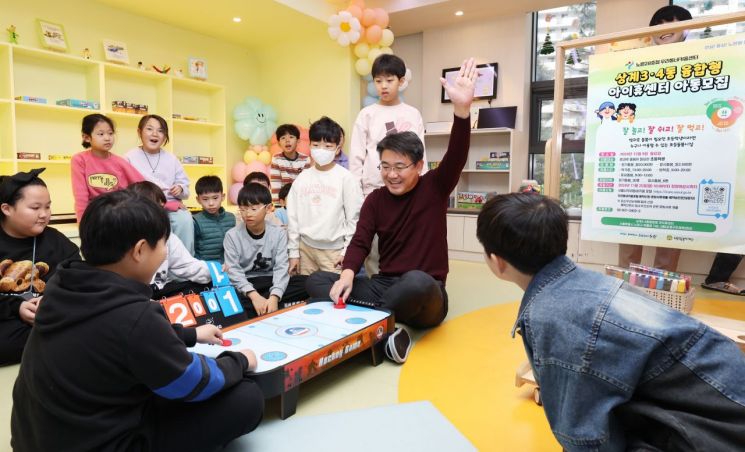
Nowon District (Mayor Oh Seungrok) announced that its ongoing ‘community-based childcare system’ is receiving increased attention.
Amid growing concerns about the care of minors following a recent elementary school student murder case that shocked society, the district’s achievements in implementing local childcare policies are being recognized.
The ‘I-Hyu Center’ is cited as the leading example. Launched in 2018, this initiative proactively addressed the need for safe spaces ‘close to home and school’ where elementary students could spend time safely with neighborhood friends after school. The number of centers has since expanded to 29, with other local governments benchmarking the model, and it has become the prototype for Seoul’s ‘I-Kium Center’ program.
Although all-day after-school care services are now available within elementary schools, the popularity of I-Hyu Centers-where the community takes the lead in childcare-remains strong. Thanks to their safe environment and highly rated programs, all 29 centers are operating at full capacity, serving a total of 749 children.
Together with the district’s 22 community child centers, I-Hyu Centers have become key after-school care and play spaces. Notably, in addition to regular care, they offer temporary care services, and integrated centers with children’s cafeterias provide meals to non-registered children (up to 10 per center per day) for just 1,000 KRW per meal, making them highly versatile.
For working parents, unexpected situations such as a child suddenly falling ill can be especially challenging, just like arranging meals during school breaks or finding temporary care. In response, the district expanded its ‘Hospital Escort Service for Sick Children’-first introduced nationwide in 2019-and since 2020 has operated the ‘Sick Child Care Center.’
The district continues to provide hospital escort services, in which staff accompany sick children to the hospital and supervise their medication, and also offers bedside care until parents return. During bedside care, children receive tailored care, medication guidance, meals, and rest to support their recovery.
The district’s policy focus on infants and toddlers also remains strong. There are now 13 cooperative childcare centers, including the Seoul-Style Kids Caf? opened last year in Jungpyeong Children’s Park. These centers offer programs that help strengthen parent-child relationships and provide practical support for childcare, resulting in high satisfaction among users.
The ‘Nowon Safe Daycare Center’ initiative is also noteworthy. In these centers, the teacher-to-child ratio is stricter than the government standard, not by adding more teachers, but by reducing the number of children per class. This approach eases the burden on teachers while improving the childcare environment. Launched in 2022, the Safe Daycare Center program was expanded to all age groups in 2024 and has become one of the district’s flagship childcare policies.
Mayor Oh Seungrok stated, “Nowon’s child-friendly environment is built on safety and goes beyond that to offer comprehensive services,” adding, “We will continue to enhance the quality of our childcare system so that both children and their guardians are fully satisfied.”
© The Asia Business Daily(www.asiae.co.kr). All rights reserved.
![Clutching a Stolen Dior Bag, Saying "I Hate Being Poor but Real"... The Grotesque Con of a "Human Knockoff" [Slate]](https://cwcontent.asiae.co.kr/asiaresize/183/2026021902243444107_1771435474.jpg)


















