Local Grant Tax Decreases Due to Real Estate Tax Cuts
Proposal to Secure an Additional 1% of Domestic Tax Revenue
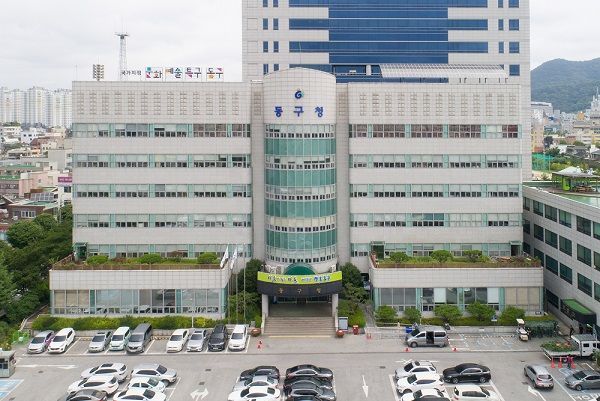
Gwangju Dong-gu (District Mayor Lim Taek) announced on the 17th that it will formally submit the amendment to the Local Grant Tax Act as an official agenda item at the 2nd Joint Chairpersons' Meeting of the Korea Association of Mayors, County Governors, and District Heads (hereinafter referred to as the Association), which will be held on the 18th, and will propose that it be passed by the National Assembly.
Local governments across the country are facing a fiscal crisis due to a sharp decrease in real estate grant taxes caused by the real estate tax reduction policy implemented in 2023. As a result, they have decided to request an amendment to the Local Grant Tax Act.
The real estate grant tax is a type of local grant tax that is funded primarily by the comprehensive real estate holding tax and is allocated to cities, counties, and autonomous districts based on their financial conditions.
As the comprehensive real estate holding tax sharply decreased from 7.5676 trillion won in 2022 to 4.9608 trillion won in 2023 and 4.1098 trillion won in 2024, the average revenue of basic local governments dropped by 13.7 billion won for cities, 15.1 billion won for counties, and 14.1 billion won for autonomous districts.
In particular, autonomous districts, which do not receive the ordinary grant tax, are highly dependent on the real estate grant tax, and the sharp decrease has resulted in severe fiscal pressure.
In response, since last year, Dong-gu has been proposing an amendment to the Local Grant Tax Act to secure an additional 1% of domestic tax revenue as a source for the real estate grant tax. This amendment was officially proposed by Democratic Party lawmaker Min Hyungbae in January.
If the law passes, basic local governments will secure an additional 13.1 billion won for cities, 14.4 billion won for counties, and 14 billion won for autonomous districts on average.
District Mayor Lim Taek stated, "I sincerely hope this amendment will be passed to maintain sound local finances and revitalize the local economy."
© The Asia Business Daily(www.asiae.co.kr). All rights reserved.
![Clutching a Stolen Dior Bag, Saying "I Hate Being Poor but Real"... The Grotesque Con of a "Human Knockoff" [Slate]](https://cwcontent.asiae.co.kr/asiaresize/183/2026021902243444107_1771435474.jpg)















