Job Growth in Major Industries Slows Down
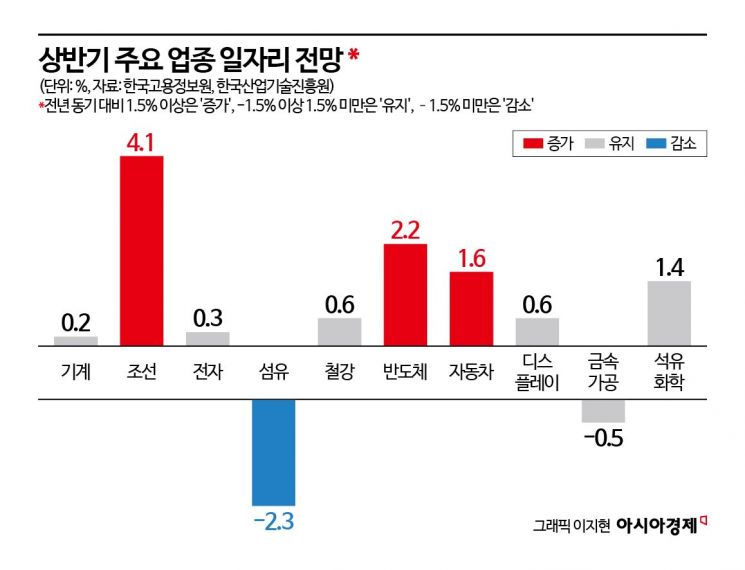
Jobs in the shipbuilding, semiconductor, and automobile industries are expected to increase in the first half of this year compared to the first half of last year. Industries such as machinery, electronics, and steel are expected to maintain job levels similar to the previous year. However, the steady decline in job growth in major industries such as shipbuilding, machinery, electronics, and steel?excluding semiconductors and automobiles?over the past 3 to 4 years is a cause for concern. The textile industry is expected to see a decrease in jobs in the first half of the year due to declines in exports and production.
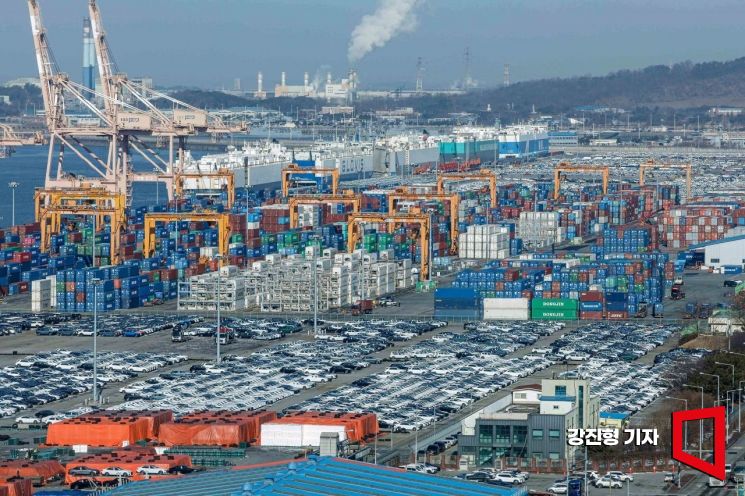
The Korea Employment Information Service and the Korea Institute for Industrial Technology Advancement announced the '2025 First Half Major Industry Job Outlook' on the 17th. Based on employment insurance subscriber data and the labor force survey by occupation and business, they projected job increases and decreases related to 10 key manufacturing sectors including machinery, shipbuilding, electronics, textiles, steel, semiconductors, automobiles, displays, metal processing, and petrochemicals.
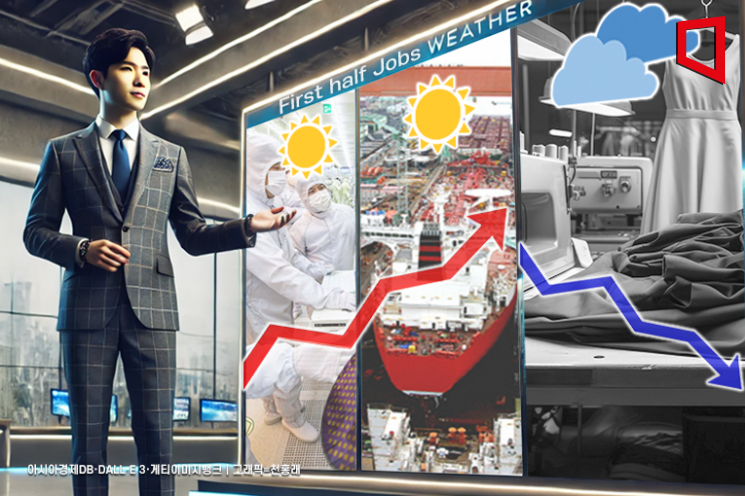
Industries expected to see job growth in the first half of this year compared to the same period last year include shipbuilding (4.1%·5,000 jobs), semiconductors (2.2%·3,000 jobs), automobiles (1.6%·6,000 jobs), and petrochemicals (1.4%·4,000 jobs). Machinery (0.2%·1,000 jobs), electronics (0.3%·2,000 jobs), steel (0.6%·1,000 jobs), displays (0.6%·1,000 jobs), and metal processing (-0.5%·-1,000 jobs) are expected to maintain employment levels similar to last year. Meanwhile, textiles (-2.3%·-4,000 jobs) are expected to see a decline in jobs.
The shipbuilding industry is expected to increase employment due to rising demand for eco-friendly ships, an increase in global ship orders, and maintaining order backlogs amid industry recovery. Semiconductors are likely to see employment growth as exports increase driven by improved demand from global economic recovery expectations and a boom in high-value memory semiconductors fueled by the growth of the artificial intelligence (AI) market. Although domestic and export sales in the automobile industry are expected to slightly decline in the first half, employment may increase due to new model launches and the spread of eco-friendly vehicles.
The petrochemical industry faces negative factors such as global oversupply and uncertainties like the imposition of general tariffs by the United States, but due to its large-company-centered nature, employment is expected to remain at last year's first half level. Despite domestic demand recovery, machinery employment is expected to remain stagnant due to export stagnation, and electronics employment is projected to stay similar to the first half of last year amid global economic uncertainties despite improved IT export performance.
Steel employment is expected to increase due to export demand from emerging markets despite sluggish domestic demand caused by a downturn in the construction sector, but employment could decline depending on the expansion of uncertainties. The display industry is expected to maintain employment levels as it transitions its business toward high-value products centered on OLEDs. Metal processing employment may slightly decrease due to reduced corporate investment amid a high domestic interest rate environment and decreased demand from a slowdown in the construction industry.
The textile industry is expected to see job reductions due to continued declines in exports and production caused by strengthened global protectionism and the overseas relocation of original equipment manufacturing (OEM) production, as well as domestic demand weakness due to consumer price inflation. The Korea Employment Information Service forecasted that "the introduction of general tariffs in the second Trump administration is expected to weaken export competitiveness and raise concerns about a decline in global market share," and "domestic production will continue to decline as OEM production facilities focused on garment sewing relocate overseas."
© The Asia Business Daily(www.asiae.co.kr). All rights reserved.
![Clutching a Stolen Dior Bag, Saying "I Hate Being Poor but Real"... The Grotesque Con of a "Human Knockoff" [Slate]](https://cwcontent.asiae.co.kr/asiaresize/183/2026021902243444107_1771435474.jpg)

















