Statement on Court Ruling Regarding Damages for Illegal Strikes
"Production Disruptions Caused by Union's Illegal Factory Occupation"
"Exceptionally Lenient Rulings on Strike-Related Cases"
The Korea Employers Federation (KEF) criticized on the 14th the recent court ruling that the Hyundai Motor irregular workers' union does not need to compensate for damages caused by illegal strikes, stating that it is "no different from granting an acquittal."
In a statement, KEF said, "Even for extreme illegal strike actions, the responsibility for production disruptions is not being held accountable, and in fact, union members involved in illegal activities are being exempted from responsibility."
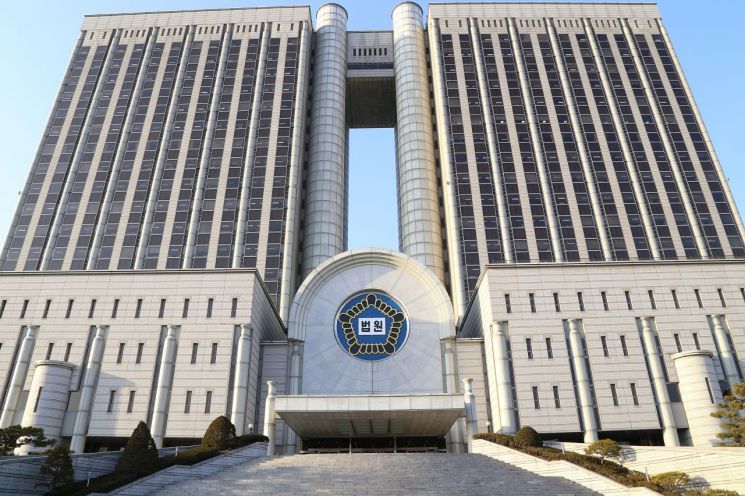
Previously, the Hyundai Motor Irregular Workers' Branch occupied some lines at the Ulsan plant in 2012, demanding direct employment of irregular workers. Hyundai Motor subsequently filed a lawsuit seeking damages. While the first and second trials partially ruled in favor of Hyundai Motor, the Supreme Court overturned the lower court's decision in 2023 and remanded the case. The Busan High Court then dismissed all of Hyundai Motor's claims, stating that if the company's annual production plan was achieved, no liability could be imposed.
KEF pointed out, "The illegal strike actions by the union targeted in this ruling involved union members repeatedly and systematically occupying company factories, committing acts of violence, and damaging property, causing massive production disruptions."
They added, "Given that hundreds of vehicles' production was disrupted due to the union's illegal factory occupation and that union members involved were even convicted in criminal trials, it is questionable whether the ruling that 'the company suffered no damages' can be understood by not only the company involved in the strike but also the majority of the public."
Furthermore, KEF criticized, "The company's annual production plan is an uncertain target that frequently changes depending on market conditions. It is difficult to accept that liability for damages varies based on whether the production plan is met."
KEF also noted, "In cases of joint illegal acts, it is a principle not to individually assess the proportion of responsibility for damages borne by joint offenders. However, in this ruling, the court reduced responsibility by stating that union members who actively participated in illegal occupations, such as organizing picket lines, did not lead the illegal acts."
They added, "This raises questions not only about fairness compared to other general illegal offenders but also why only in strike-related cases are illegal actors treated leniently."
KEF urged, "For our companies to conduct business normally, the courts should not differentiate illegal strike actions from other illegal acts and should fairly hold them accountable according to law and principles, delivering rulings that the public can sympathize with."
© The Asia Business Daily(www.asiae.co.kr). All rights reserved.
![Clutching a Stolen Dior Bag, Saying "I Hate Being Poor but Real"... The Grotesque Con of a "Human Knockoff" [Slate]](https://cwcontent.asiae.co.kr/asiaresize/183/2026021902243444107_1771435474.jpg)















