Tariff Waiver for Apple During Trump's First Term
High Proportion of Apple Products Made in China Led to Tariff Impact
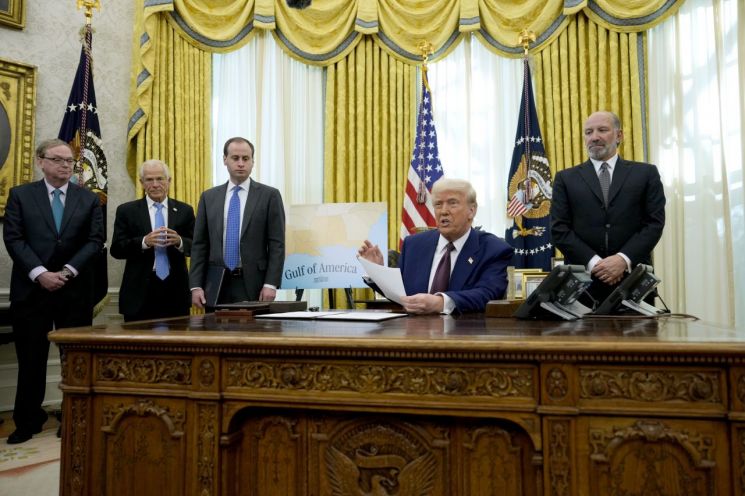 Donald Trump, President of the United States, held a press conference on the 13th (local time) in the Oval Office at the White House in Washington DC before signing an executive order. On that day, Trump announced that he would not apply tariff exemptions to Apple, which manufactures a significant portion of its products, including the iPhone, in China. / AP·Yonhap AP Yonhap News Agency
U.S. President Donald Trump announced on the 13th (local time) that he will not apply tariff exemptions to Apple, which produces more than 90% of its products, including the iPhone, in China.
On the same day, in response to a question at the White House office in Washington DC about whether exemption or waiver measures would be considered, President Trump said, "In Apple's case, we allowed a waiver during my first term," adding, "Samsung was manufacturing products in Korea, so Samsung did not have to pay taxes."
He further explained, "At that time, the tariffs were targeted at China, and Apple was producing many products in China," and "So we did that because otherwise it wouldn't have been fair."
He then emphasized again, saying, "But now it applies to everyone," and "This is much simpler and a better way."
During the Trump administration's first term in 2019, Apple requested a tariff exemption on Chinese-made products such as the iPhone, and the Trump administration approved it. Apple also promised to relocate some Mac computer manufacturing bases from China to the U.S., but ultimately, this promise was not fulfilled.
As of 2023, more than 95% of Apple's products, including the iPhone, iPad, and MacBook, are produced in China. Apple is making efforts to diversify its production bases to countries such as India and Vietnam, but the majority of production remains concentrated in China.
© The Asia Business Daily(www.asiae.co.kr). All rights reserved.

















