Bill Gates Publishes Memoir
"If Born in This Era, I Would Be Diagnosed with Autism"
Struggled with Social Relationships, Found Solace in Books
Learned the Power of Humor from His Teacher
Gained Confidence Through Theater Activities
Candidly Admits the Role of Luck in His Life...
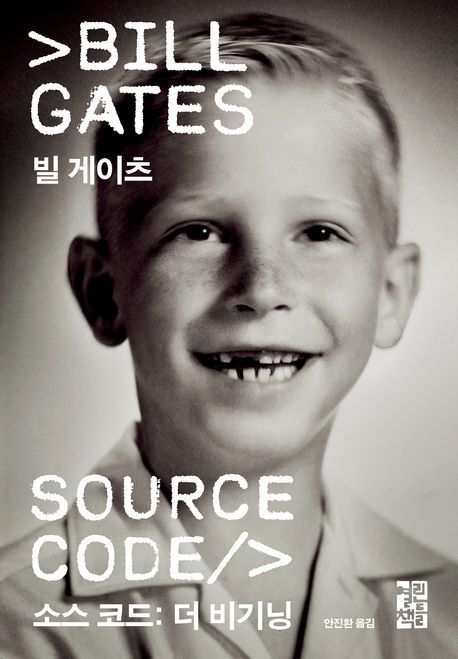
Bill Gates, co-founder of Microsoft who changed the way people around the world work and live, focuses on the people who deeply influenced his life in this memoir. Rather than portraying himself as a businessman who grew into a global billionaire through Microsoft or as a philanthropist working to solve climate, health, and education issues through the Gates Foundation, he reflects on the human relationships he formed along the way and the impact they had on him.
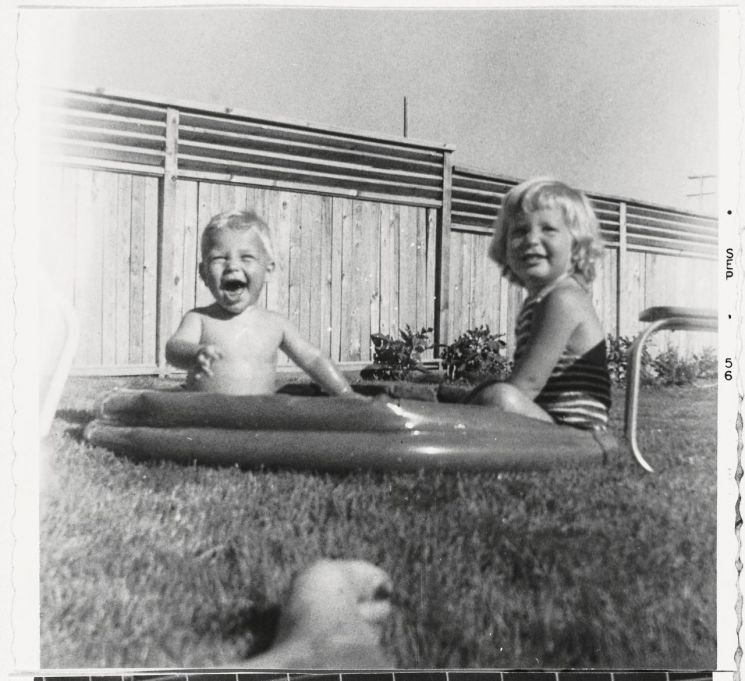 Bill Gates in his childhood (photo left). Provided by the author's personal collection and Open Books.
Bill's childhood was far from ordinary. He himself said, "If I had grown up today, I probably would have been diagnosed with autism spectrum disorder." Born on October 28, 1944, as the second of three siblings, Bill earned the nickname 'Happy Boy' because he was always smiling as a baby, but in kindergarten, he was described as an "aggressive and rebellious child." He couldn't sit still and was constantly moving, often reprimanded at school for impulsive behavior. "If something caught my attention, I would jump up from my seat, wildly waving my hands or shouting out answers. (...) At the same time, I felt like I didn't fit in well with other kids." Struggling with social relationships, Bill immersed himself in books.
His mother emphasized strict discipline in all aspects of life, but reading was an exception. Thanks to her willingness to spend money and time so he could read as much as he wanted, Bill learned to study independently by reading many books even before entering elementary school. He recalled, "Anywhere I could read, I could fully immerse myself in my mind, exploring and absorbing new facts. (...) Through reading, I could find answers to all kinds of problems." However, this tendency also made it difficult for him to relate to friends. He often wondered, "Why don't kids want to see the world the way I do?"

One of the most influential people in Bill's growth was his fourth-grade teacher, Hazel Carlson. Instead of scolding Bill for constantly asking strange questions during class, she took time after class to satisfy his curiosity. She also allowed him to assist librarian Blanche Capier with library duties so he could explore more knowledge. Bill recalls that Ms. Capier's words made him feel valued: "Bill, I don't know how you would have found those books if you hadn't used your detective skills." He cherishes the memories of sharing the books he was reading, interesting parts, and his feelings after reading them.
Ms. Carlson also gave Bill another important gift: a sense of humor. Taking advantage of her habit of occasionally spraying hairspray, Bill and his friends created a fake story that one day someone had replaced the hairspray with paint spray, dyeing the teacher's hair. This playful story made both the friends and the teacher laugh heartily, and through this, Bill realized the power of humor in human relationships. His involvement in theater during high school was also an important experience for him.
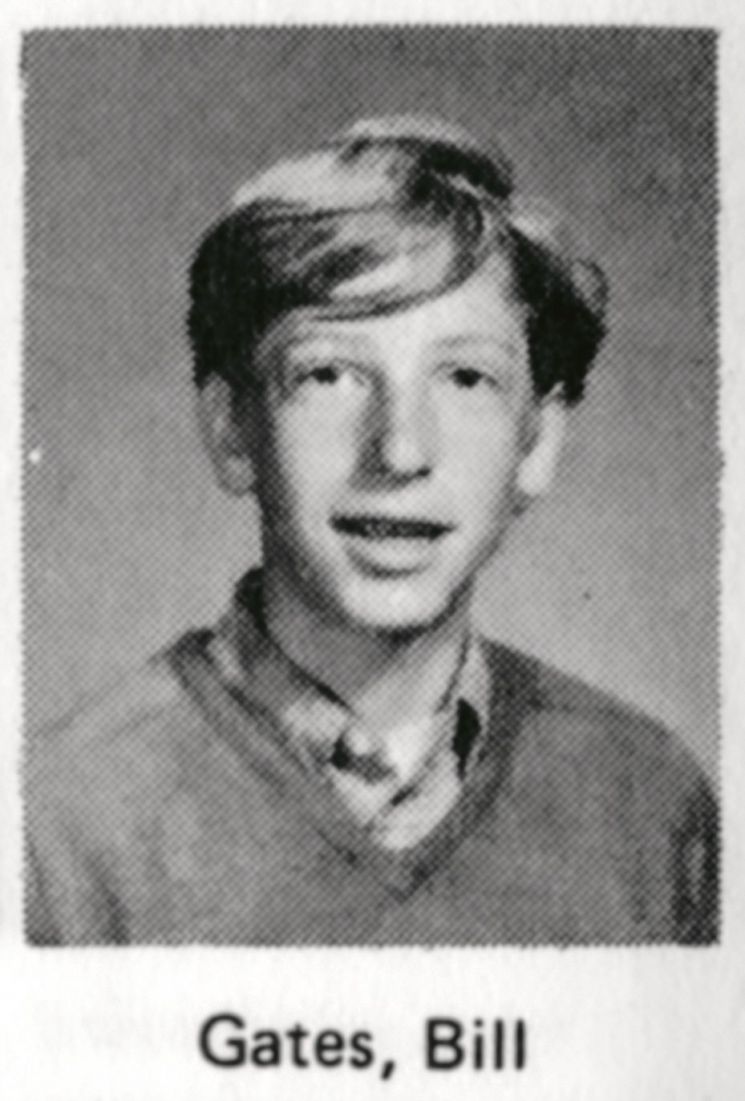
It might seem surprising, but theater gave him a chance to expand himself in new ways. He said, "Contrary to my initial worries, acting was not stressful but rather liberating," and "Every time I read a script, I gained confidence. (...) Theater was an attempt to broaden myself and see if I could try new things and succeed."
This experience also helped with college admissions. Bill was interested in various fields such as pure mathematics, cognitive psychology, war politics, management theory, and advanced chemistry, and he applied to several universities by packaging himself into different personas. He explained, "While writing applications, I experimented with my personas," and "Like in theater, I thought of each application as a performance, with one actor playing three different characters."
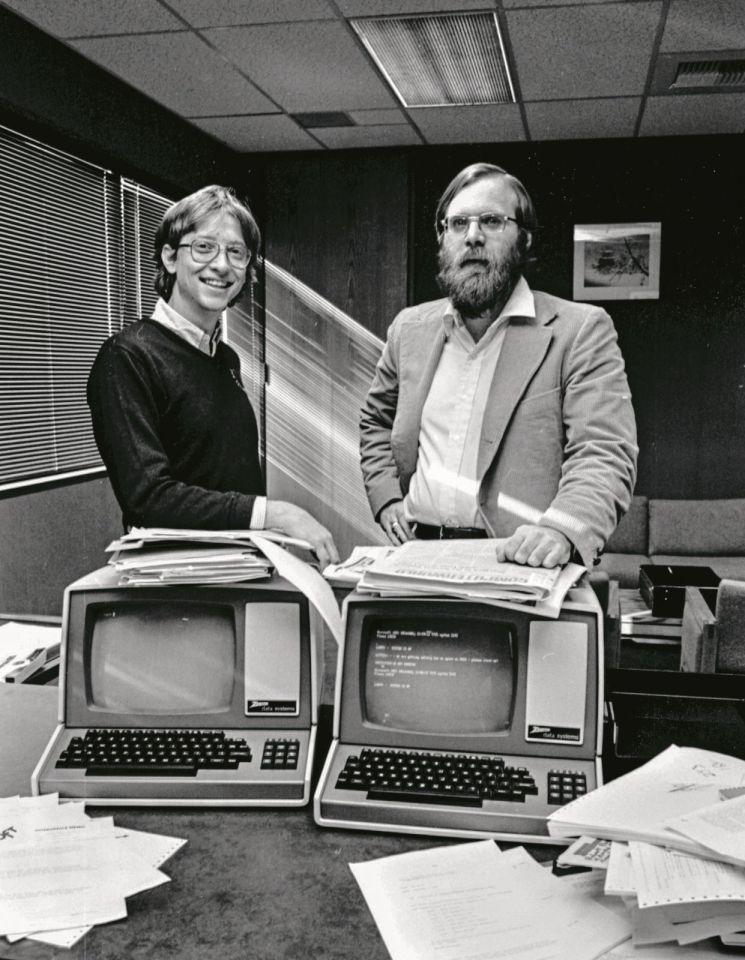 Microsoft founders Bill Gates (left) and Paul Allen. Photo by Barry Wong/The Seattle Times·Provided by Open Books
At the end of the book, Bill expresses concern that readers might understand him only as a fragmented character. Rather than being confined to the labels of a genius boy, an outstanding engineer, or a global billionaire, he hopes readers will also see the environments and people who influenced the path he walked. He candidly acknowledges that luck was on his side, emphasizing the benefits of the 'birth lottery' of being born a white male and the opportunities he had to encounter semiconductor chips and programming.
In the final section, "Acknowledgments," spanning an impressive 11 pages, he expresses gratitude to those who had a significant impact on him. He also revealed plans to publish a second memoir covering his time running Microsoft and a third memoir focusing on his current life and activities with the Gates Foundation. However, according to Open Books Publishing, which published his memoir in Korean, the writing is currently in the planning stage, and the publication schedule is not yet determined.
Source Code: The Beginning | Written by Bill Gates | Translated by An Jin-hwan | 520 pages | 28,000 KRW
© The Asia Business Daily(www.asiae.co.kr). All rights reserved.
![Clutching a Stolen Dior Bag, Saying "I Hate Being Poor but Real"... The Grotesque Con of a "Human Knockoff" [Slate]](https://cwcontent.asiae.co.kr/asiaresize/183/2026021902243444107_1771435474.jpg)


















