Holzmann Warns of Inflation Risks, Urges Caution
Bundesbank President Joins Calls for Prudence
Prolonged High Rates Could Push Inflation Below Target
There is growing caution in Europe regarding interest rate cuts. Despite aggressive rate cuts last year, concerns about a rebound in inflation are increasing due to U.S. President Donald Trump's tariff policies.
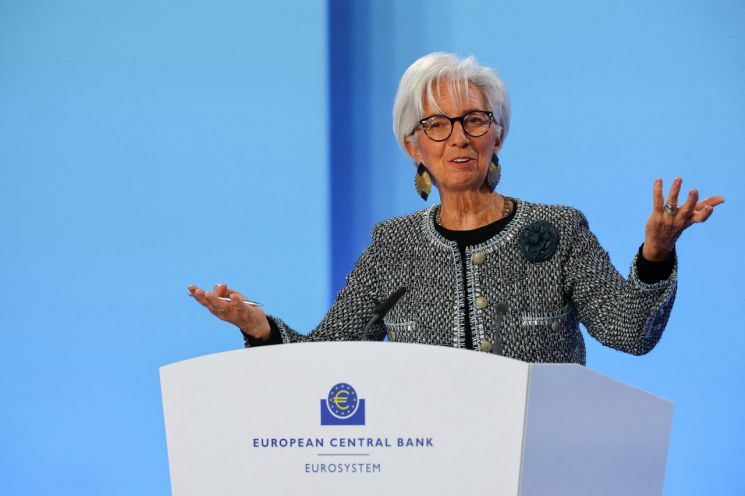
Robert Holzmann, Governor of the Austrian National Bank and a member of the European Central Bank (ECB) Monetary Policy Committee, mentioned Trump's tariff threats in an interview with CNBC on the 12th (local time), saying, "We need to be cautious because there is a risk of inflation."
He added, "According to our models, it is true that growth decreases when trade frictions increase, but conversely, inflation also rises, so more patience is required," and said, "In my view, the pace of disinflation (slowing inflation) will not accelerate." Governor Holzmann is considered the most hawkish (favoring monetary tightening) among the ECB policymakers.
He made it clear that the goal of monetary policy is focused more on taming inflation than on boosting growth. Governor Holzmann said, "Our job is to deal with inflation, not growth," and stated that a big cut (a 0.50 percentage point policy rate cut) to stimulate the economy is not a good idea. He added that policymakers need to consider inflation caused by U.S. tariff measures and proceed cautiously.
Isabel Schnabel, an ECB Executive Board member regarded as a key figure, also warned in a speech in Nuremberg, Germany, the previous day that uncertainty in the trade sector has increased "dramatically," and that structural crises such as high energy prices cannot be resolved by cutting interest rates.
The ECB has cut policy rates five times from June last year to last month amid concerns that the growth engine of the Eurozone (20 countries using the euro) might stall. In June last year, the ECB shifted its monetary policy direction for the first time in 1 year and 11 months by cutting policy rates by 0.25 percentage points, and since then, the deposit rate, the benchmark for monetary policy, has fallen from 4.00% to 2.75% per annum. Among the policy rates such as the main refinancing rate, deposit rate, and marginal lending rate, the ECB mainly bases its monetary policy on the deposit rate.
The market expected the deposit rate to fall to 2% per annum by the end of this year, reaching the neutral rate zone. The neutral rate refers to the interest rate that neither overheats nor depresses the economy and allows the achievement of potential growth. In a Bloomberg survey, economists also predicted that the ECB would accelerate easing until the end of this year to lower rates to a level where the European economy would not face contractionary pressure. However, with President Trump's tariff policies emerging as a wild card, it has become difficult to be confident that inflation will fall to a controllable level.
Joachim Nagel, President of the Bundesbank (Germany's central bank), also expressed caution about rate cuts. In a lecture held in London, UK, on the same day, he said, "There is no reason to act hastily in the current uncertain environment," and "The closer we get to the neutral rate, the more appropriate a gradual approach becomes." The Bundesbank considers the neutral rate range to be between 1.8% and 2.5%.
However, he emphasized that "making monetary policy decisions based on uncertain estimates of neutrality would be risky," and stressed that the ECB evaluates using various financial, real economy, and other indicators.
ECB President Christine Lagarde also said in a speech to the European Parliament on the 10th that disinflation is progressing smoothly but warned, "If global trade frictions increase, the inflation outlook for the Eurozone will become more uncertain."
On the same day, U.S. January consumer price inflation came in at 3.0% year-on-year, exceeding forecasts, prompting officials to issue hawkish remarks repeatedly. According to Bloomberg News, the market's expectation for additional rate cuts this year also decreased from 88 basis points (1bp = 0.01 percentage points) on the 10th to 75 basis points on the day.
On the other hand, some voices express concern that inflation could fall below the target due to the weakness of the Eurozone economy.
Philip Lane, Chief Economist of the ECB, argued that if interest rates remain high, prices could fall below the ECB's target of 2%, and that monetary easing policies should continue. He warned that tightening policies could weaken economic activity and put downward pressure on inflation. If the economy contracts, the recovery of consumption and investment will slow, which could act as a factor lowering visible prices.
In a speech at the Peterson Institute for International Economics on the 5th, he said, "To balance the risks that could fuel excessive inflation, central bank policy easing should continue," and added, "It is appropriate to maintain neutrality without overestimating the risks of inflation rising or falling." He also predicted that tariffs imposed by the U.S. on the European Union (EU) could burden economic growth but would have limited impact on inflation.
© The Asia Business Daily(www.asiae.co.kr). All rights reserved.

















