CPI Rises 3% Year-on-Year in January, Exceeding Expectations
Powell: "We Have Not Reached Inflation Target... Will Maintain Tight Policy"
Wall Street: Some Say "The Rate-Cutting Cycle Is Over"
Last month, the U.S. Consumer Price Index (CPI) rose unexpectedly, returning to the 3% range. As Jerome Powell, Chair of the Federal Reserve (Fed), and other central bank officials repeatedly expressed caution and reaffirmed their commitment to maintaining tight monetary policy, the likelihood of the Fed resuming monetary easing has diminished, with the timing likely to be pushed back further.
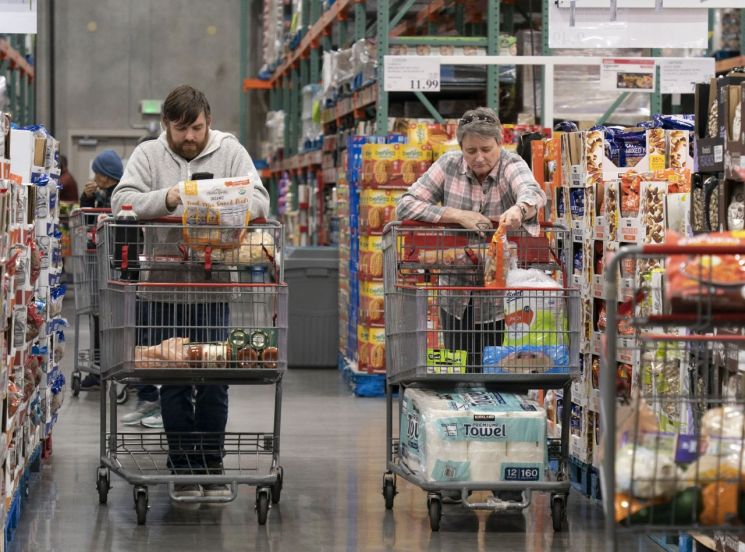
On February 12 (local time), the U.S. Department of Labor announced that the CPI for January 2025 increased by 3% year-on-year. This is 0.1 percentage points higher than the previous month’s figure of 2.9% in December 2024, and it also exceeded market expectations of 2.9%. On a month-over-month basis, the January CPI rose 0.5%, surpassing both the previous month’s figure of 0.4% and the forecast of 0.3%.
Rises in housing costs, food, and energy prices all contributed to the CPI increase. By category, housing costs rose 0.4% from the previous month, accounting for 30% of the overall increase and continuing to impede the decline in inflation. Energy prices climbed 1.1% month-over-month, with gasoline prices jumping by 1.8%. Grocery costs increased by 0.4%, while dining out became 0.2% more expensive, resulting in an overall 0.4% rise in food prices. Due to avian influenza, egg prices surged by 15.2%, accounting for two-thirds of the total increase in grocery costs. This spike in egg prices is the highest since June 2015.
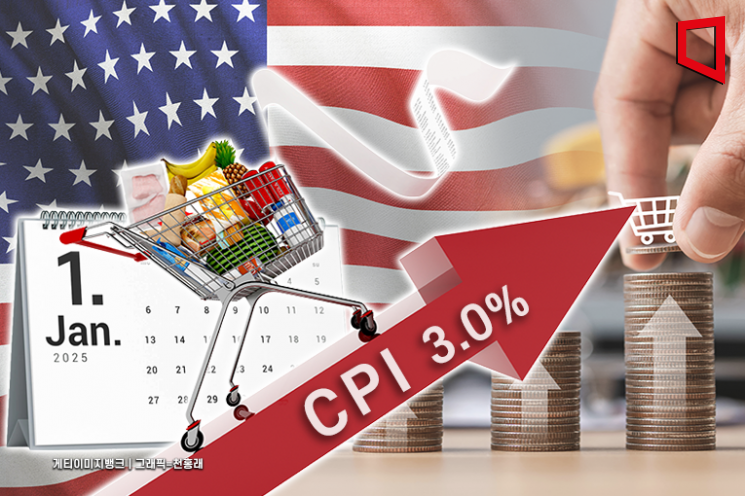
The core CPI, which excludes the volatile food and energy sectors, rose 0.4% from the previous month and jumped 3.3% year-on-year. Both figures were higher than in December 2024 (0.2% and 3.2%, respectively) and also exceeded market expectations (0.3% and 2.9%, respectively). The core CPI is closely watched by the Fed as it reflects underlying inflation trends.
With the U.S. economy and labor market remaining robust and inflation rebounding, Chair Powell and other Fed officials have signaled that the timing for resuming interest rate cuts may be delayed. Previously, the Fed began monetary easing in September 2024, lowering the key interest rate from a peak of 5.25-5.5% through three consecutive cuts to 4.25-4.5%, before holding rates steady for the first time last month.
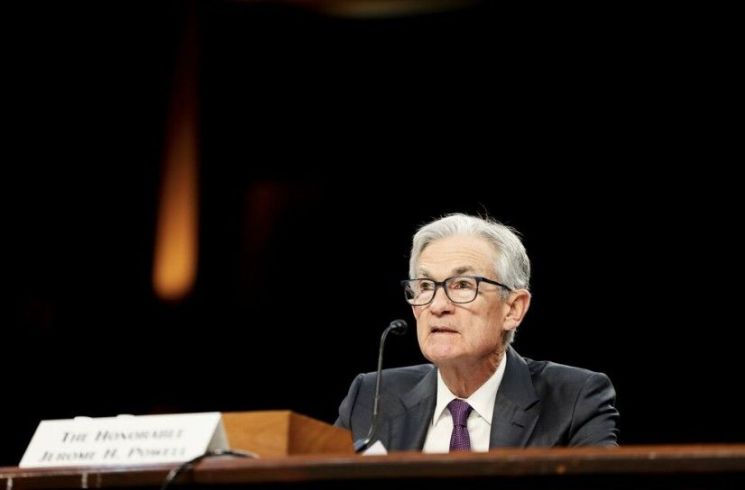
Chair Powell, appearing before the House Financial Services Committee, commented on the newly released CPI data, stating, "We are close (to our target), but we are not there yet," and added, "For now, we want to maintain a restrictive policy." For the second consecutive day, he reiterated a cautious stance on monetary easing.
Raphael Bostic, President of the Federal Reserve Bank of Atlanta, said at a public event that "it will take time to figure out what is happening," and indicated that additional rate cuts will occur "later (than expected)." Austan Goolsbee, President of the Federal Reserve Bank of Chicago, told The New York Times that the January CPI report was "sobering," and warned, "If this kind of data continues for several months, there will be no doubt that the Fed has not completed its mission." However, he also emphasized that he would not overreact to a single data point.
Former President Donald Trump also commented on the surprise jump in January CPI. On his social media platform, Truth Social, he wrote, "BIDEN INFLATION UP!" criticizing former President Joe Biden’s economic policies for driving up prices. Before the CPI announcement, Trump also posted, "Rates must be cut. This should happen along with the upcoming tariffs." In response, Chair Powell told Congress, "We will do our job," and stated that the White House would not influence monetary policy.
The market is quickly lowering its expectations for rate cuts. According to the CME FedWatch Tool, the federal funds futures market is now pricing in a 67.2% chance that the Fed will keep rates unchanged throughout the first half of the year, up from 34.1% a week ago. The probability that rates will remain unchanged for the entire year has also climbed from 10.4% to 28.7% over the past week.
Some on Wall Street are now analyzing that the Fed’s monetary easing cycle has ended. Josh Jamner, investment strategy analyst at ClearBridge Investments, said, "The Fed said it would wait and see, but the hot January CPI report means they will wait even longer," adding, "This report put the final nail in the rate-cut cycle. The rate-cutting phase is over."
Following the surprise rebound in inflation, U.S. Treasury yields surged and major indices on the New York Stock Exchange mostly declined. The benchmark 10-year U.S. Treasury yield, a global standard for bond rates, jumped 9 basis points from the previous session to 4.62%, while the 2-year Treasury yield, which is sensitive to monetary policy, rose 6 basis points to 4.35%. On the New York Stock Exchange, the Dow Jones Industrial Average and the S&P 500 Index fell by 0.5% and 0.27%, respectively, while the Nasdaq Index edged up by 0.03%.
© The Asia Business Daily(www.asiae.co.kr). All rights reserved.



















