National Integrated Bio Big Data Project in Full Swing
Stored in Liquid Nitrogen Freezers After Inspection
Available Free to Researchers Starting in 2026
On the afternoon of the 11th, in front of the back gate of the National Central Human Bioresource Bank in Cheongju, Chungbuk, three researchers from the Korea Disease Control and Prevention Agency (KDCA) were waiting anxiously in the chilly weather. When a truck arrived, they carefully began moving a refrigerated box from the truck into the bank. The contents of the box were human biospecimens such as blood, serum, plasma, and exudate. Human biospecimens refer to human-derived materials like blood, urine, and post-surgical tissues, as well as genetic information, which are used as research materials in healthcare studies. The specimens received that day were the first human biospecimens to arrive since the main phase of the "National Integrated Bio Big Data Construction Project" began in December last year.
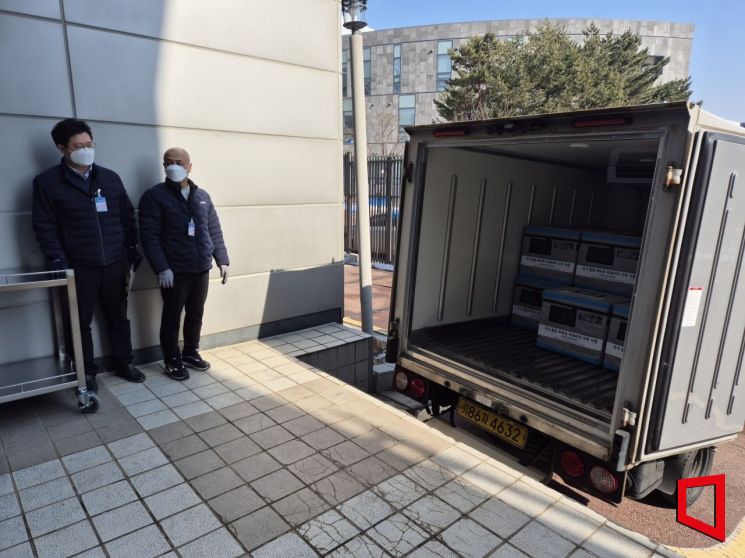 Researchers from the Korea Disease Control and Prevention Agency are preparing to unload human biological resources delivered to the National Central Human Body Resource Bank in Cheongju, Chungbuk, around 1:30 PM on the 11th. Photo by Choi Taewon
The human biospecimens were immediately moved to the second floor of the bank for inspection. This process involves verifying whether the biospecimens match the pre-registered information and checking for any defects. The researchers removed frost from each vial (containers used for storing pharmaceuticals and similar materials) containing the frozen biospecimens, scanned barcodes, and checked for any discrepancies with the pre-registered data. Fortunately, all the first biospecimens of the National Integrated Bio Big Data Construction Project passed inspection and were stored in a liquid nitrogen freezer. If any specimens fail inspection, they are returned to the producing institution.
The KDCA announced on the 12th that the first biospecimen intake procedure since the start of the main phase of the National Integrated Bio Big Data Project last year was successfully completed. The project is a large-scale initiative commissioned by the Korea Research Institute of Bioscience and Biotechnology and supported by the Ministry of Health and Welfare, the Ministry of Science and ICT, the Ministry of Trade, Industry and Energy, and the KDCA to establish a personalized precision medicine platform tailored to Koreans.
This project integrates and manages medical data such as clinical information, public data, and genomic data centered on individuals, based on voluntary participation and consent from the public. The goal for the first phase (2024?2028) is to recruit a total of 772,000 participants, including patients with rare diseases, patients with severe diseases, and general participants. The plan is to build a bio big data set of 1 million people through the second phase (2029?2032).
To achieve this, 38 hospitals nationwide, including Seoul National University Hospital and Samsung Medical Center, participate as recruitment institutions. Typically, attending physicians explain the necessity of research to patients with relevant diseases and obtain consent to collect specimens. Participation is also possible on an individual basis. Participants can visit institutions corresponding to their participation type (rare disease patients, severe disease patients, general participants), complete consent forms and questionnaires, and donate specimens such as blood and urine along with clinical information.
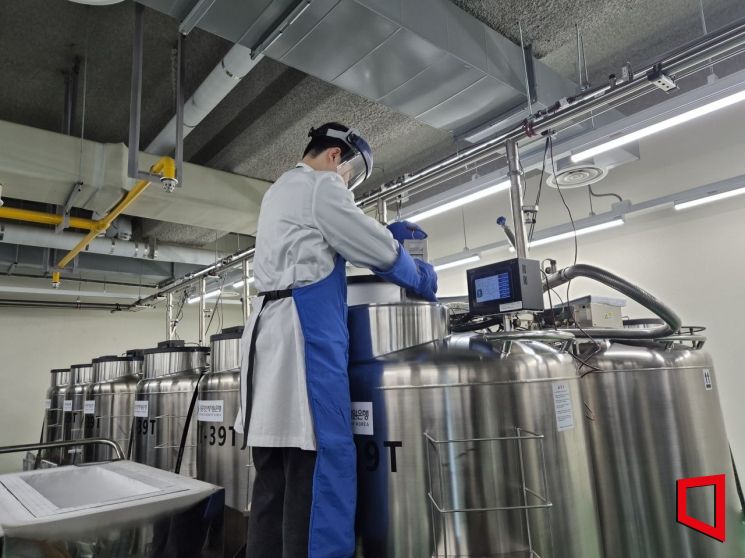 A researcher from the Korea Disease Control and Prevention Agency is placing inspected human biological materials into a liquid nitrogen freezer at the National Central Human Body Resource Bank in Cheongju, Chungbuk on the 11th. Photo by Choi Taewon
Data and specimens collected from participants are securely stored and utilized through data banks and bio banks. A bio bank is an institution that collects and preserves human-derived materials or genetic information along with related epidemiological and clinical data. Starting in 2026, the data will be made available to researchers at universities and hospitals for studies on rare and intractable diseases, precision medicine, digital healthcare development, and more.
The National Integrated Bio Big Data Project was launched amid growing recognition of human biospecimens as a national strategic asset. Bio big data is essential for developing new drugs and medical devices. For example, during the COVID-19 pandemic, a domestic company obtained COVID-19 positive specimens from the National Central Human Bioresource Bank and successfully developed a rapid diagnostic kit. Professor Kim Nan-hee of Korea University Ansan Hospital also received Korean-specific genomic chip data and developed a diabetes prediction system last year. Recognizing this importance, countries like the United States and the United Kingdom have already secured human biospecimens for 650,000 and 500,000 people, respectively.
Park Hyun-young, director of the National Institute of Health, stated, "We aim to contribute to public health improvement by systematically collecting and managing high-quality, high-value human biospecimens for use in healthcare research and industry." She added, "We hope domestic researchers will receive abundant biospecimens free of charge and that their good ideas will shine. For researchers without supercomputers, we will provide access to the KDCA's computing power through a cloud system."
© The Asia Business Daily(www.asiae.co.kr). All rights reserved.
![Clutching a Stolen Dior Bag, Saying "I Hate Being Poor but Real"... The Grotesque Con of a "Human Knockoff" [Slate]](https://cwcontent.asiae.co.kr/asiaresize/183/2026021902243444107_1771435474.jpg)
















