Industry and Construction Committee Approves Raising Residential Floor Area Ratio in Commercial Zones from 400% to 540%
City Warns of Side Effects: "Accelerated Unsold Apartments Rather Than Economic Revitalization"
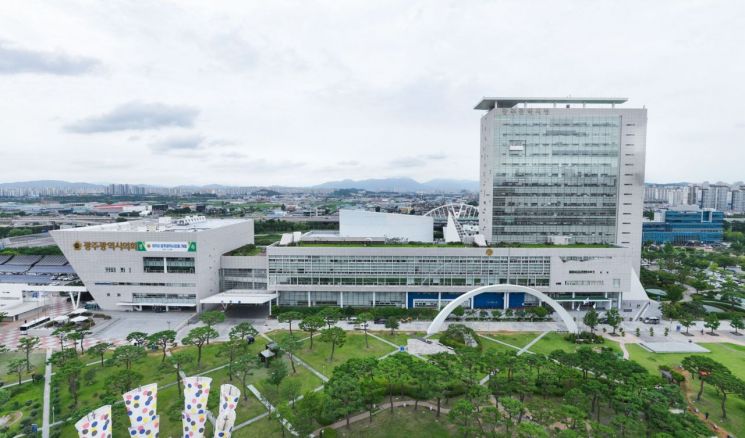
Gwangju City expressed strong regret after the 'Urban Planning Ordinance Amendment', which includes easing floor area ratio regulations for residential use in central commercial areas, passed the city council's standing committee despite opposition from the executive branch.
The Gwangju City Council's Industry and Construction Committee on the 11th approved an amendment to the ordinance that raises the 'floor area ratio for residential use (residential complex buildings, quasi-residential living accommodation facilities) in commercial areas' from the current 400% or less to 540% in central commercial areas, an increase of 140%.
In response, Gwangju City pointed out that this amendment goes against residential policy. The city argued that if residentialization of commercial areas accelerates, it would undermine the purpose of designating central commercial areas to promote commercial and business functions, and inevitably lead to the loss of their role as the urban center and as a support area for residential districts.
In particular, the city claims that if high-density residential complexes are built in central commercial areas with poor residential and educational environments, there will be a shortage of infrastructure such as schools and roads, and the mix of various hazardous facilities like entertainment and lodging establishments with residential facilities will significantly lower the quality of life for residents.
The city also questioned whether standalone apartments or residential facilities in commercial areas would contribute to revitalizing the local economy. With the housing supply rate in Gwangju reaching 105.5% as of December 2023 and a recent increase in unsold apartment units, the city believes that additional housing supply policies are not appropriate.
Kim Junyoung, Director of Urban Space, stated on the 12th, "The amended urban planning ordinance goes against Gwangju City's housing policy, considering the current increase in unsold apartments and the loss of central commercial areas' function as the urban and residential support center. While we respect the council's legislative authority, introducing a system without considering the realities of implementation will clearly cause side effects, so we have no choice but to oppose it."
© The Asia Business Daily(www.asiae.co.kr). All rights reserved.
![Clutching a Stolen Dior Bag, Saying "I Hate Being Poor but Real"... The Grotesque Con of a "Human Knockoff" [Slate]](https://cwcontent.asiae.co.kr/asiaresize/183/2026021902243444107_1771435474.jpg)















