Lutnick and Greer Poised to Take Office in the U.S.
Pro-Business Lutnick, Former Financial CEO
Greer, Who Led the U.S.-China Trade War
Heavier Tariff Burdens and Pressure for Local Production
Potential for High Tariffs on Targeted Countries and Products
With the imminent confirmation hearings for Howard Lutnick, nominee for U.S. Secretary of Commerce, and Jayme Greer, nominee for U.S. Trade Representative (USTR), the tariff war triggered by President Donald Trump is expected to penetrate into more segmented areas. Both individuals support protecting U.S. manufacturing and a tough trade policy toward China, meaning Korean companies are likely to face increased tariff burdens on exports to the U.S. as well as pressure to expand production within the United States.
According to local media and trade experts on the 12th, the two nominees, who were appointed last November, are awaiting Senate confirmation votes and are expected to begin full-scale policy implementation immediately upon approval. Lutnick is expected to lead economic strategy, while Greer will strengthen legal enforcement, pushing the trade stance of the Trump administration’s second term more precisely and swiftly.
In this regard, the U.S. Wall Street Journal (WSJ) recently reported, "Lutnick and Greer are expected to take office within the next few weeks," adding, "This will accelerate new tariffs from Washington (Trump administration)."
Given Korea’s sensitivity to trade, close attention must be paid to their movements. Seongdae Cho, head of the Trade Research Division at the Korea International Trade Association, evaluated, "Lutnick has acted as a spokesperson representing President Trump’s economic stance, and Greer also maintains a tough position against China."
Lutnick is a financier who served as CEO of investment bank Cantor Fitzgerald for over 30 years. Based on his strong pro-business stance, he is likely to pursue trade policies supporting U.S. manufacturing and financial sectors. At his Senate confirmation hearing last December, he stated, "It is now time for our allies to cooperate with us in relocating production bases to the U.S.," indicating that revitalizing domestic manufacturing is his top priority. Analysts suggest Lutnick is likely to strengthen the competitiveness of U.S. companies through corporate tax cuts and expanded incentives while pressuring allied countries to increase investment in the U.S.
Greer served as chief of staff to former USTR Robert Lighthizer during Trump’s first term and was a key figure in managing the trade war with China. Based on a thoroughly protectionist viewpoint, he is expected to interpret World Trade Organization (WTO) rules from a U.S.-centric perspective and legally justify retaliatory trade measures against other countries. At a Senate Finance Committee hearing earlier this month, he emphasized, "There is a need to rapidly restructure the international trade system to align with U.S. interests."
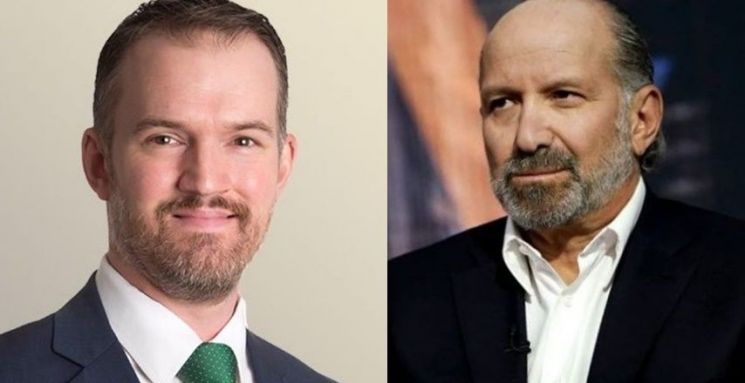 (From left) Jameson Greer, nominee for the United States Trade Representative (USTR), and Howard Lutnick, nominee for Secretary of Commerce. Photo by Asia Economy DB
If Lutnick and Greer assume their posts, the U.S.-China trade war is expected to intensify further. In particular, the U.S. is likely to increase pressure on China in sectors such as semiconductors, batteries, and advanced technologies. Wonkyu Shin, visiting research fellow at the Korea Economic Research Institute, said, "Lutnick and Greer are considered hardliners within the Trump administration. If broad tariffs are difficult to implement during internal discussions, they are likely to actively pursue high tariffs targeting specific countries and products," adding, "Both are also likely to support expanding U.S. authorities’ discretion in trade remedy measures such as anti-dumping and countervailing duties."
Korean companies need to closely monitor the changes in trade policies led by these two and hasten the preparation of response strategies. Since major export industries such as automobiles and semiconductors are likely targets, companies should review supply chain adjustments and the possibility of expanding local production.
Areum Han, senior research fellow at the Korea International Trade Association, analyzed, "The two nominees will move in a direction that realizes President Trump’s vision," and "Tariff measures are likely to be implemented faster than before." Accordingly, the Korean government and companies need to secure negotiating power to mitigate U.S. trade pressures.
If economic pressure from the Trump administration intensifies, it is highly likely to directly affect relations with North Korea. Strengthened U.S. protectionist policies could lead to tougher sanctions on China, which may translate into increased economic pressure on North Korea. There are also expectations that the U.S. will demand stronger enforcement of North Korea sanctions from allies including Korea and Japan.
© The Asia Business Daily(www.asiae.co.kr). All rights reserved.
![Clutching a Stolen Dior Bag, Saying "I Hate Being Poor but Real"... The Grotesque Con of a "Human Knockoff" [Slate]](https://cwcontent.asiae.co.kr/asiaresize/183/2026021902243444107_1771435474.jpg)















