First Korean Beverage Company to Surpass 4 Trillion Won in Sales
Driven by Overseas Business such as Philippine Pepsi and Core Products like Zero-Calorie Drinks and Saero
Profitability Recovery Hinges on Overcoming Domestic Market Slump
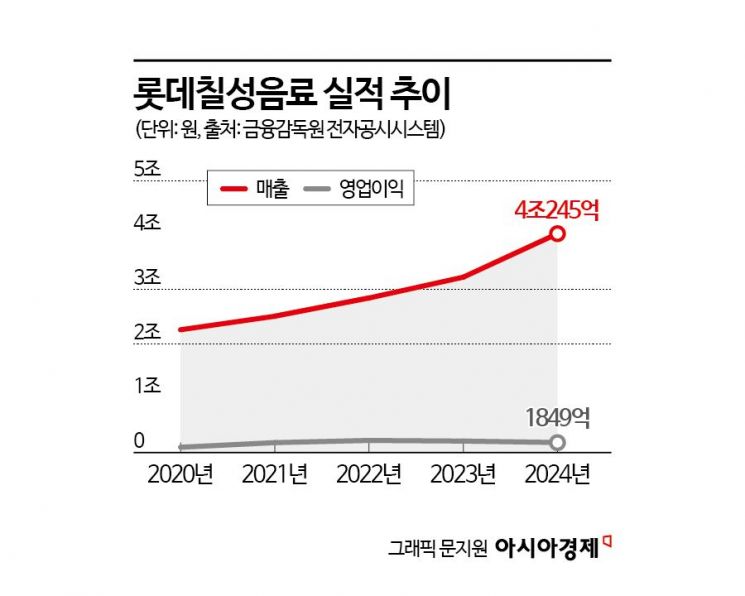
Lotte Chilsung Beverage became the first comprehensive beverage company in South Korea to enter the '4 trillion won club' in sales last year. However, due to sluggish domestic market conditions, the core beverage business underperformed, resulting in a decline in operating profit. Since a short-term rebound in the domestic market is unlikely, Lotte Chilsung is expected to continue expanding its size mainly through overseas markets this year, while focusing on improving profitability domestically by reducing fixed costs and enhancing cash flow.
First Beverage Company to Join the '4 Trillion Won Club'
Lotte Chilsung announced on the 10th through a public disclosure that its sales last year were tentatively estimated at 4.0245 trillion won, a 24.8% increase from the previous year (3.2247 trillion won). While sales surpassed 4 trillion won for the first time in history, operating profit decreased by 12.2% to 184.9 billion won from 210.7 billion won a year earlier, and net profit also dropped sharply by 64% to 60 billion won.
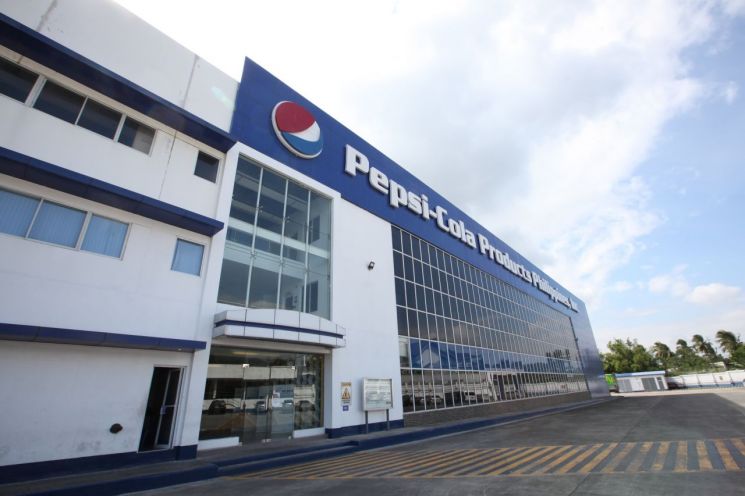
The decisive factor behind the rapid growth from 3 trillion won in annual sales in 2023 to over 4 trillion won within a year was the overseas business. Last year, overseas sales reached 1.2456 trillion won, nearly tripling from 426.5 billion won the previous year, and operating profit increased by 135.1% (to 41 billion won from 23.5 billion won). Starting from the fourth quarter of 2023, Lotte Chilsung consolidated the Philippines' second-largest beverage company, Philippine Pepsi (PCPPI), as a subsidiary. The Philippine entity recorded a 9.0% increase in sales last year, surpassing 1 trillion won, and successfully turned profitable as the business environment improved. In addition to Philippine Pepsi, sales growth and operating profit improvements were achieved by subsidiaries in Pakistan and Myanmar, contributing to the overall performance.
On the other hand, the core beverage business faltered. Beverage sales last year were 1.9097 trillion won, down 2.2% from the previous year, and operating profit fell 35.7% to 104.2 billion won. The domestic economic slowdown and rising raw material costs for sugar, oranges, and coffee led to underperformance across major categories including carbonated drinks, coffee, bottled water, and juice. However, overseas markets saw stable growth of 7.3% year-on-year, driven by strong performances of products like Milkis and Let's Be, providing some relief to the business division's results.
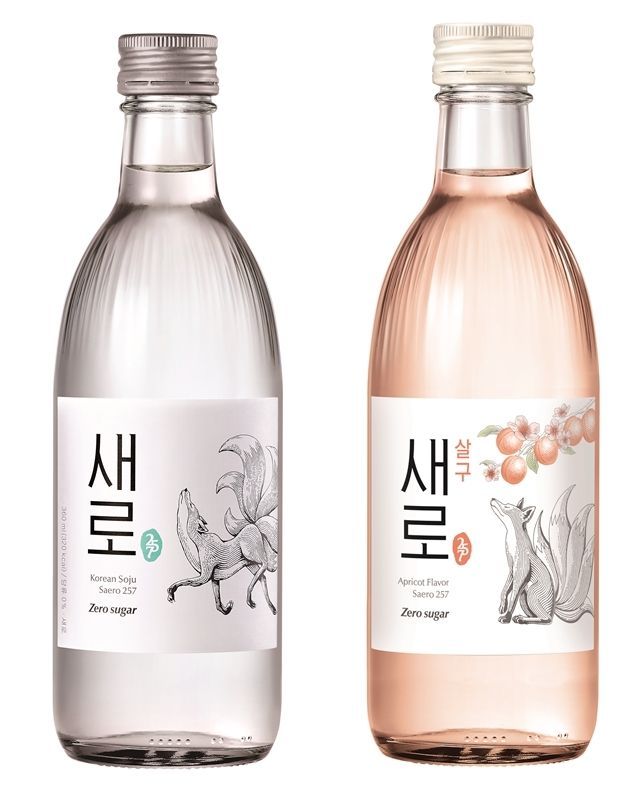
The liquor business grew despite economic downturns and high inflation dampening consumer sentiment. Last year's cumulative sales were 813.4 billion won, up 1.2% from the previous year, and operating profit increased by 3.4% to 34.7 billion won. The soju segment, led by the steady growth of 'Saero,' grew 6.5% to 360.8 billion won in sales, but other segments did not perform well. The RTD (ready to drink) product line grew by 7.8%, helping somewhat, but its share is small. Beer sales grew only 2.3% to 82.5 billion won, while cheongju, wine, and spirits declined.
Continued Growth in Overseas Markets... Focus on Profitability Improvement Domestically
Lotte Chilsung faces the dual challenge this year of continuing top-line growth while improving profitability. However, the domestic market remains challenging. With a slowdown in processed food consumption and a depressed dining-out market, it will be difficult for beverage and liquor product sales to rebound in the short term. Although the stabilization of raw sugar prices is a positive factor, rising won-dollar exchange rates and aluminum prices pose additional burdens.
Therefore, the company is relying on overseas markets. Lotte Chilsung aims to increase the proportion of overseas sales from 37% last year to 40% this year, placing high hopes on foreign markets. The overseas market outlook is positive, centered on the Philippines and Myanmar subsidiaries. The Philippine subsidiary is consolidating production plants and logistics, which is expected to sustain profitability improvements, while the Myanmar subsidiary is expanding production facilities, enabling overall growth in scale.
Ryu Eun-ae, a researcher at KB Securities, said, "According to market research firm Euromonitor, the Philippine beverage market is expected to grow by more than 10% this year. If the Philippine subsidiary completes its internal profitability improvement project by the third quarter, the company’s forecasted annual performance should be achievable." She added, "The Myanmar subsidiary, having completed its expansion, will also contribute to the growth of overseas subsidiary performance based on high profit margins."
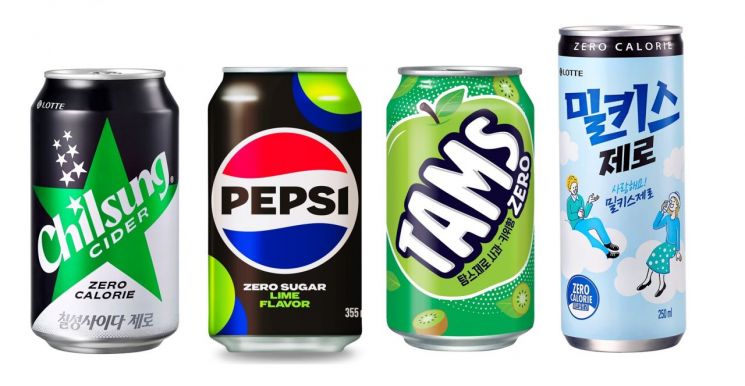
Lotte Chilsung is also expected to focus on improving profitability throughout this year. Although the outlook for the domestic market is not positive, reducing transaction costs and fixed expenses and improving cash flow could enable profitability improvements, as the base effect from last year's poor performance is not significant. Additionally, despite domestic sluggishness, the core categories such as zero-calorie carbonated drinks and soju have been steadily improving, so if consumer sentiment recovers to some extent, sales growth beyond expectations is anticipated.
Meanwhile, according to financial information provider FnGuide, Lotte Chilsung’s sales this year are expected to grow 4.7% from last year to 4.2492 trillion won, continuing top-line growth. Operating profit is forecast to increase by 19.8% to 243.5 billion won, and net profit is also expected to rise to 146.9 billion won, indicating successful profitability improvement.
© The Asia Business Daily(www.asiae.co.kr). All rights reserved.



















