Japan's Special Exemptions Likely to Be Lifted
South Korea Also Expected to Face Blanket Tariffs Instead of Quotas
Next Targets: Automobiles, Semiconductors, Pharmaceuticals
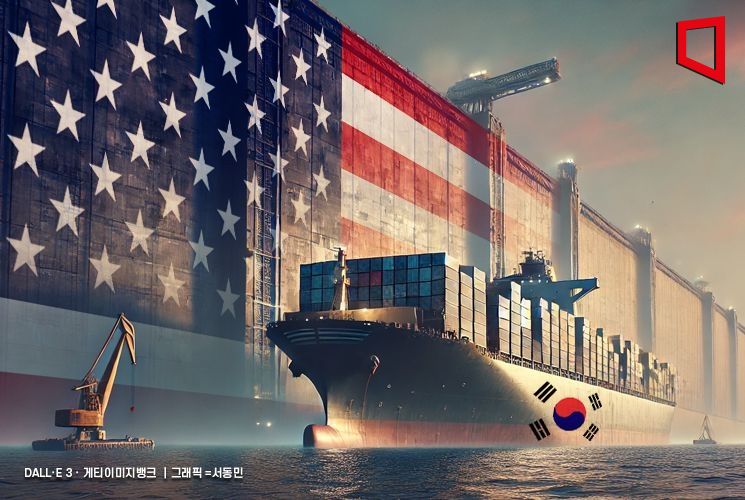
In Japan, concerns have emerged about the impact on industries as the tariff bombshells triggered by Trump on steel and aluminum become a reality. In particular, greater repercussions are anticipated following President Donald Trump's remarks that additional tariffs could be imposed on automobiles, semiconductors, and pharmaceuticals in the future.
Trump Signs Proclamation Imposing 25% Tariffs on Steel and Aluminum
Japan's public broadcaster NHK reported on the 11th that "President Trump signed a proclamation on the 10th imposing a 25% tariff on steel and aluminum products imported into the United States," adding that "Japanese products are also expected to be subject to this." This measure is based on Section 232 of the Trade Expansion Act and is scheduled to take effect from March 4.
NHK noted that President Trump has indicated no exceptions will be made, and it is expected that special treatment for Japanese products will be abolished. During Trump's first term in office in 2018, the U.S. imposed tariffs of 25% on steel and 10% on aluminum imports from many countries including Japan. However, under the subsequent Joe Biden administration starting in 2022, Japanese steel products were granted an exemption through a tariff quota allowing up to 1.25 million tons annually.
The Nihon Keizai Shimbun (Nikkei) also reported on Trump's tariff imposition on steel and aluminum products, stating that "with the suspension of the exemption, Japanese products are expected to be included." Nikkei further mentioned that "President Trump hinted at the possibility of negotiations with Australia regarding exemptions," adding that "if exemptions are suspended, tariff burdens on products from Canada, Mexico, Australia, the European Union (EU), the United Kingdom, Brazil, South Korea, and Japan will inevitably increase significantly." Kyodo News also expressed concerns, saying "Japan is likely to be included," and warned that "reactions from various countries are inevitable and this could disrupt global economic supply chains."
Next Targets: Automobiles, Semiconductors, Pharmaceuticals
NHK and Nikkei highlighted that President Trump has clearly indicated plans to consider imposing additional tariffs not only on steel and aluminum but also on automobiles, semiconductors, and pharmaceuticals in the future. Regarding automobiles, it appears the measures are aimed at the EU and other countries.
President Trump stated, "They export cars to the United States, but American cars do not receive the same treatment," adding, "While the U.S. imposes tariffs of 0% or 2.5%, some countries impose high tariffs."
Hardline Trump... No Exceptions Likely for South Korea
Germany has already announced retaliatory measures against steel and aluminum tariffs. According to Germany's public broadcaster DW, Robert Habeck, Germany's Minister for Economic Affairs and Vice Chancellor, said, "The most important thing for Germany and the EU is to maintain cooperative relations with the United States," but also made clear that "Europe must respond unitedly and firmly to unilateral trade restrictions." In response, Trump maintained a hardline stance, saying, "I don't care if there are retaliations."
Of course, South Korea is not exempt from the U.S.'s tough tariff stance. President Trump has stated, "There are no exceptions or exemptions." South Korea has also been subject to a quota system limiting exports to the U.S. to about 2.63 million tons annually in exchange for tariff-free treatment during Trump's first administration. South Korea's steel exports to the U.S. were approximately 2.53 million tons in 2022, 2.59 million tons in 2023, and 2.77 million tons in 2024. These figures represent a sharp decline compared to the pre-quota annual export volume of 3.4 million tons to the U.S.
© The Asia Business Daily(www.asiae.co.kr). All rights reserved.
![Clutching a Stolen Dior Bag, Saying "I Hate Being Poor but Real"... The Grotesque Con of a "Human Knockoff" [Slate]](https://cwcontent.asiae.co.kr/asiaresize/183/2026021902243444107_1771435474.jpg)















