Trump Announces 25% Tariff on Steel and Aluminum
Canada and Mexico Hit Directly... Impact on Korea Unavoidable
Analysis: "Steel Tariff Target Is 'Dumping' China"
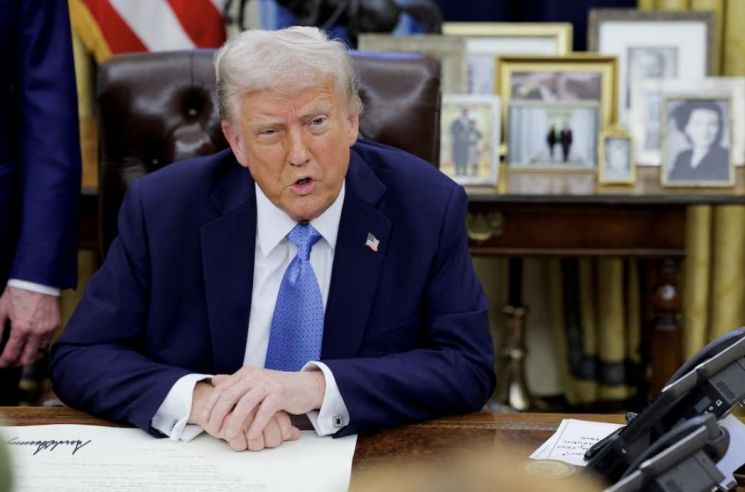
U.S. President Donald Trump's announced 25% tariff on steel is expected to impact Asian countries including Korea, in addition to major U.S. import partners Canada and Mexico. Korea ranks 4th in steel exports and 3rd in aluminum exports to the U.S.
According to statistics from the International Trade Administration (ITA) under the U.S. Department of Commerce cited by CNBC on the 10th (local time), Canada was the largest steel exporter to the U.S. in 2024, with imports totaling $7.14 billion.
Following Canada were Mexico ($3.5 billion), Brazil ($2.99 billion), Korea ($2.9 billion), and Germany ($1.9 billion) in terms of steel import value.
Canada was also the top aluminum exporter to the U.S., with imports valued at $9.42 billion. Next were the United Arab Emirates (UAE, $920 million), Korea ($780 million), China ($770 million), and Bahrain ($530 million).
Given the large volume of steel exports from Canada and Mexico to the U.S., these countries are expected to be directly hit by the 25% tariff announced by President Trump.
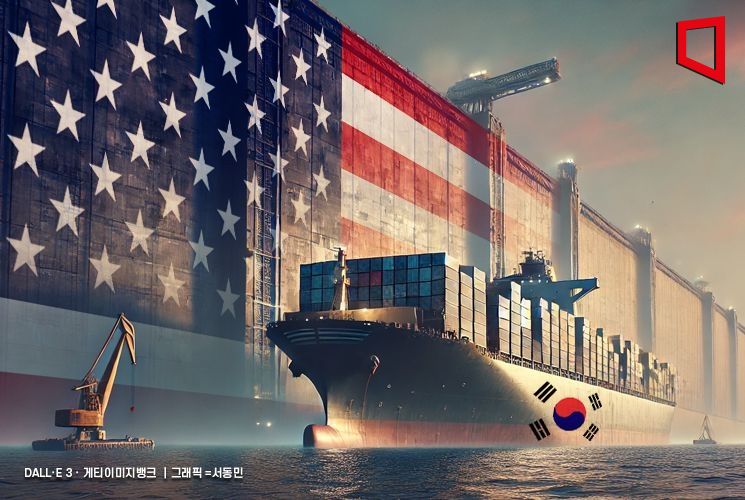
Korea, Vietnam, Japan, and others are also expected to be affected by the steel and aluminum tariff measures. Last year, Vietnam and Taiwan’s steel exports to the U.S. increased by 143% and 75%, respectively, compared to the previous year. Korea’s steel exports to the U.S. grew by 7%.
Bloomberg reported, "Korea, which exports both steel and aluminum to the U.S., has already been seeking alternative markets," adding, "Korea’s current steel exports to the U.S. are about 70% of the average annual export volume during the tariff attacks of Trump’s first administration from 2015 to 2017, but it still exports the most steel to the U.S." According to Korea International Trade Association statistics, the U.S. accounted for about 13% of Korea’s total steel exports last year.
There is also analysis that the real target of the steel tariff measures is China. China ranked 10th among steel exporters to the U.S. last year with $8 billion in exports. However, it is pointed out that the U.S. imposed tariffs on all countries because China has been "dumping" low-priced steel products produced in excess domestically into global markets. The U.S. daily newspaper The New York Times (NYT) diagnosed that Chinese steel products released into global markets outside the U.S. are flowing into countries like Canada and Mexico, which then export to the U.S.
During his first term in 2018, President Trump applied Section 232 of the Trade Expansion Act, imposing a 25% tariff on steel products and a 10% tariff on aluminum products citing national security reasons. At that time, the European Union (EU) retaliated with tariffs on U.S. motorcycles and jeans, and the U.S. eventually reached a compromise by suspending tariffs on European steel and imposing tariffs only on quantities exceeding certain quotas. Korea also received a quota system through negotiations, allowing duty-free exports up to 2.63 million tons, which is 70% of the average annual export volume from 2015 to 2017 (about 3.83 million tons).
However, after President Trump stated yesterday that "steel entering the U.S. will be subject to a 25% tariff," concerns have arisen that the quota system may be abolished and Korea could face a tariff bomb. The U.S. has not yet announced detailed measures regarding the steel tariffs.
Some speculate that, as in Trump’s first administration, the U.S. may negotiate with individual countries in the future. Last month on the 1st, President Trump signed an executive order imposing a 25% tariff on all imports from Canada and Mexico but unexpectedly delayed its implementation for a month just one day before it was to take effect.
© The Asia Business Daily(www.asiae.co.kr). All rights reserved.
![Clutching a Stolen Dior Bag, Saying "I Hate Being Poor but Real"... The Grotesque Con of a "Human Knockoff" [Slate]](https://cwcontent.asiae.co.kr/asiaresize/183/2026021902243444107_1771435474.jpg)
















