Power Grid Independence After the Collapse of the Soviet Union
Concerns Over Russian Attacks on Undersea Cables
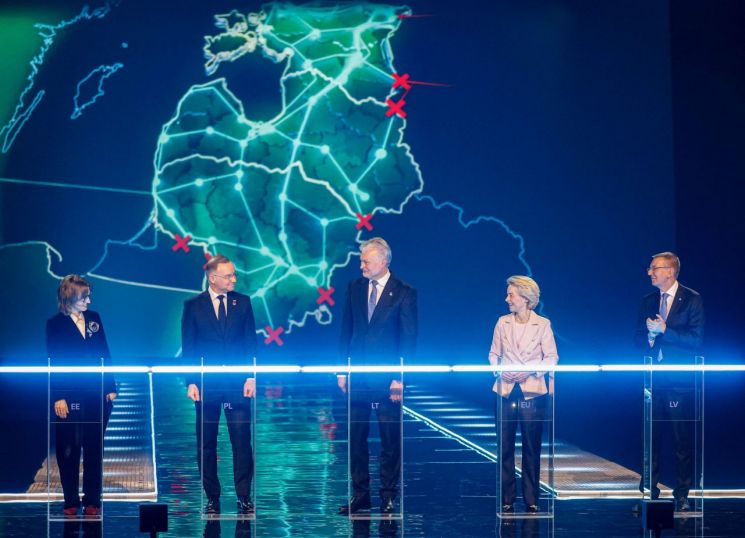 On the 9th (local time), the 'Baltic Energy Independence Day' event was held in Vilnius, the capital of Lithuania. On this day, the three Baltic countries?Lithuania, Estonia, and Latvia?disconnected from the existing Russian power grid and joined the European Union (EU) integrated power grid. Photo by AFP and Yonhap News.
For the first time in over 30 years since Lithuania, Estonia, and Latvia?the Baltic States?gained independence from the former Soviet Union, they have disconnected from the Russian power grid. Despite joining the North Atlantic Treaty Organization (NATO), the Baltic States had not been able to reduce their dependence on Russian electricity, but they have finally freed themselves completely from Russia's influence. It is assessed that the war in Ukraine fundamentally changed the Baltic States' energy policies due to concerns that Russia could weaponize power supply cutoffs in times of crisis.
Power grid independence after 34 years since the collapse of the Soviet Union: "Freedom from threats and intimidation"
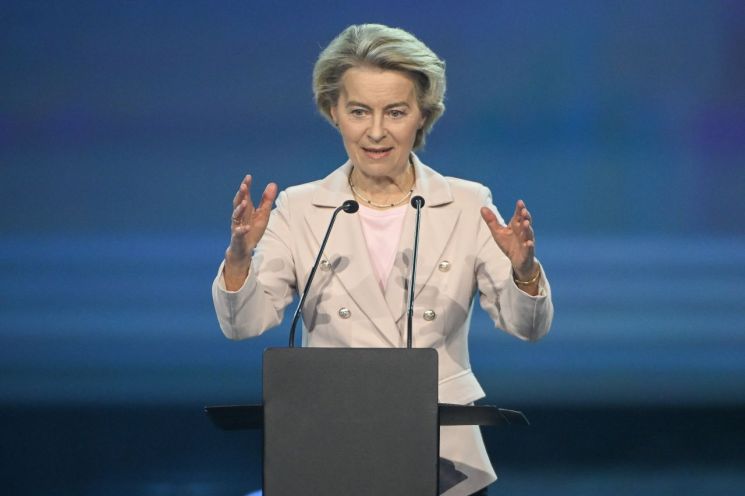 On the 9th (local time), Ursula von der Leyen, President of the European Commission, delivering a speech at the 'Baltic Energy Independence Day' event held in Vilnius, the capital of Lithuania. Photo by EPA·Yonhap News
On the 9th (local time), the Baltic States announced that, together with the European Union (EU), they have completed the transition from the Russian power grid to the EU power grid system. In Vilnius, the capital of Lithuania, a 'Baltic Energy Independence Day' event was held, and a declaration was made marking the end of Russian power grid dominance 34 years after gaining independence following the collapse of the Soviet Union.
Ursula von der Leyen, President of the European Commission, who attended the event, emphasized, "The chains of a power grid connected to a hostile neighbor are now a thing of the past," adding, "This transition means freedom from threats and intimidation." Ukrainian President Volodymyr Zelensky also stated in a video speech, "Russia can no longer weaponize energy against the Baltic States."
Originally, the Baltic States remained part of the Russian power grid even after the collapse of the Soviet Union. In 2001, the Baltic States, Russia, and Belarus signed the BRELL agreement, pledging to continue receiving electricity from Russia. However, after Russia's forced annexation of Crimea in 2014, discussions began on transitioning to the EU power grid, and from 2018, plans were made with the EU to disconnect from the Russian power grid starting in the 2030s. The outbreak of the Ukraine war in 2022 significantly accelerated the pace of this transition.
Concerns over Russia weaponizing power in emergencies... Preventing attempts to cut undersea cables
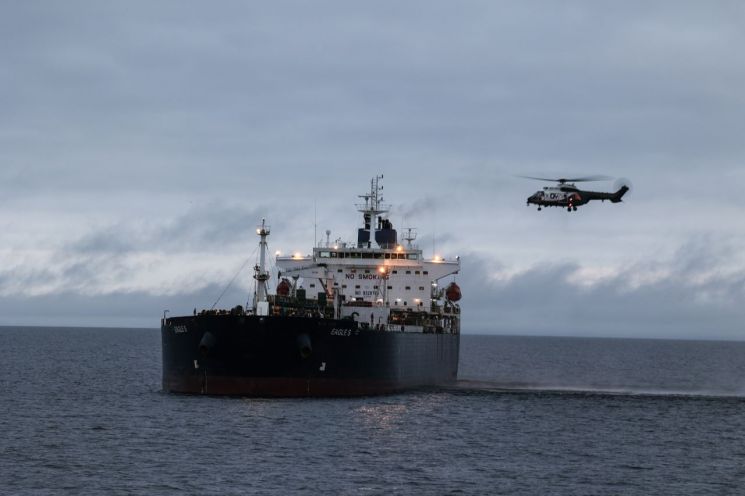 The oil tanker Eagle S, suspected of damaging the undersea power cable connecting Finland and Estonia last December. Photo by EPA·Yonhap News
The main reason the Baltic States hurried the power grid transition after the Ukraine war is believed to be the threat of Russia cutting off power supply. Since the start of the Ukraine war, Russia has taken control of major Ukrainian nuclear power plants such as Chernobyl and Zaporizhzhia and has destroyed power grids through drone and missile attacks.
Ukraine's power grid was particularly vulnerable to Russian offensives because most of its nuclear and hydroelectric power plants were built during the Soviet era, and Russia possessed extensive information about the power grid. Since the war began, Russian forces have bombed not only power plants but also high-voltage substations and key power grid points, causing blackouts and power outages in major Ukrainian cities.
Accordingly, concerns have been raised that the Baltic States, which had long used the Russian power grid, were highly vulnerable to Russian power grid attacks. Since the Ukraine war, the Baltic States have drastically reduced their purchase of Russian electricity to around 10% and accelerated preparations for the transition to the EU power grid. The EU also supported the power grid transition with a total of 1.6 billion euros (approximately 2.4 trillion Korean won).
Given the possibility of future Russian attempts to sabotage the EU power grid, protecting the power grid is a challenge the EU must address. CNN recently reported that 11 undersea cables?including power cables and fiber optic communication cables passing through the Baltic Sea connecting the Baltic States and Northern European countries?have been damaged. Although Russia denies involvement, U.S. and Western intelligence agencies believe the Russian government is deliberately damaging undersea cables in the Baltic Sea area using oil smuggling ships known as the 'Shadow fleet' tankers.
© The Asia Business Daily(www.asiae.co.kr). All rights reserved.
![Clutching a Stolen Dior Bag, Saying "I Hate Being Poor but Real"... The Grotesque Con of a "Human Knockoff" [Slate]](https://cwcontent.asiae.co.kr/asiaresize/183/2026021902243444107_1771435474.jpg)

















