Professor Kim Byungsoo's Team at Pusan National University Develops Technology for Combining Endocrine-Active Adipose and Skin Tissues
Presents New Possibilities in Tissue Engineering and Regenerative Medicine by Enabling Multifunctional Artificial Tissue Fabrication Beyond Adipose Tissue
A research team at Pusan National University has developed a technology that combines endocrine-active adipose tissue and skin tissue using optimized modular 3D bioprinting, presenting new possibilities in tissue regeneration and wound healing.
Pusan National University (President Choi Jae-won) announced on the 10th that a research team led by Professor Kim Byung-soo of the Department of Biomedical Convergence Engineering published research results promoting skin regeneration through the assembly of endocrine adipose tissue using 3D bioprinting technology.
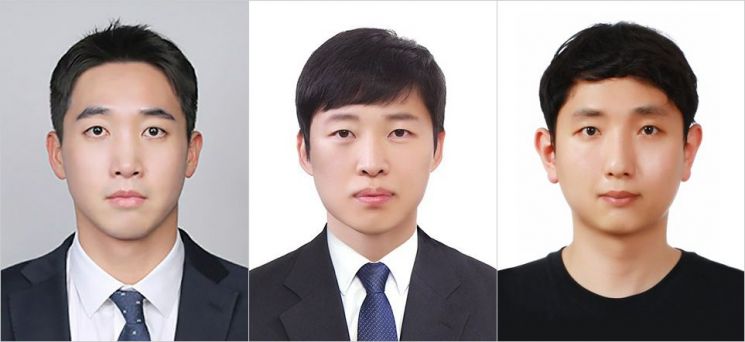 (From left) Professor Kim Byung-su, graduate student Lee Jae-sung, Dr. Ahn Min-jun. Provided by Pusan National University
In this study, a rapid tissue assembly technology was developed that maintains the endocrine function of adipose tissue while enabling integration with various tissues, confirming that adipose tissue effectively combines with skin tissue to promote wound healing.
This study, which presents a new paradigm for tissue regeneration research utilizing the endocrine function of adipose tissue, was published in the internationally recognized journal in the field of biomaterials and tissue engineering, Advanced Functional Materials, on February 2.
Adipose tissue is gaining attention not only as a simple energy reservoir but also as an endocrine organ regulating various physiological activities. Endocrine refers to the process of sending hormones produced within the body directly into the bloodstream without passing through ducts.
Adipocytes secrete various cytokines (protein signaling molecules secreted by immune cells) to interact with surrounding tissues, and this endocrine function significantly influences metabolic homeostasis and tissue regeneration. However, existing tissue engineering technologies had limitations in effectively replicating the structure and function of adipose tissue. In particular, adipose tissue regulates tissue homeostasis and regeneration through interactions with skin and muscle, but tissue fabrication technologies reflecting this were lacking, limiting their application in regenerative medicine.
Accordingly, the research team developed an assembly technology that maintains the endocrine function of adipose tissue while enabling integration with various tissues and conducted research to promote skin regeneration using this technology.
Recognizing the importance of integrating adipose tissue with skin tissue, the team introduced a method of fabricating adipose tissue in modular units similar to Lego blocks to combine with the dermis layer of the skin.
To maintain the high cell density of adipose tissue and maximize functionality, an embedded 3D bioprinting technique was applied to stably form adipose tissue units, optimizing bioink composition and printing conditions. Rheological analysis and fluid dynamics simulations were conducted to optimize the viscoelasticity of the bioink.
A hybrid bioink containing alginate was developed to enable effective maturation of cells within the adipose tissue units. When using only AdECM bioink, adipose progenitor cells migrated into the surrounding medium, preventing the maintenance of a dense cellular environment. To address this, alginate, which has low cell adhesion properties, was added to the AdECM bioink to restrict cell migration.
AdECM (adipose-derived decellularized extracellular matrix) is the main material of the bioink that mimics the natural environment of adipose tissue, maximizing adipocyte maturation and endocrine function.
As a result, the hybrid bioink containing 0.5% alginate showed the highest adipocyte density and increased expression of genes promoting adipocyte maturation.
Next, the research team set the optimal size of the adipose unit based on the hybrid bioink. Experimental results showed that sizes above 900 μm (micrometers, one-millionth of a meter) created hypoxic environments inside the adipose units, reducing functionality, while 600 μm optimized adipocyte survival and maturation.
Additionally, to maximize interactions between adipose units and enhance endocrine function, experiments adjusting the spacing between units revealed that cell signaling and maturation were highest at distances below 1000 μm.
To evaluate the effect of adipose units on skin regeneration, a 3D printing-based customized wound healing platform (wound scratch assay platform) was fabricated. According to this, the migration speed of skin cells (fibroblasts and keratinocytes) increased in environments containing adipose units, achieving over 80% wound closure within 16 hours, with the highest cell mobility observed when the spacing between adipose units was 1000 μm.
Using a nude mouse model, modules containing adipose units were transplanted into skin injury sites, resulting in increased vascular formation and promoted epidermal regeneration. Laser Doppler perfusion imaging (LDPI) analysis demonstrated enhanced angiogenesis and smooth blood flow supply, while immunohistochemical analysis showed increased expression of angiogenesis markers (CD31) and epidermal formation markers (K10, involucrin), confirming activated skin regeneration.
The research team demonstrated that producing adipose tissue with endocrine function using 3D bioprinting and precisely assembling it with skin tissue provides faster and more efficient regenerative effects than conventional tissue engineering approaches. In particular, they designed a precise tissue assembly technology using a modular polycaprolactone (PCL) framework to effectively combine adipose and skin tissues and maintain stable structures in vivo.
Furthermore, the Lego-like design of the PCL framework allows flexible combination of various tissue modules, facilitating integration not only of adipose tissue but also vascular and skin tissues, enabling customized composite tissue fabrication. This distinguishes it from existing bioprinting methods. Through this precise assembly system, inter-tissue signaling is maximized, enabling effective tissue integration that maintains the endocrine function of adipose tissue while promoting skin regeneration.
Professor Kim Byung-soo of Pusan National University stated, “This study is significant in developing an innovative 3D bioprinting technology that utilizes the endocrine function of adipose tissue to promote skin regeneration,” adding, “This technology will present new possibilities for fabricating multifunctional artificial tissues beyond adipose tissue in tissue engineering and regenerative medicine.”
This research was conducted with Professor Kim Byung-soo of the Department of Biomedical Convergence Engineering at Pusan National University as the corresponding author, with Lee Jae-sung, an integrated master's and doctoral student in the Department of Information Convergence Engineering and Biomedical Convergence major, and Min-jun Ahn, a medical researcher, as co-first authors.
The study was supported by the Korean Research Foundation’s Excellent Young Researcher Program, Leading Research Center, and the Ministry of Trade, Industry and Energy’s Alchemist Project, funded by the Ministry of Science and ICT.
© The Asia Business Daily(www.asiae.co.kr). All rights reserved.
![Clutching a Stolen Dior Bag, Saying "I Hate Being Poor but Real"... The Grotesque Con of a "Human Knockoff" [Slate]](https://cwcontent.asiae.co.kr/asiaresize/183/2026021902243444107_1771435474.jpg)















