Court: "Suspected of Protecting Accomplices... Severe Punishment Needed"
A man in his 30s who set up a ghost company and engaged in so-called 'card kkang' to pocket about 300 million won was sentenced to five years in prison in the appellate court as well. This man consistently made excuses, which effectively added a 'contempt of court' factor, resulting in a heavy sentence.
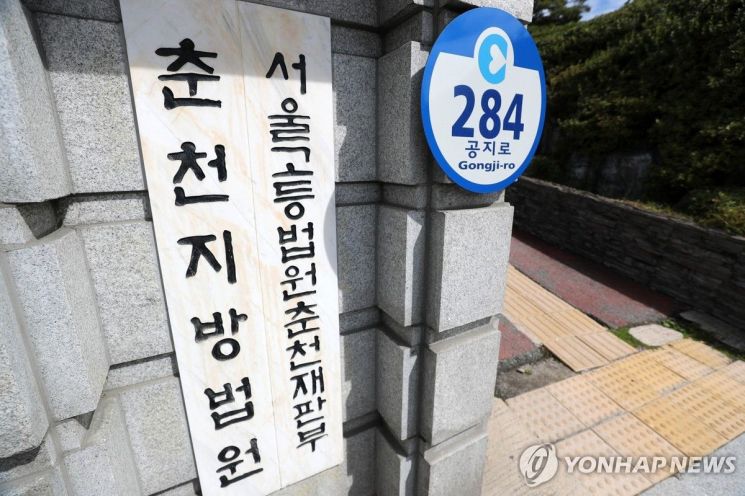
On the 9th, Yonhap News reported that the Chuncheon District Court Criminal Division 2 (Presiding Judge Kim Seong-rae) dismissed the appeal filed by A (30), who was indicted on charges of computer-related fraud, and upheld the original sentence of five years in prison.
 Mr. A, who pocketed about 300 million won through the card kkang scheme. (This photo is not directly related to the article.) Pixabay
According to the charges, A established a ghost company in January last year. He signed an electronic payment service merchant contract with Company B and received a card payment terminal. A immediately used another person's card information to make payments totaling about 380 million won over four hours. After deducting fees and withheld amounts, the amount he pocketed reached 280 million won.
Company B is responsible for any bounced transactions caused by false payments from merchants. Subsequently, the company reimbursed all payment amounts to the cardholders. Despite suffering such losses, Company B was unable to recover a single won from A.
A made excuses by mentioning 'Telegram.' He claimed that he was scammed for about 8 million won while attempting card kkang through Telegram and that he committed the crime under the orders of an unidentified person. Later, he changed his story about the owners of the cards used in the card kkang attempt, stating they were himself, a friend, and his mother. When the investigation agency requested related documents, he reportedly refused to cooperate, saying, "I don't know why I should cooperate," and submitted no documents.
The investigation agency had a hard time because he did not cooperate. Initially, A claimed, "There are no accomplices," but when the agency questioned the difference in handwriting between the merchant contract with Company B and his own handwriting, he refused to cooperate, saying, "Why should I rewrite the writing?"
The court criticized A's behavior. The first trial stated, "In light of these circumstances, there is a very strong need for severe punishment," and added, "The defendant participated in a new type of organized fraud, and there is even suspicion that he is trying to hide the existence of accomplices."
Furthermore, based on the Supreme Court sentencing guidelines, the court considered the extremely malicious nature of the crime as an aggravating factor and imposed a sentence close to the upper limit of the recommended range (2 years and 6 months to 6 years in prison). Although A argued that the sentence was heavy, the appellate court dismissed the appeal, stating, "There has been no significant change in circumstances warranting reconsideration of the sentence since the original judgment."
© The Asia Business Daily(www.asiae.co.kr). All rights reserved.
![Clutching a Stolen Dior Bag, Saying "I Hate Being Poor but Real"... The Grotesque Con of a "Human Knockoff" [Slate]](https://cwcontent.asiae.co.kr/asiaresize/183/2026021902243444107_1771435474.jpg)

















