Optimization of Traffic Signal Systems: The Start of Smoother Flow
Commute Times Reduced by 5 Minutes... Annual Economic Benefits of 7.6 Billion KRW
Uijeongbu City to Implement Step-by-Step Signal Improvements Through 2026
Uijeongbu City, Gyeonggi Province (Mayor Kim Dong-geun) is promoting the ‘Traffic Signal System Optimization Project’ to address the increasing vehicle traffic volume and chronic traffic congestion. According to Uijeongbu City on the 7th, this project aims for tangible traffic improvements that citizens can directly experience, and has achieved significant results by inducing smooth traffic flow through signal system adjustments.
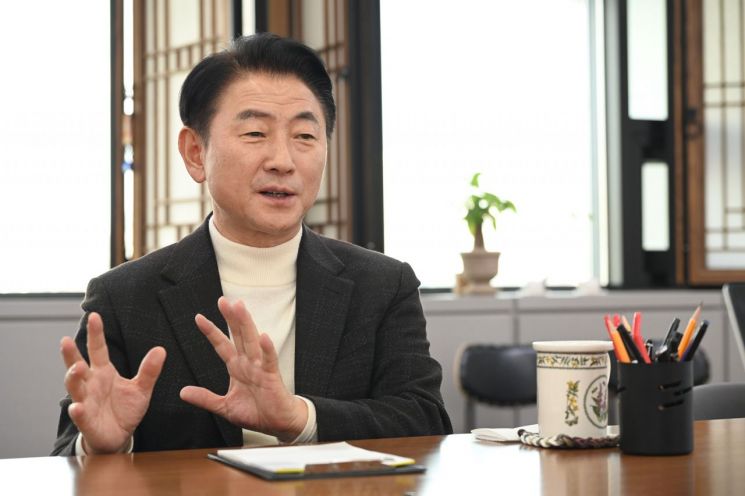
In urban areas, traffic congestion and accidents frequently occur during rush hours due to concentrated vehicle traffic, with one of the main causes identified as an irrational traffic signal system.
To resolve this, the city conducted a survey in January last year targeting 447 people including citizens and transportation workers. The results identified the area around Jeil Market, the largest traditional market in northern Gyeonggi, as the most congested. This area was selected as a priority for rapid improvement due to serious issues such as illegal parking, signal violations, and queue jumping.
Additionally, areas such as around Uijeongbu Station, Mangadae Intersection, near the Bus Terminal, Seongmo Hospital Intersection, and in front of the Police Station?key junctions and places with concentrated floating populations and traffic volumes?were found to experience congestion, traffic jams, accidents, and complaints mainly during weekday rush hours and weekends.
Based on the survey results, the city prioritized improvement sites and actively reflected citizens’ opinions in policy to promote this project.
Traffic signal system optimization is a project that adjusts signal cycles and timings according to changes in traffic volume to reduce unnecessary waiting times and facilitate smooth traffic flow.
This is a traffic improvement measure that can expect high effects at low cost in a short period, and adjusting the signal system alone has reduced traffic congestion during rush hours and weekends.
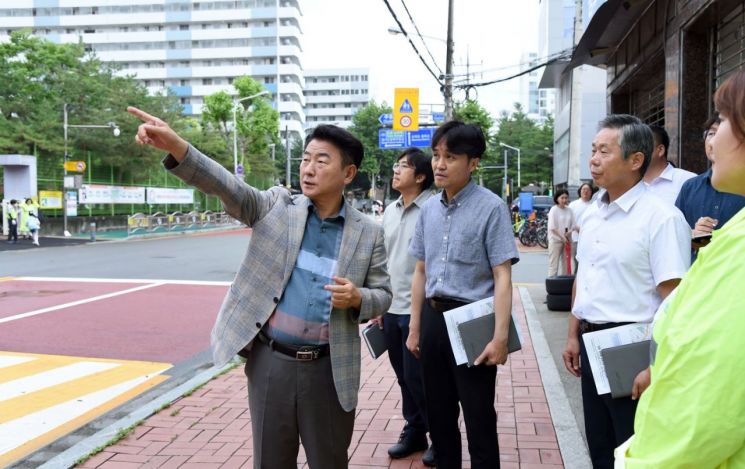 Mayor Kim Dong-geun is inspecting the current status of roads in the jurisdiction. Provided by Uijeongbu City
In particular, efficient signal operation helps reduce intersection congestion and enhances the safety of pedestrians and bicycle users. It also contributes to environmental improvement by reducing vehicle idling.
The city secured traffic signal experts with abundant field experience, professional skills, and know-how, and conducted a pilot signal system optimization in the Gosan district. Since the public housing complex moved in 2022, Gosan district had been experiencing habitual traffic congestion and accidents due to population growth. Accordingly, over about three months, the city conducted status surveys, traffic volume analysis, improvement plan establishment, and signal cycle adjustments to optimize the signal system.
According to the Korea Road Traffic Authority’s effectiveness evaluation, the average travel speed increased by 31.8%, and travel time decreased by 40.8%. The economic effect from fuel cost savings and reduced air pollution was analyzed at 5.46 billion KRW annually. Citizen satisfaction was also high after the improvements, and notably, no traffic accidents or signal-related complaints occurred.
Recognizing these achievements, the Gosan district signal system optimization project was selected as an exemplary case of proactive administration by Uijeongbu City, and based on its effectiveness, the ‘Traffic Signal System Optimization Project’ was launched in earnest.
From May to July last year, the city implemented the first phase of signal system optimization at 46 major intersections including Minrak-dong Costco intersection, Songyang Elementary School intersection, in front of Hwalgi Sports Park, in front of Nakyang Water Love Park, and Songsan Station.
Through traffic volume surveys and drone filming, signal cycles were adjusted by time of day, and measures such as extending pedestrian crossing times were implemented.
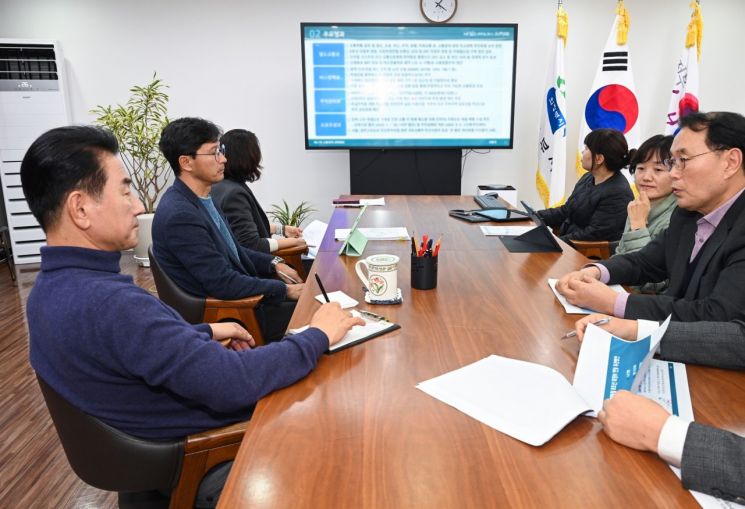 Kim Dong-geun, the mayor, is holding a transportation policy strategy meeting. Provided by Uijeongbu City
As a result of the improvements, the average travel time decreased by 20.4%, from 191.5 seconds to 152.4 seconds, and the average vehicle speed increased by 26.9%, from 13.8 km/h to 17.5 km/h. The number of stops decreased by 26.8%, from 1.7 times to 1.2 times, and the average queue length decreased by 46%, from 26.6 meters to 14.4 meters, showing clear effects. The annual economic benefit was approximately 1.87 billion KRW, contributing not only to alleviating traffic congestion but also to reducing carbon emissions.
Building on the success of the first phase, the city promoted the second phase of signal system optimization on Hoguk-ro, a habitual congestion area, for three months starting in August last year.
Hoguk-ro (an 8.78 km section covering Yangju City, Uijeongbu City, and Pocheon City, including National Routes 39 and 43) passes through the center of Uijeongbu City and is a major road providing access to Kyungmin University, Uijeongbu Police Station, Budae Jjigae Street, Jeil Market, Bus Terminal, and Seongmo Hospital. However, due to narrow road widths and numerous intersections spaced 30 to 80 meters apart, severe congestion occurred during rush hours.
The city collaborated with the police and traffic experts to conduct detailed preliminary inspections including traffic volume surveys, drone filming, and driving tests, then readjusted signal cycles according to day of the week, direction, and time of day, and extended pedestrian crossing times.
As a result, the average travel speed increased by 4.2 km/h (22.6%), from 18.4 km/h to 22.5 km/h, and the average travel time was shortened by 4 minutes 37 seconds (18.9%), from 24 minutes 26 seconds to 19 minutes 49 seconds, realizing a tangible reduction in commute times. This was analyzed to generate an annual economic benefit of 7.6 billion KRW.
This traffic signal system optimization project is an important first step not only for short-term traffic congestion relief but also for building a sustainable traffic environment in the mid to long term.
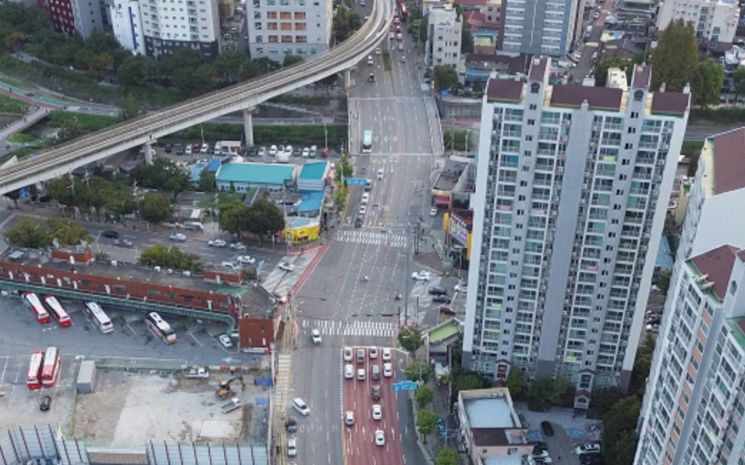
The city is currently promoting the third phase of signal system improvements targeting major roads such as Pyeonghwa-ro, Simin-ro, and Gyeongui-ro by 2026. Additionally, installation of diagonal crosswalks, improvements to unprotected left turns, and operation of timed flashing signals are also under consideration.
Mayor Kim Dong-geun stated, “To meet citizens’ expectations, we will spare no budget support for traffic environment improvements and actively promote customized signal system improvements reflecting regional characteristics. We will continue to do our best to create a sustainable traffic environment so that citizens can move more conveniently and safely.”
© The Asia Business Daily(www.asiae.co.kr). All rights reserved.
![Clutching a Stolen Dior Bag, Saying "I Hate Being Poor but Real"... The Grotesque Con of a "Human Knockoff" [Slate]](https://cwcontent.asiae.co.kr/asiaresize/183/2026021902243444107_1771435474.jpg)

















