Additional Tidal Flats in Seosan, Muan, Goheung, and Yeosu Proposed
Application Submitted to UNESCO... Decision Expected in 2026
Our country's tidal flats, regarded as an ecological treasure trove, are challenging for additional inscription on the UNESCO World Heritage list.
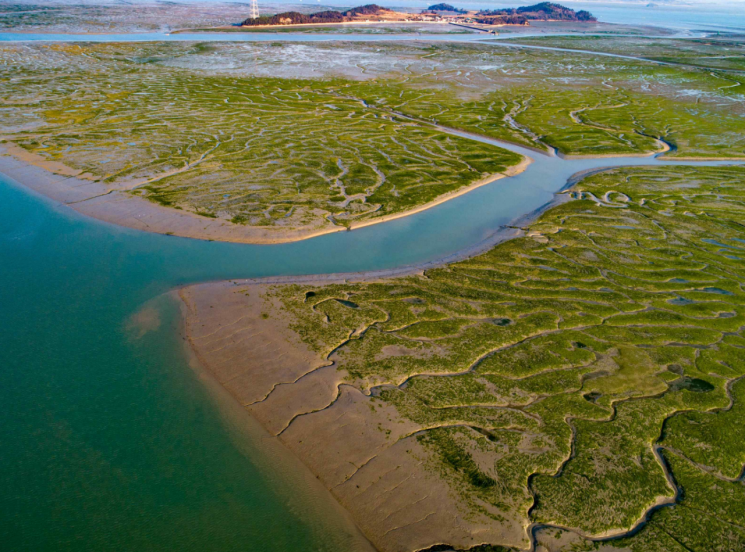
The National Heritage Agency announced on the 7th that it submitted an application last month to the UNESCO World Heritage Centre for the expansion of the World Heritage listing related to 'Getbol, Korean Tidal Flats (Phase Ⅱ)'.
Korean tidal flats are a natural heritage site where over 2,000 species live and serve as a habitat for endangered migratory birds. UNESCO recognized the irreplaceable value of this habitat and inscribed it as a World Heritage site in 2021. The designated areas include tidal flats in Seocheon, Chungnam; Gochang, Jeonbuk; Sinan, Jeonnam; and Boseong and Suncheon, Jeonnam. It became Korea's fifteenth World Heritage site and its second natural heritage site.

The National Heritage Agency has been preparing for the expansion inscription by adding additional tidal flats to protect and enhance the Outstanding Universal Value (OUV) of the heritage, following recommendations from the UNESCO World Heritage Committee. This is the first attempt to add new heritage elements. Previously, in 2018, the Geomunoreum Lava Tube System upstream caves were added to the 'Jeju Volcanic Island and Lava Tubes' to expand the heritage area. The National Heritage Agency stated, "This is the first case of expansion inscription domestically. Globally, such cases are rare, and the concept of Phase 2 is also uncommon."
The areas challenging for expansion inscription include tidal flats in Seosan, Chungnam; and Muan, Goheung, and Yeosu, Jeonnam. The National Heritage Agency explained, "The buffer zones around the tidal flats in Seocheon, Gochang, Boseong, and Suncheon, which were included in Phase 1, have also been expanded to sufficiently encompass the migratory range and habitats of waterbirds."
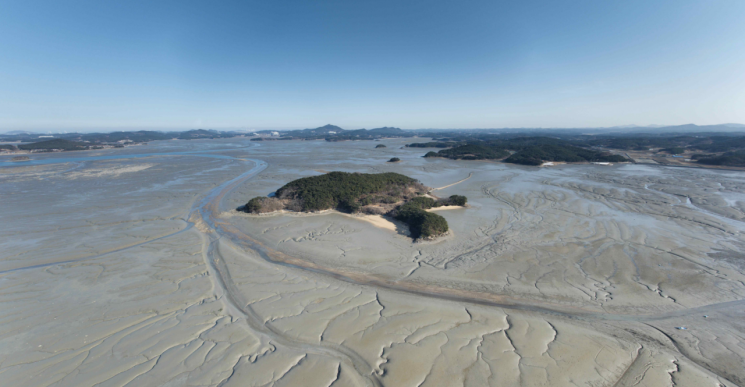
The submitted application will undergo a completeness check by the World Heritage Centre starting next month. To become a World Heritage site, it must be recognized for its outstanding universal value that should be protected for all humanity. If it passes the evaluation by the International Union for Conservation of Nature (IUCN) and is selected for review, the decision on inscription will be made at the 48th World Heritage Committee in 2026. The National Heritage Agency said, "We will cooperate with the Ministry of Oceans and Fisheries, local governments, and the Korean Tidal Flats World Heritage Promotion Team to ensure its inscription as a World Heritage site."
World Heritage sites are classified into cultural heritage, natural heritage, and mixed heritage that possess characteristics of both. Korea, which first inscribed 'Seokguram Grotto and Bulguksa Temple,' 'Haeinsa Temple Janggyeong Panjeon,' and 'Jongmyo Shrine' in 1995, currently holds sixteen World Heritage listings.
© The Asia Business Daily(www.asiae.co.kr). All rights reserved.
![Clutching a Stolen Dior Bag, Saying "I Hate Being Poor but Real"... The Grotesque Con of a "Human Knockoff" [Slate]](https://cwcontent.asiae.co.kr/asiaresize/183/2026021902243444107_1771435474.jpg)


















