Significant Industrial Impact of Humanoid Commercialization
Can Revitalize Manufacturing Struggling Due to Labor Shortages
"Humanoids represent national power. We must diligently advance without delay."
Professor Han Jae-kwon of Hanyang University's Department of Robotics (photo) emphasized, "Countries that have the technology to produce automobiles, semiconductors, and smartphones are regarded as powerful nations. The same applies to humanoids. Countries without the technology to produce humanoids will be left behind."
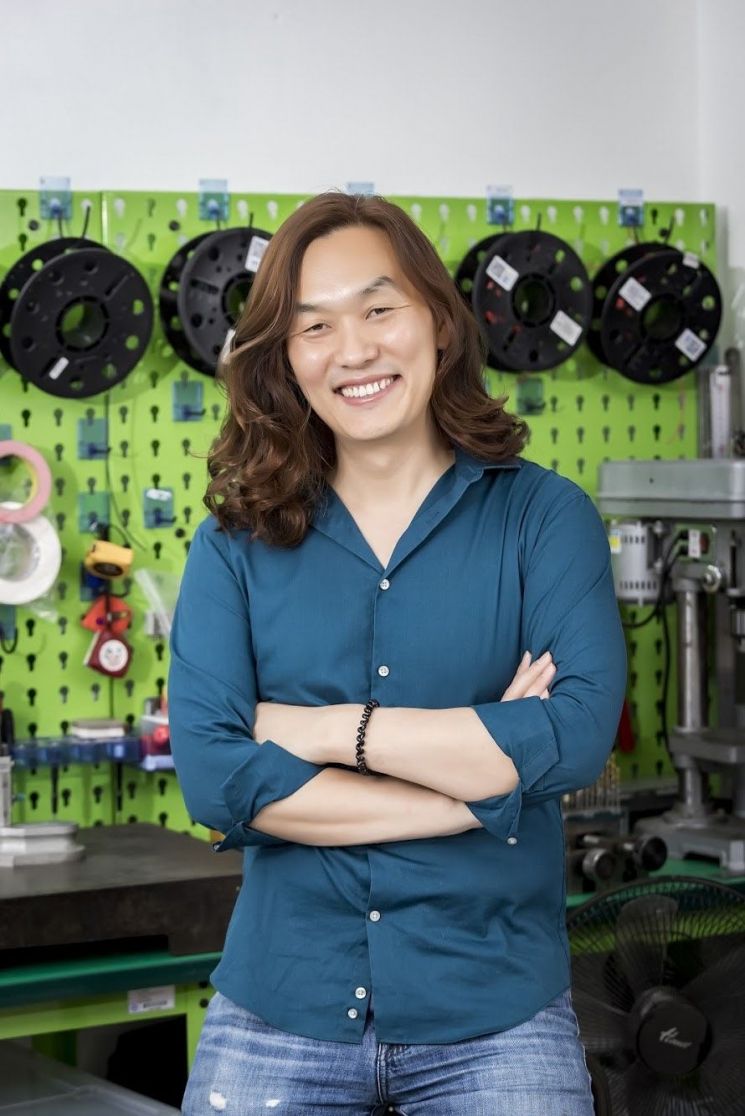
In an interview with Asia Economy on the 6th, Professor Han said, "If humanoids become commercialized, their industrial ripple effect will be significant," adding, "Humanoids can immediately prevent the collapse of traditional manufacturing sites struggling to find labor."
Structural social changes also highlight the necessity of humanoid robots. He stated that solutions to social structural changes such as accelerated low birthrates and aging, and the retirement of the baby boom skilled labor generation can be found in humanoids.
He said, "If we do not positively address these social structural changes, numerous social problems will arise and negatively impact economic growth," and asserted, "Just as the world changed with the advent of smartphones, the emergence of humanoids will also change the world."
Furthermore, Professor Han emphasized that Korea must become a 'fast follower.' He acknowledged, "It is true that humanoid technology is much less competitive compared to the United States and China," but added, "However, Korea is not that far behind."
What does this mean? Until the 2010s, Korea actively conducted research on humanoids and was internationally recognized for its technological capabilities. However, since it was not immediately profitable technology, it was neglected by companies and the government, leading to a decline in development momentum and ultimately falling behind.
He said, "Except for the United States and China, countries capable of producing humanoids include Japan, Germany, France, Italy, and the United Kingdom," adding, "Honestly, aside from the US and China, there are practically no outstanding countries. In that sense, Korea is doing very well. If it becomes a fast follower now, it can stand shoulder to shoulder with the US and China."
However, he pointed out that institutional arrangements must come first. Professor Han diagnosed, "Even if humanoids become commercialized right now, they cannot be used. Because regulations are not in place, using them would be illegal," and said, "The reason Elon Musk became a minister is probably related to institutional arrangements."
◆ Professor Han Jae-kwon is a widely recognized roboticist in the global robotics industry. He completed his bachelor's and master's degrees at Korea University and earned a Ph.D. in mechanical engineering from Virginia Tech in the United States. While at Virginia Tech, he developed the United States' first humanoid robot, 'Charlie,' and in 2011, as the leader of the 'CHARL I' team, won the 'RoboCup 2011 Humanoid League.' After returning to Korea, he worked as a senior engineer at Robotis, creating humanoids for disaster rescue such as 'Ddolmang.' Currently, he is dedicated to commercializing robots developed in his lab as the Chief Technology Officer (CTO) of AeroBot Co., Ltd., while also training future talents at Hanyang University.
© The Asia Business Daily(www.asiae.co.kr). All rights reserved.

















