Urgent Need to Reflect Actual Construction Costs
Clarify the Responsibilities of the Client
Increase in Construction Cost Disputes...
Need for Institutional Response
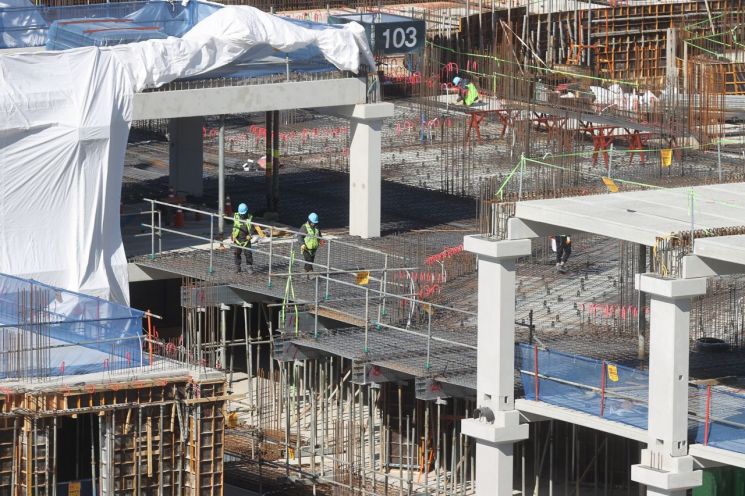
A claim has been made that an appropriate level of construction costs should be secured during public construction projects to reduce the burden on the construction industry.
There is a need for an institutional foundation to set reasonable construction costs, such as raising the public construction bidding standards (qualification review system) and improving the calculation of rental housing construction costs so that they can be adjusted annually according to inflation trends. On the 6th, at the ‘Discussion on Strengthening Construction Industry Competitiveness and Construction Safety’ held at the National Assembly Members' Office Building, discussions were held on ways to reflect realistic construction costs in public construction projects.
Urgent Need to Reflect Actual Construction Costs
Clarify the Responsibilities of the Client
Na Kyung-yeon, head of the Economic Finance and Urban Research Office at the Korea Construction Industry Research Institute, emphasized that public construction projects are at a breaking point by presenting a figure showing that the operating profit margin is -0.15% when the public construction sales ratio of construction companies in 2023 is 100%. She argued that clients should be given the responsibility to calculate appropriate construction costs that can ensure the quality of construction work, and that additional costs should be reflected when extending the construction period.
She also pointed out the serious gap between the standard construction cost for public rental housing (3.3㎡ at 3.69 million KRW) and the actual construction cost (6 to 9 million KRW), stating that instead of the standard construction cost, a 'basic construction cost' adjusted annually according to the inflation index should be applied.
She called for improvements to the long-term continuous construction system as well. She noted that the burden on contractors is large in long-term continuous construction projects and that Korea is the only country where contractors bear losses. Long-term continuous construction refers to public construction projects that cannot be completed within a single year’s budget and are carried out over several years.
She demanded improvements to the qualification review system, which accounts for more than 85% of public construction projects. This system reviews the contractor’s ability to perform the construction and awards contracts based on volume. Although introduced to prevent poor-quality construction and reflect appropriate construction costs, there have been criticisms that it lowers the chances of winning bids for small and medium-sized construction companies with weak financial power and only increases their burden, as the bidding competition rate exceeds 500 to 1.
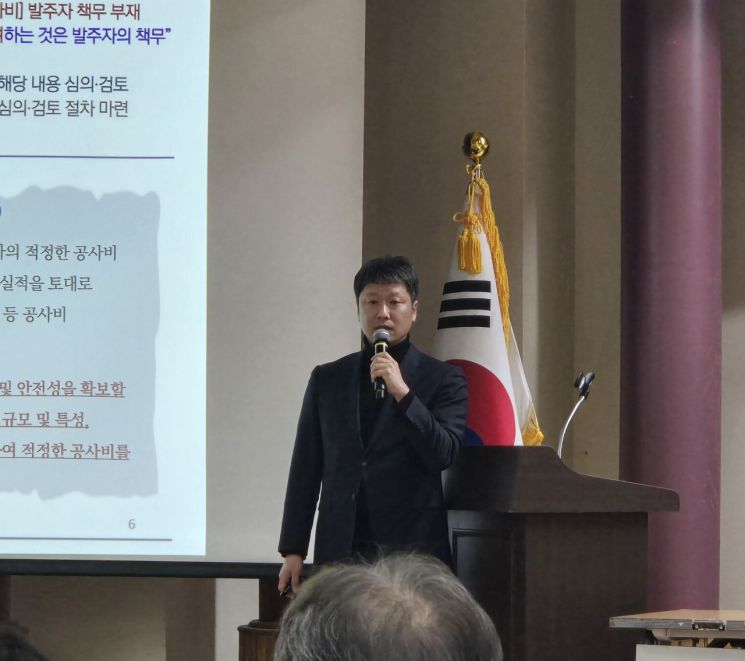 Na Kyung-yeon, Director of the Economic Finance and Urban Research Office at the Korea Construction Industry Research Institute, is giving a presentation on the topic of "Policy Measures for Securing Appropriate Construction Costs and Revitalizing the Construction Industry" at the "Discussion on Strengthening Construction Industry Competitiveness and Construction Safety" held at the National Assembly Members' Office Building on the 6th. Photo by Choi Seo-yoon
Increase in Construction Cost Disputes...
Need for Institutional Response
He viewed the frequent disputes caused by soaring construction costs as requiring "institutional preventive measures." He said, "Mayors and governors should be required to dispatch coordinators to construction sites with cost disputes, and if the dispute prolongs, the Ministry of Land, Infrastructure and Transport should directly send a mediation team." When construction costs rise, projects are delayed, leading to increased sale prices and more disputes.
In this regard, Maeng Seong-gyu, chairman of the National Assembly Land, Infrastructure and Transport Committee, who hosted the event, responded that an integrated mediation organization for resolving construction disputes will be established soon. Chairman Maeng said, "As the construction industry becomes more difficult, conflicts between contractors and developers, clients and contractors, and developers and associations are intensifying," adding, "In fact, 10 to 15% of visitors to the lawmaker’s office complain about construction dispute issues."
Minister Park Sang-woo, who attended the discussion, said, "To recover the construction economy, we will promote housing supply expansion, ease real estate regulations, and provide financial support," and added, "This month, we will prepare a ‘fall accident prevention measure’ and establish a plan to stabilize the supply and demand of construction manpower."
© The Asia Business Daily(www.asiae.co.kr). All rights reserved.
![Clutching a Stolen Dior Bag, Saying "I Hate Being Poor but Real"... The Grotesque Con of a "Human Knockoff" [Slate]](https://cwcontent.asiae.co.kr/asiaresize/183/2026021902243444107_1771435474.jpg)
















