At Least Two Dedicated Personnel Permanently Assigned for Prevention
Gradual Introduction of Vehicle-Mounted Ultrasonic Devices
To prevent bird strikes on aircraft, the government plans to increase dedicated personnel and introduce radar systems capable of early detection at all airports nationwide. As a follow-up measure to last year's Jeju Air disaster, approximately 250 billion KRW will be invested over three years to improve various facilities, including bird detection radar systems.
On the 6th, the Ministry of Land, Infrastructure and Transport announced this during a briefing at the National Assembly's Special Committee on the Investigation of the 12·29 Passenger Plane Disaster and Support for Victims and Bereaved Families. The briefing covered responses following the December accident, support systems for bereaved families, airline safety inspection results, and improvement plans. The government will also release a comprehensive aviation safety plan around April.
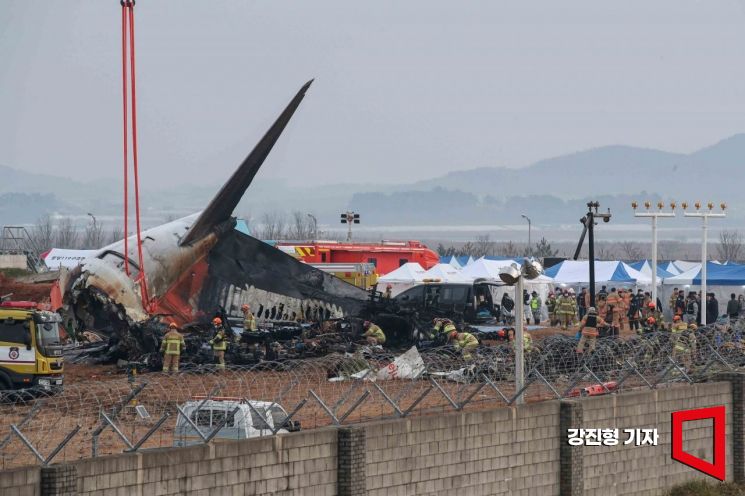 Firefighters are searching for belongings at the site of the Jeju Air passenger plane collision and explosion accident that occurred last December at Muan International Airport in Jeollanam-do. Photo by Jang Jin-hyeong
Following an investigation last month of airports nationwide and bird deterrent facilities, the government found that some airports lacked sufficient personnel or equipment to prevent bird strikes. Although related consultative bodies exist, experts or airlines often do not participate, and there is a lack of institutional grounds to relocate bird deterrent facilities.
To address this, at least two dedicated personnel for bird strike prevention will be permanently assigned. Airports will issue recruitment announcements within this month and review the criteria for dedicated personnel. Additionally, at least one thermal imaging camera will be installed at every airport. Vehicle-mounted ultrasonic devices to respond to medium and large birds will be gradually introduced. These devices, attached to vehicles, emit warning sounds or ultrasonic waves to enable rapid response in emergencies.
To introduce bird detection radar at all airports, a specialized service contract will begin this month. A consultative body involving related agencies will be formed to develop a Korean-style radar model. The initial installation sites will be selected as early as April, with pilot implementation within the year. Manuals will be created and joint training conducted to ensure organic collaboration among staff responsible for detection tasks, including pilots, air traffic controllers, and prevention personnel.
The Bird Strike Prevention Committee will include bird experts, airlines, and local governments without exception. The ranks of attendees from regional aviation offices and airport corporations will be raised from operational staff to directors and airport managers, and regular meetings will be held twice a year. Regulations imposing penalties for constructing unauthorized bird deterrent facilities and legal grounds for relocating existing facilities will also be established.
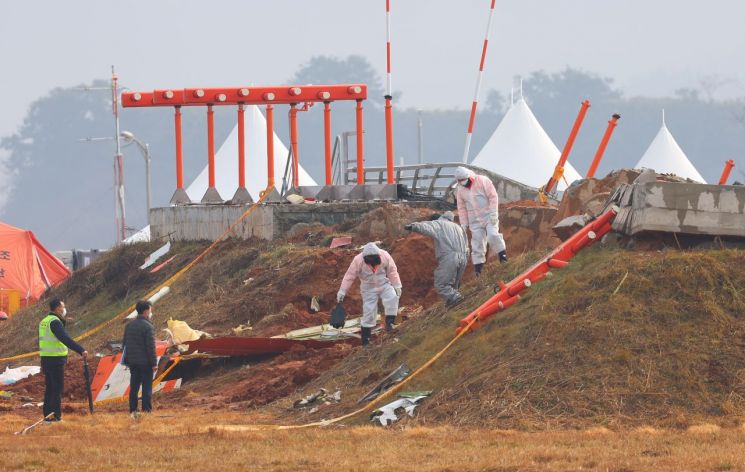
Alongside the airport facility improvement project announced last month, the government will invest 67 billion KRW this year to introduce new equipment such as radar systems. A total of 247 billion KRW will be spent by 2027. For urgent facilities, Korea Airports Corporation will initially use its budget, with the government later securing funds to reimburse the costs. Renovations of azimuth facilities will be completed within the year, and plans to introduce the Engineered Materials Arrestor System (EMAS) will be prepared by April after review.
Joo Jong-wan, Director of the Aviation Policy Office at the Ministry of Land, Infrastructure and Transport, stated, "Our top priority is to establish reform measures across aviation safety to prevent recurrence of aircraft accidents. While steadily implementing airline safety management and airport facility improvement plans, we will do our best to achieve fundamental improvements, including preparing an aviation safety innovation plan by April."
Meanwhile, the government reported that it has established a support system for victims of this disaster by forming a corporation for the bereaved families' council and preparing customized support measures. A comprehensive inspection of 11 domestic airlines last month uncovered violations and deficiencies such as failure to follow maintenance procedures and omission of maintenance records.
© The Asia Business Daily(www.asiae.co.kr). All rights reserved.
![Clutching a Stolen Dior Bag, Saying "I Hate Being Poor but Real"... The Grotesque Con of a "Human Knockoff" [Slate]](https://cwcontent.asiae.co.kr/asiaresize/183/2026021902243444107_1771435474.jpg)
















