Kyungnam University Institute of Far Eastern Studies
Releases In-depth Survey of 40 Domestic Experts
Even if North Korea-U.S. negotiations resume with the launch of Donald Trump's second term administration in the United States, diplomatic and security experts expressed a pessimistic outlook, saying that substantial achievements are unlikely.
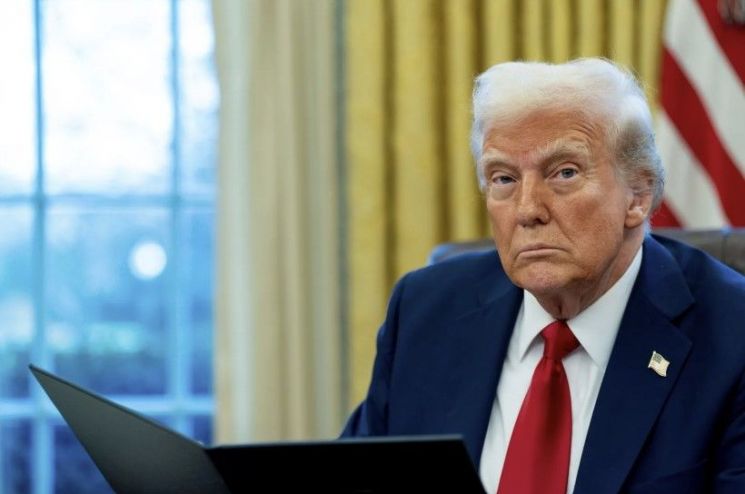
On the 5th, the Kyungnam University Institute of Far Eastern Studies released the results of an in-depth survey of 40 diplomatic and security experts on the theme of "Prospects for the Korean Peninsula Situation with the Launch of Trump's Second Term Administration."
The experts who participated in the survey generally agreed that the Trump second term administration would soon initiate contacts to restart North Korea-U.S. negotiations. The reasons cited included President Trump's personal ambition for achievements such as winning the Nobel Peace Prize and the possibility of a personal friendship with North Korean State Affairs Commission Chairman Kim Jong-un playing a role. Additionally, the appointment of so-called "loyalists" in this second term administration supported the possibility of resuming negotiations in a "top-down" manner. It was also expected that North Korea might respond to negotiations focusing on arms control, such as "nuclear freeze or disarmament" rather than complete denuclearization, or restrictions on intercontinental ballistic missiles (ICBMs).
However, 70% of them were negative about the outcomes even if dialogue between North Korea and the U.S. resumed. This is because there are significant differences between North Korea and the U.S. regarding denuclearization, and issues such as the Russia-Ukraine war, Middle East conflicts, and China problems could push North Korea issues to a lower priority.
In particular, it was anticipated that Chairman Kim, who experienced the so-called "Hanoi no deal" in 2019, would take sufficient time for exploration rather than rushing actively into future North Korea-U.S. negotiations.
The experts who participated in the survey also showed a negative perception of the possibility of improving inter-Korean relations in the future. Sixty percent of respondents answered that the tense situation between North and South Korea would continue regardless of changes in North Korea-U.S. relations. The reasons cited included ▲ the South Korean government's passive role and lack of consistent North Korea policy ▲ North Korea's adherence to an anti-South Korea stance ▲ North Korea's prioritization of internal cohesion.
Meanwhile, regarding South Korea-U.S. relations after the launch of Trump's second term administration, the majority (58%) believed that the current level would be maintained. On the other hand, 40% responded that the relationship would weaken. The background mentioned was that President Trump's America First policy would weaken alliances, and the South Korea-U.S. alliance would be no exception. In particular, issues such as defense cost-sharing negotiations, trade issues, and the possibility of reducing U.S. troops stationed in South Korea were cited as sources of tension between South Korea and the U.S.
This survey was conducted online from January 10 to 20 with 40 domestic experts on Korean Peninsula issues.
© The Asia Business Daily(www.asiae.co.kr). All rights reserved.
![Clutching a Stolen Dior Bag, Saying "I Hate Being Poor but Real"... The Grotesque Con of a "Human Knockoff" [Slate]](https://cwcontent.asiae.co.kr/asiaresize/183/2026021902243444107_1771435474.jpg)















