Conflicting Rulings on Loss of Control Accounting
Logic of 'Merger Damages' for National Pension Service Lawsuit Undermined
Administrative Appeal Strengthens Civil Case for Defendants
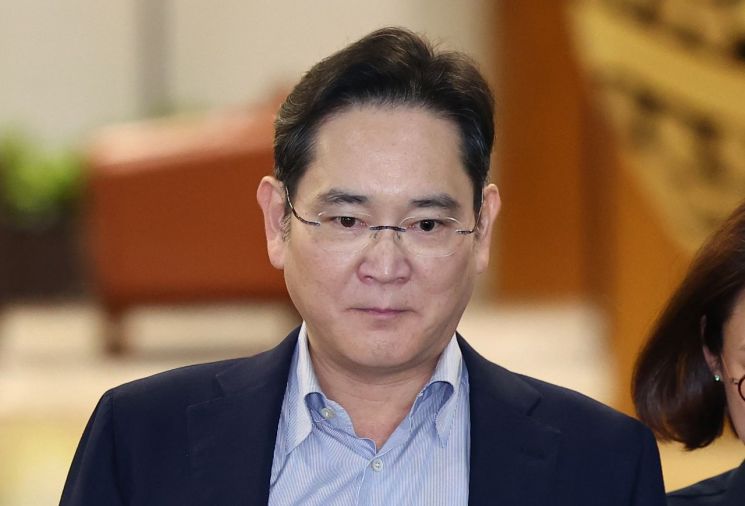
Samsung Electronics Chairman Lee Jae-yong was acquitted of all charges in the second trial of the ‘unfair merger and accounting fraud’ case, drawing attention to related lawsuits.
The Seoul High Court’s 4-1 Administrative Division (Presiding Judges Lee Seung-ryeon, Lee Gwang-man, and Jeong Seon-jae) will hold the first appellate hearing on the 5th for the lawsuit filed by Samsung Biologics against the Securities and Futures Commission (SFC) seeking to cancel corrective orders. In 2015, the SFC under the Financial Supervisory Service imposed an 8 billion KRW fine on Samsung Biologics for intentionally violating accounting standards and recommended the dismissal of former CEO Kim Tae-han. Samsung Biologics filed a lawsuit at the Seoul Administrative Court to cancel these measures. While the Seoul Administrative Court ruled in favor of Samsung Biologics in the first trial, it stated that the accounting treatment reflecting the loss of control over Samsung Bioepis in 2015 involved ‘abuse of discretion’ and other issues.
The judgment stated, “Samsung Biologics abused its discretion by pre-determining conclusions to avoid problems such as capital erosion.” This finding contrasts with the first and second trial rulings in Chairman Lee Jae-yong’s criminal case. The criminal appellate court on the 3rd acquitted Chairman Lee of all 19 charges, stating, “It is difficult to conclude that Samsung Biologics’ finance team had definitive awareness of accounting standard violations,” and “there is at least minimal rationality in the grounds and process leading to that judgment.” It remains to be seen whether this factual determination will be upheld in the administrative court case as well.
The National Pension Service’s lawsuit filed last September against Chairman Lee Jae-yong and others, claiming damages in the billions of KRW due to the merger between Samsung C&T and Cheil Industries, is also considered a related case. This case has been assigned to the Civil Division 31 of the Seoul Central District Court (Presiding Judge Kim Sang-woo). Legal circles interpret that the acquittal on the 3rd has given Chairman Lee a favorable position. This is because the ‘unfair merger’ or ‘accounting fraud’ aimed at succession of management rights, which supported the logic of ‘merger damages,’ was not recognized by the criminal court. It is difficult for the civil lawsuit’s key issues to avoid this aspect.
The criminal appellate court also stated in the judgment that “the allegation of providing false information to the National Pension Service (as per the prosecution’s charges) lacks a clear connection even when considering the grounds for appeal.” Furthermore, it upheld the first trial’s finding that the purpose of the Samsung C&T and Cheil Industries merger “was not solely for Chairman Lee’s succession of management rights.” The appellate court judged that the merger of the two companies could not be seen as solely aimed at Chairman Lee’s succession or strengthening control, and there is no sufficient basis to recognize that the unfair merger ratio caused damages to Samsung C&T and its shareholders.
© The Asia Business Daily(www.asiae.co.kr). All rights reserved.
![Clutching a Stolen Dior Bag, Saying "I Hate Being Poor but Real"... The Grotesque Con of a "Human Knockoff" [Slate]](https://cwcontent.asiae.co.kr/asiaresize/183/2026021902243444107_1771435474.jpg)
















