Cultural Heritage Administration and Riot Games Repatriate Seonwonjeon Signboard
"Analysis of Brush Strokes Confirms Calligraphy by Seo Seung-bo"
The Cultural Heritage Administration and the Foundation for Cultural Heritage of Overseas Koreans announced on the 3rd that they have repatriated a signboard presumed to have been hung in Seonwonjeon (璿源殿) of Gyeongbokgung Palace last year with sponsorship from Riot Games. A signboard refers to a framed piece on which paintings or writings are drawn on paper, silk, or wooden boards. It is made according to the scale and formality of the building and hung inside rooms or above doors.
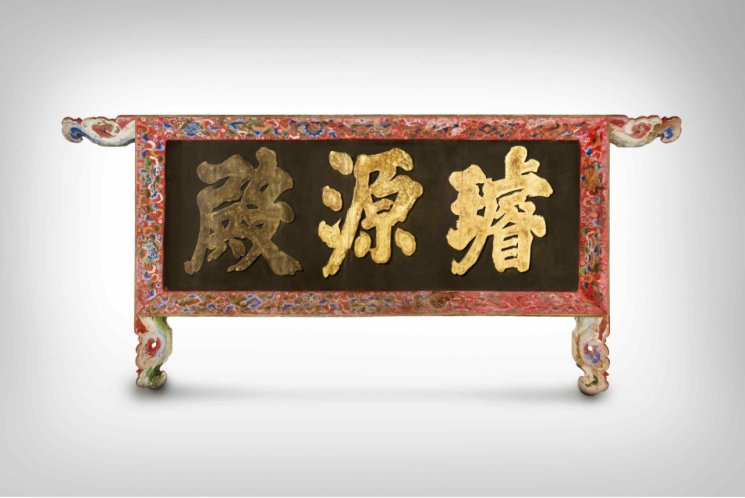
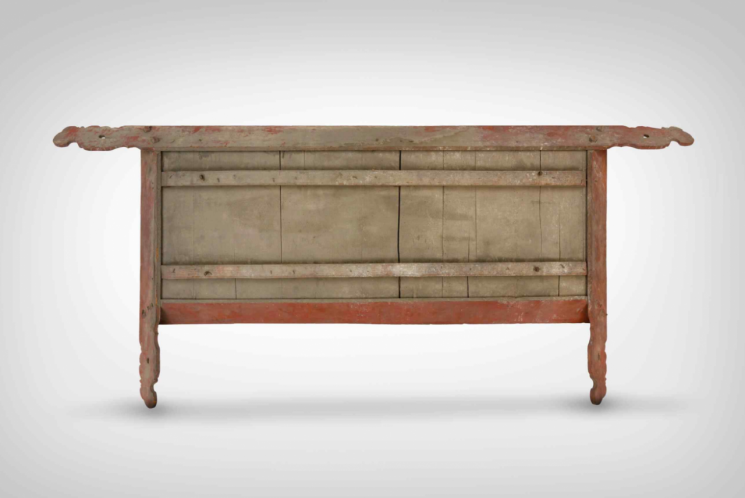
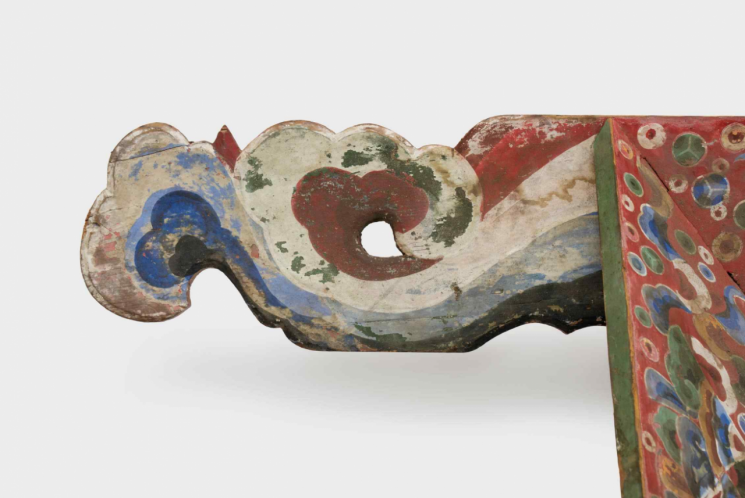
The signboard returned to the homeland this time measures 312 cm in width and 140 cm in height, making it quite large. The characters 'Seonwon (璿源)', meaning 'Source of Jade', are inscribed in gold on a black background. The extended border features carved cloud patterns and painted treasure motifs such as fans and wrapping cloths, suggesting it was hung in a building of high formality and rank.
After expert evaluation and literature research, the Cultural Heritage Administration regards this as the signboard of Seonwonjeon, considered the most sacred space within the Joseon Dynasty palaces. Seonwonjeon was the building enshrining the royal portraits (Eojin, 御眞) of past kings. The king conducted rituals such as incense offering and worship there. The Joseon royal family had Seonwonjeon halls in Gyeongbokgung, Changdeokgung, and Gyeongungung (Deoksugung). When the king moved his residence, the royal portraits were also relocated and respectfully enshrined.
The Cultural Heritage Administration stated, "Considering circumstances and records related to the construction and destruction of Seonwonjeon halls in each palace, this is believed to be the signboard that hung in the reconstructed Seonwonjeon of Gyeongbokgung." According to the 'Gyeongbokgung Construction Diary (景福宮營建日記)', Seonwonjeon of Gyeongbokgung was rebuilt in 1868.
The Seonwonjeon of Gyeongbokgung, first built in 1444, and the Seonwonjeon of Gyeongungung, built in 1897, were lost to fire. The new Seonwonjeon of Changdeokgung only preserves the signboard from the 1901 rebuilt Seonwonjeon of Gyeongungung. Although the old Seonwonjeon of Changdeokgung no longer has a surviving signboard, the location of the iron fittings for hanging the signboard and the size of the repatriated artifact did not match this signboard.
The calligraphy on the signboard also supports the assumption that it is from Gyeongbokgung’s Seonwonjeon. According to the 'Seungjeongwon Ilgi (承政院日記)', which records royal orders and administrative affairs of the Joseon Dynasty, the signboard of the Seonwonjeon rebuilt in 1868 was written by Seo Seung-bo (1814?1877).
The Cultural Heritage Administration said, "Analysis of the brush strokes and calligraphic characteristics suggests that the writing on the signboard is Seo Seung-bo’s." They added, "The pigments used on the signboard mostly match the materials recorded in the Uigwe (royal protocols) documenting the construction of Seonwonjeon halls in Gyeongbokgung and Changdeokgung around 1900."
The Cultural Heritage Administration and the Foundation confirmed that an artifact described as '19th-century Gyeongbokgung Seonwonjeon signboard' appeared at an auction in Japan in 2023 and began tracking it. The auction house cited connections to Terauchi Masatake (1852?1919), the first Governor-General of Joseon, as grounds. They explained, "When Terauchi returned to his hometown, some buildings of Gyeongbokgung were dismantled and relocated," and "the signboard was kept by an employee involved in the dismantling work."
The Cultural Heritage Administration and Riot Games conveyed to the holder the necessity of returning the Seonwonjeon signboard, a cultural heritage of the Joseon royal family, to Korea and negotiated. This is the seventh time that artifacts overseas have been brought back together. Since the agreement in 2012, they have cooperated in repatriating treasures such as the 'Bamboo Book Conferring the Title of Crown Princess to Queen Sinjeong' and the 'Triptych of Shakyamuni Buddha.'
The Cultural Heritage Administration and the Foundation will unveil the actual signboard at the National Palace Museum on the 27th. Afterwards, the National Palace Museum will take charge of its management. A Cultural Heritage Administration official said, "We expect it to be utilized in various ways such as academic research and exhibitions in the future."
© The Asia Business Daily(www.asiae.co.kr). All rights reserved.
![Clutching a Stolen Dior Bag, Saying "I Hate Being Poor but Real"... The Grotesque Con of a "Human Knockoff" [Slate]](https://cwcontent.asiae.co.kr/asiaresize/183/2026021902243444107_1771435474.jpg)













