The United States, the World's Top Oil Producer, Still Relies on Canadian Oil
Imports Over 140 Trillion Won Worth of Canadian Crude Annually
North American Crude Oil Differs in Composition, Even Between the U.S. and Canada
If Affordable Canadian Oil Can't Be Replaced,
Costs for Diesel, Plastics, and More Could Soar
Since the shale revolution, the United States has become the world's number one oil producer and crude oil exporter. This means there is enough oil within the U.S., and any surplus can be exported to other countries. However, the U.S. still imports a significant amount of oil from Canada. If issues arise with Canadian crude oil imports, it could disrupt the supply of various petrochemical products ranging from fuel to plastics. This is also why the U.S. decided to impose a 25% tariff on Canadian manufactured goods but only a 10% tariff on energy products such as crude oil.
The Web of the North American Oil Industry... Are Canada and Mexico Also One Body?

The oil and gas pipelines crossing the crude oil extraction zones in North America connect not only the United States but also Canada, Alaska, and Mexico in Central and South America. Even after the shale revolution in the 2010s, the U.S. has imported over $100 billion (approximately 145 trillion KRW) worth of crude oil annually from Canada and Mexico. According to the American Fuel & Petrochemical Manufacturers (AFPM), as of last year, 60% of the U.S.'s imported crude oil came from Canada, and 7% from Mexico. The oil and gas pipelines, which serve as the 'lifeline' of the U.S. economy, continue to expand westward into Canada and northward into Mexico.
Sweet U.S. Oil vs Sour Canadian Oil
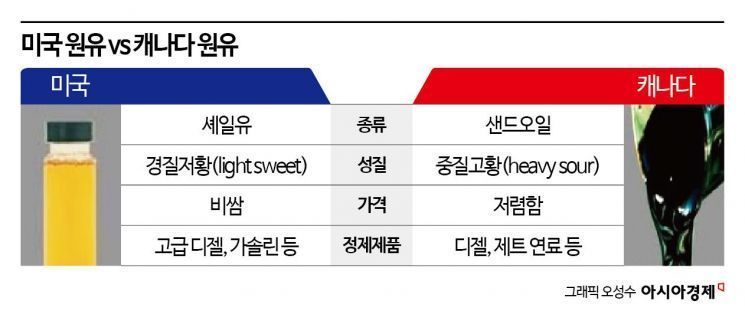
Why does the oil-producing U.S. rely on Canadian oil? The answer lies in the characteristics of crude oil. Crude oil is classified by viscosity and odor. As viscosity increases, it is categorized from 'light crude' to 'heavy crude,' and as the odor becomes stronger (indicating higher sulfur content), it is classified from 'low sulfur' to 'high sulfur.'
U.S. shale oil has low viscosity and a fresh scent, classified as 'light sweet' crude. Conversely, Canadian oil has high viscosity and a strong odor, classified as 'heavy sour' crude.
U.S. shale oil is well-suited for reprocessing into fuels and chemical products, enhancing the competitiveness of the U.S. refining industry. However, from a global perspective, light sweet crude is still less abundant than heavy sour crude and is correspondingly more expensive.
There is also the issue of refining facilities. Oil refineries are designed with different components and layouts depending on whether they process light or heavy crude. Before the shale revolution, heavy crude was much easier to obtain than light crude, so most U.S. chemical complexes specialized in refining heavy crude.
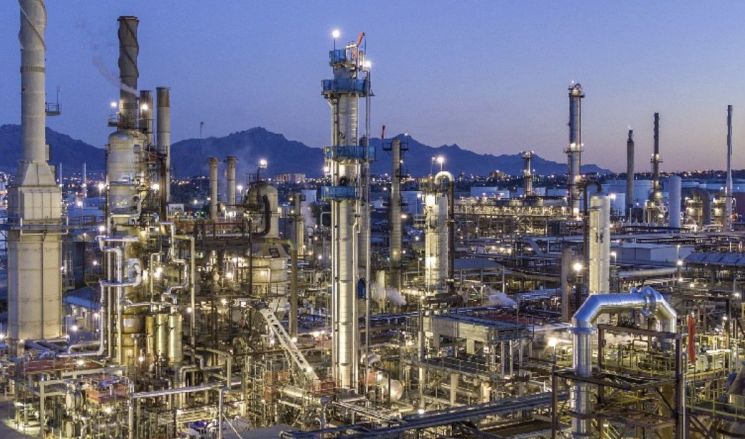 El Paso Refinery Complex in Texas, USA. Established by Big Oil Chevron in the 1920s. Screenshot from the El Paso Refinery Complex website.
For this reason, Texas refining complexes in the U.S. host many heavy crude refining clusters, which are likely to remain the backbone of U.S. manufacturing in the future. Especially, crude oil imported from Canada and Mexico is processed into diesel and jet fuel, which are essential to the U.S. economy, where trucking and air transport have a high share.
Due to the nature of refineries, it is not easy to dismantle heavy crude plants and convert them into light crude plants. This process requires at least 10 years and tens of trillions of won in additional costs. There is also a risk that the price competitiveness of oil could be damaged during the transition from heavy to light crude refining. If production costs rise, this would be unwelcome news for the U.S. chemical industry, which is already engaged in fierce competition with low-cost Chinese products.
The U.S. refining industry has gained its current competitiveness by operating with a blend of U.S. shale oil and Canadian and Mexican crude oil. In a tariff policy statement released last month, AFPM emphasized, "The refining industry must blend different types of crude oil to maximize production efficiency," and "More than 70% of the U.S. refining industry depends on heavy crude (not shale)."
If North American Energy Security Wavers... Importing Countries Like South Korea Also Face Burdens
Tariffs operate bidirectionally. On the 1st of this month, the Donald Trump administration announced a 25% tariff on Canadian manufactured goods and a 10% tariff on energy products such as crude oil, but on the 3rd, after a phone call with Canadian Prime Minister Justin Trudeau, they agreed to delay the actual imposition by 30 days. The energy tariff targets the heavy crude oil flowing into North America through pipelines spread across Canada, known as Western Canadian Select (WCS). Canada immediately announced retaliatory tariffs, though energy products were not included in the tariff targets.
Although the tariff imposition was delayed by 30 days, the situation is not yet resolved. Both U.S. and Canadian crude oil could face crossfire from tariffs and retaliatory tariffs at any time. This has raised concerns that the massive energy supply network, built over decades by cooperation among entrepreneurs and innovators from the U.S., Canada, and Mexico, is at risk of collapse. AFPM warned, "It may sound counterintuitive, but crude oil import tariffs increase costs for consumers and manufacturers and threaten energy security," adding, "This is not a problem that can be solved simply by increasing U.S. crude oil production. U.S. light crude cannot replace Canadian heavy crude."
The sudden tectonic shift in the North American refining industry is likely to impact Asia, especially the South Korean chemical industry. South Korea is already a key importer of U.S. crude oil. As of last year, it imported 21.51 million tons, ranking second after Saudi Arabia (47.89 million tons), accounting for 15.7% of its crude oil imports.
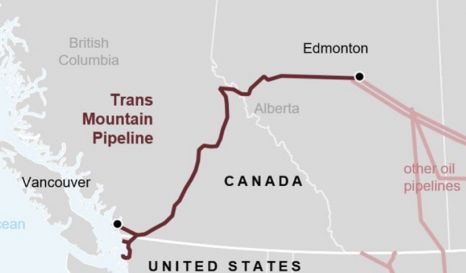 Canada exports crude oil not only to the United States but also to Asia through the TMX pipeline. However, the infrastructure scale is still limited. Natural Resources Canada
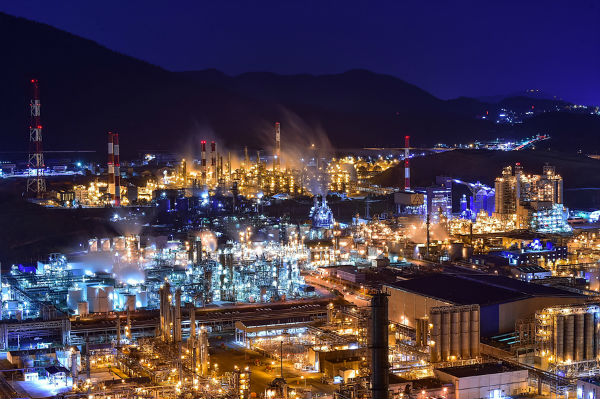
Some voices suggest that the South Korean refining industry could seize the tariff war as an opportunity. The heavy chemical cluster within the Yeosu National Industrial Complex in South Korea specializes in refining heavy crude like WCS. If Canada redirects its WCS exports from the U.S. to Asia, it would mean a new crude oil supply source for South Korea.
Do Chun-ho, chairman of the Korea Chemical Experts Association, explained, "Our chemical industry has been structured to refine imported heavy crude into petrochemical products such as asphalt for re-export. Recently, with advances in cracking technology (a method of reprocessing crude oil with heat), we can also refine high-grade fuels like gasoline," adding, "If Canadian crude oil is available, it can be used more effectively."
However, Canada's relatively limited export infrastructure poses an obstacle. Canada transports crude oil overseas through the western 'TMX Pipeline.' Crude oil destined for Asia accounts for only about 180,000 barrels per day, roughly 30% of the total 600,000 barrels per day. This is only a tiny fraction of South Korea's daily consumption (approximately 3.06 million barrels, according to the Korea Petroleum Association).
© The Asia Business Daily(www.asiae.co.kr). All rights reserved.



















