60.4% of Households Cooked at Home Last Year
Over 30 Percentage Point Drop in a Decade
Per Capita Rice Consumption Hits Record Low at 55.8kg
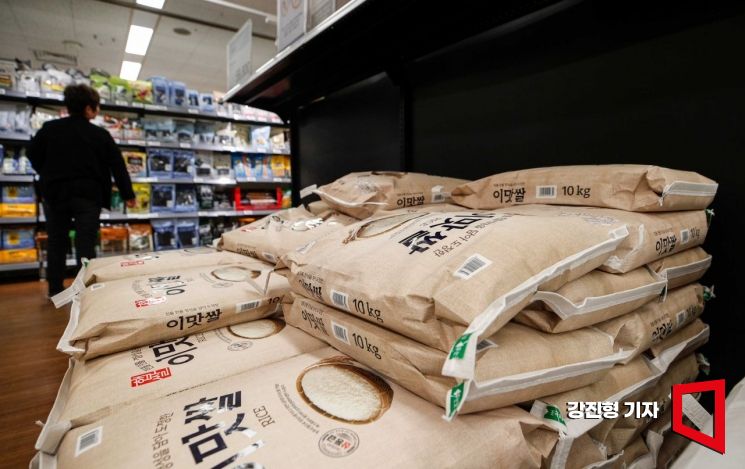
Due to changes in household types such as the increase in single-person households, there is a growing trend of enjoying convenient meals rather than spending long hours cooking. Additionally, consumption of foods that replace rice, such as meat and salads, has intensified, resulting in a continuous decline in the number of households preparing meals at home each year.
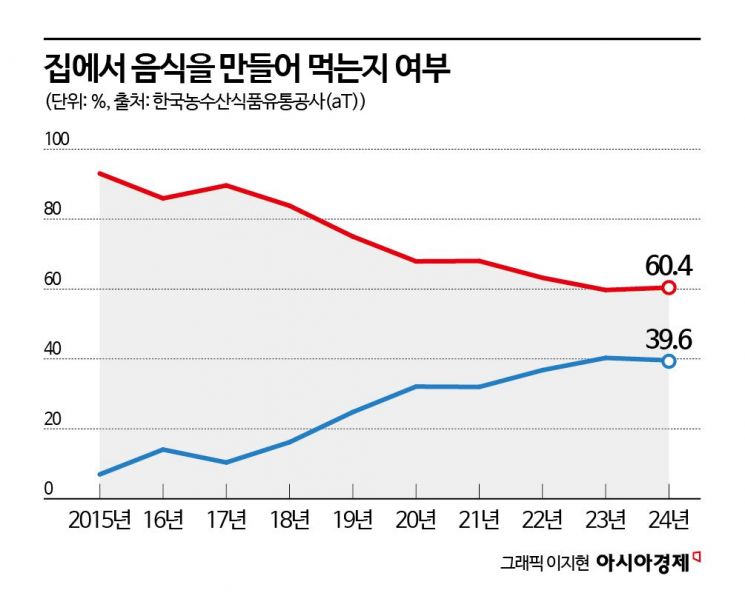
According to the food consumption behavior survey conducted by the Korea Agro-Fisheries & Food Trade Corporation (aT) on the 1st, last year, 60.4% of respondents said they mostly prepared meals at home. The proportion of households eating home-cooked meals was 93.0% in 2015, which dropped to 85.9% the following year, falling into the 80% range, and has decreased every year since, declining by more than 30 percentage points over about a decade.
As the proportion of households not preparing food at home continues to expand, the frequency of skipping meals is also increasing. In particular, skipping breakfast has become more common; the number of times breakfast was skipped per week increased from 1.44 in 2021 to 1.79 last year. In contrast, the frequency of skipping dinner changed relatively little, from 0.12 times to 0.15 times during the same period.
The reasons for the decrease in the number of meals eaten are also gradually changing over time. The passive reason of finding meal preparation cumbersome, which led to reducing traditional meals such as rice or porridge, is decreasing, while active reasons such as preferring other foods like bread or noodles or reducing intake for dieting are increasing. In fact, the response that meal preparation was too troublesome to eat rice decreased from 39.5% in 2023 to 36.4% last year, whereas the response that other foods like bread and noodles were preferred rose from 24.1% to 38.3%, and the response that rice was avoided for dieting increased from 16.1% to 18.1%.
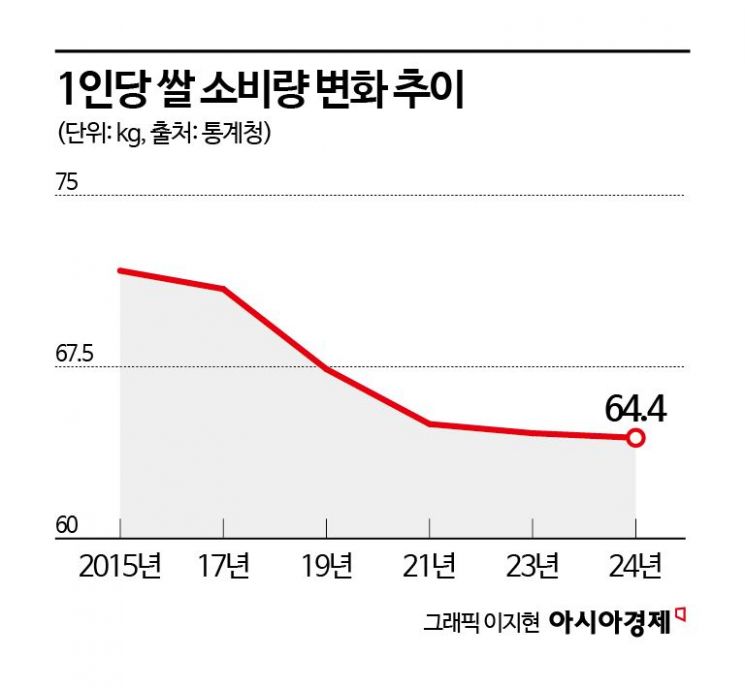
Rice consumption is also rapidly declining. According to the '2024 Grain Consumption Survey' released by Statistics Korea, the annual per capita rice consumption in the household sector last year was 55.8 kg. This is a 1.1% decrease from 56.4 kg in 2023, marking the lowest level ever recorded. The daily per capita consumption was 152.9 g, which is 1.7 g less than 154.6 g in 2023. Considering that the typical size of instant rice sold on the market is around 200 g, this means that people consume less than one serving of instant rice per day. The household sector survey includes both rice cooked and consumed at home and rice consumed through delivery or dining out.
In Korea, the annual per capita rice consumption has been on a downward trend for 40 years since it rose from 129.5 kg in 1983 to 130.1 kg in 1984, without any rebound until last year. The total annual per capita consumption of all grains, including rice, barley, wheat flour, and other mixed grains, also decreased by 0.3% (0.2 kg) to 64.4 kg last year compared to the previous year. On the other hand, the consumption of the three major meats?beef, pork, and chicken?last year was 60.1 kg, exceeding rice consumption.
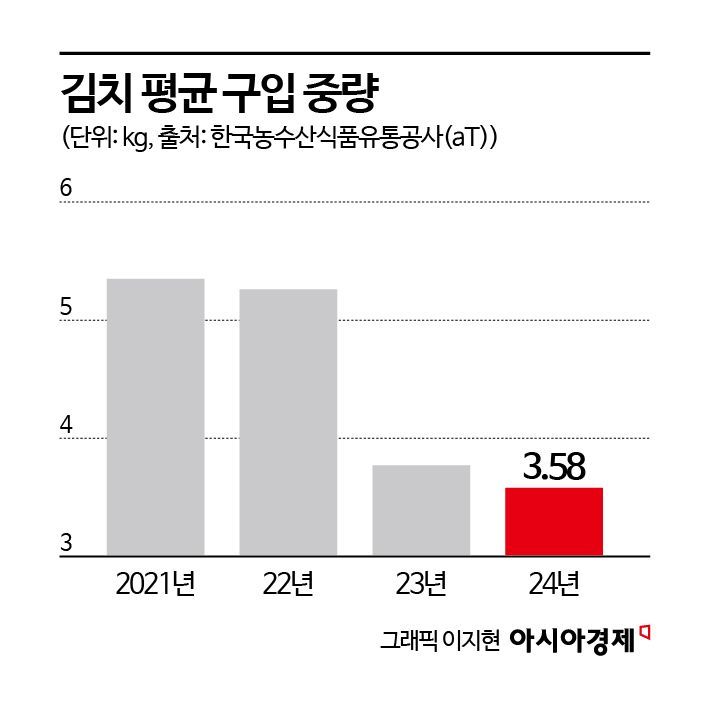
As the frequency of cooking rice at home decreases, the consumption patterns of kimchi within households are also changing. In particular, the average purchase weight of kimchi has been decreasing annually, with the kimchi market shifting toward smaller packaging. The average purchase weight of kimchi dropped from 5.35 kg in 2021 to 3.58 kg last year, decreasing by nearly 2 kg over three years.
However, with the global popularity of K-food, both kimchi export volume and export value reached record highs last year. According to the Ministry of Agriculture, Food and Rural Affairs, kimchi exports last year totaled 47,100 tons, a 6.9% increase from the previous year. Kimchi export volume increased by 7.1% from 39,700 tons in 2020 to 42,500 tons in 2021, then slightly decreased to 41,100 tons in 2022, but rose again for two consecutive years in 2023 (44,000 tons) and last year. Corresponding to the increase in export volume, export value also rose by 5.2% last year to $163.6 million (approximately 240 billion KRW), setting a new record.
Meanwhile, as home-cooked meals decline, the consumption and purchase of convenience foods are expanding. The proportion of consumers purchasing ready-to-cook foods at least once a week increased from 15.3% in 2021 to 22.1% last year, and the frequency of purchasing ready-to-eat foods, which require no additional cooking and can be eaten immediately after purchase, also rose from 16.2% to 25.7%.
© The Asia Business Daily(www.asiae.co.kr). All rights reserved.
![Clutching a Stolen Dior Bag, Saying "I Hate Being Poor but Real"... The Grotesque Con of a "Human Knockoff" [Slate]](https://cwcontent.asiae.co.kr/asiaresize/183/2026021902243444107_1771435474.jpg)

















