Even Without Directly Filing a Report,
Active False Statements to Police Can Be Punished
Supreme Court Rules on False Accusation in Sexual Violence Cases
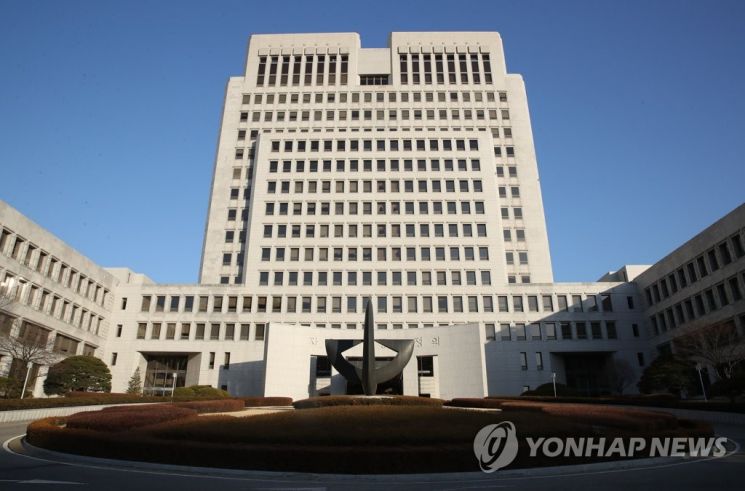
The Supreme Court's 3rd Division (Presiding Justice Oh Seok-jun) has ruled that even if it is not a police report, actively lying about having been a victim of a sex crime can be punished as false accusation. The Supreme Court overturned the lower court's acquittal of Kang, who was tried on charges of falsely testifying about sexual violence, and on the 9th sent the case back to the Seoul Central District Court.
In July 2022, Kang had a dispute with a man identified as A, whom he met through social networking services (SNS), over the payment for using a lodging facility. When the police were dispatched following A's report, Kang was indicted on charges of falsely testifying that he had been sexually assaulted by A. Kang repeated the same claim not only on the day of the incident but also during the victim investigation four days later. He protested that the police did not properly collect evidence related to the sexual violence and also submitted a separate medical opinion.
The investigative agency judged Kang's statements to be false and prosecuted him for false accusation. The first trial court sentenced him to eight months in prison. However, the second trial court acquitted him. The reason was that false accusation punishes "a person who reports false facts to a public official with the intent to cause another person to be subject to criminal punishment," and Kang's responses to the police officers' questions alone could not be considered a voluntary "report."
This judgment was overturned by the Supreme Court. The Supreme Court pointed out, "The defendant consistently testified to the investigative agency that he was sexually assaulted by A, submitted related evidence, and continuously protested that the police officers did not collect evidence." It further concluded, "The defendant's initial statement at the time of the police dispatch and subsequent statements to the investigative agency were not merely made under the agency's interrogation but were voluntary 'reports' made to the investigative agency with the intent to cause another person to be subject to criminal punishment," and thus it is appropriate to punish Kang for false accusation.
© The Asia Business Daily(www.asiae.co.kr). All rights reserved.
![Clutching a Stolen Dior Bag, Saying "I Hate Being Poor but Real"... The Grotesque Con of a "Human Knockoff" [Slate]](https://cwcontent.asiae.co.kr/asiaresize/183/2026021902243444107_1771435474.jpg)















