Gap Between Top and Bottom 20% Reaches Record High
Seoul Tops List With 154 Times Difference... Nationwide Average at 99.9 Times
Individual business owners, including the top 0.1% income earners, were found to earn an average of over 1.5 billion KRW annually, with income concentration particularly pronounced in Seoul, where it exceeded 2.5 billion KRW. The gap between the top 20% and bottom 20% in business income was also largest in Seoul, reaching 154 times.
On the 29th, Yonhap News cited data on personal business income declarations by region received from the National Tax Service by Park Seong-hoon, a member of the National Assembly’s Planning and Finance Committee from the People Power Party. According to the data, there were 7,721,416 business income declarants nationwide for the 2023 tax year.
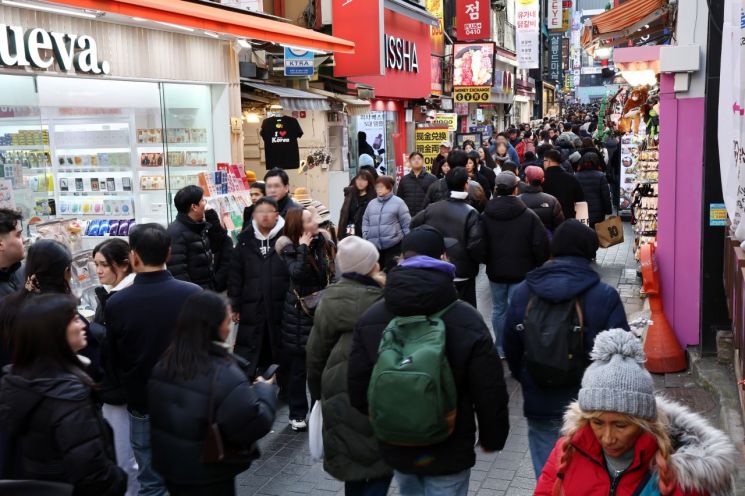
Their average business income was 18.59 million KRW, and the median income (the exact middle value when business incomes are arranged in order) was 6.37 million KRW. By region, Daegu had the highest average business income at 24.83 million KRW. It was followed by Busan (21.96 million KRW), Seoul (2.83 million KRW), and Ulsan (20.02 million KRW), all exceeding 20 million KRW.
On the other hand, Incheon (15.63 million KRW), Gyeonggi (16.33 million KRW), Chungnam (17.06 million KRW), and Gangwon (17.52 million KRW) had lower averages. The average business income outside the metropolitan area was 19.6 million KRW, which was 1.74 million KRW higher than the metropolitan area (17.86 million KRW).
Ultra-high-income business owners were concentrated in Seoul. The top 0.1% of business income declarants earned an average of 1.56322 billion KRW. Seoul ranked first with 2.53611 billion KRW, the only region among the 17 cities and provinces to exceed 2 billion KRW. Daegu (1.69132 billion KRW) and Busan (1.60336 billion KRW) also surpassed the national average.
Conversely, Incheon (1.0287 billion KRW), Gyeongbuk (1.0502 billion KRW), Chungbuk (1.06867 billion KRW), and Gangwon (1.08223 billion KRW) had lower figures.
The largest gap between the top 20% and bottom 20% in business income was also found in Seoul.
 The average KRW/USD exchange rate in Q4 last year reached its highest level since the financial crisis. Photo by Yonhap News
The top 20% in Seoul reported an average business income of 83.41 million KRW, which is 154.4 times that of the bottom 20% (540,000 KRW).
Sejong (141.3 times), Daegu (109.5 times), Daejeon (106.5 times), and Gwangju (104.7 times) followed with large gaps.
The smallest income gap was in Gyeongbuk (73.0 times), followed by Jeonnam (73.3 times), Incheon (75.8 times), and Chungnam (76.5 times). Nationwide, the income gap between the top 20% and bottom 20% was 99.9 times.
Earlier research revealed that ultra-high-income individual business owners earning over 500 million KRW annually in 2022 had higher access to tax avoidance or evasion methods. The Korea Institute of Public Finance stated in a report titled “A Study on the Efficiency Cost of Income Tax” that “the marginal efficiency cost resulting from an increase in income tax rates was highest at 39.7 in the tax base exceeding 500 million KRW.”
The institute analyzed that “statistically significant positive taxable income elasticity was observed in the sample of individual business owners, resulting in significant efficiency costs,” and explained that “high taxable income elasticity in certain groups is due to their greater access to tax avoidance or evasion methods.”
© The Asia Business Daily(www.asiae.co.kr). All rights reserved.
![Clutching a Stolen Dior Bag, Saying "I Hate Being Poor but Real"... The Grotesque Con of a "Human Knockoff" [Slate]](https://cwcontent.asiae.co.kr/asiaresize/183/2026021902243444107_1771435474.jpg)












