Cases of Mulgim Disposal Emerge
Amid Surge in Production
As the K-food craze continues to gain momentum, the price of gim (dried seaweed) has also been soaring this year. However, the raw material for dried gim, mulgim (fresh seaweed), has seen a price crash due to a surge in production, leading to cases of disposal in production areas.
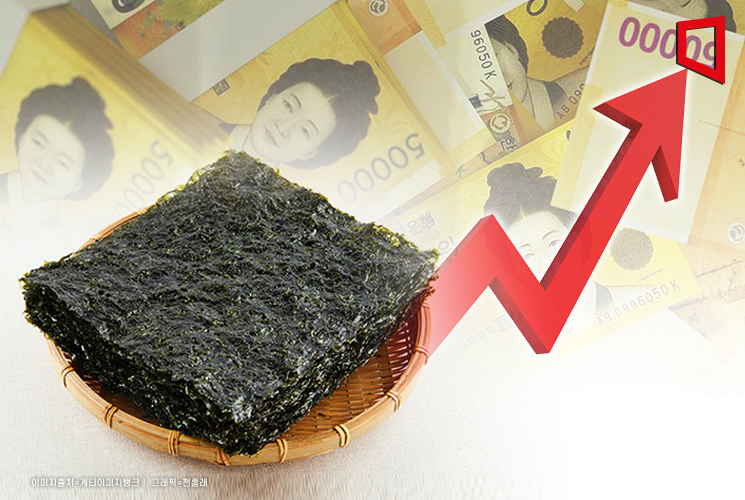
According to the Agricultural Products Price Information (Kamis) operated by the Korea Agro-Fisheries & Food Trade Corporation (aT) on the 27th, on the 21st, just before the Lunar New Year holiday, medium-grade dried gim (10 sheets) was traded at an average price of 1,467 KRW in domestic traditional markets. With strong exports and domestic consumption combined, this is a 44.2% (450 KRW) increase compared to January last year (1,017 KRW).
The monthly average price of gim has been on an upward trend for eight consecutive months since it first surpassed the 1,300 KRW mark in June last year. The average retail price of gim last year was 1,214 KRW, up 36.5% (325 KRW) from 889 KRW in 2023. Gift-packaged gopchang gim, which was traded at around 20,000 KRW per one tot (100 sheets) a year ago, has risen by 60-70% to the high 30,000 KRW range.
Gim became the first domestic seafood product to surpass 1 trillion KRW in exports, earning the nickname "black semiconductor." Following exports of 790 million USD (approximately 1.156 trillion KRW) in 2023, last year recorded 997 million USD (approximately 1.3 trillion KRW). The consumption ratio of gim, which was 55% domestic and 45% export in 2020, surged to 63% export share in 2023, achieving over 1 trillion KRW in exports for two consecutive years.
The rise in gim prices is mainly attributed to a rapid increase in export volumes amid the global K-food boom, which reduced inventory. Additionally, increased labor costs, electricity fees, and fuel prices involved in the gim production process also contributed to the price hike.
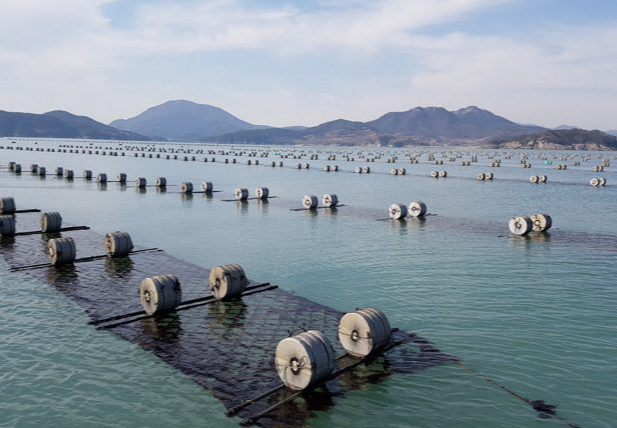
However, in some areas of Jeonnam, the largest gim-producing region, there have been cases where excess mulgim has been discarded. In Jindo, which had the highest gim auction volume nationwide last year, 1,010 tons of mulgim were unsold at auction and discarded this year. In Haenam and Goheung, 167 tons and 49 tons respectively were also dumped into the sea. Since mulgim is a living organism, it must be sold on the day of auction; otherwise, it has to be discarded. However, as the number of processing plants is limited while mulgim production has increased, prices in production areas have sharply fallen, leading to disposal cases. It is also pointed out that dried gim companies are holding back purchases, expecting mulgim prices to fall further, which is another reason for the discarding of mulgim.
According to the Korea Maritime Institute (KMI), this year’s mulgim production reached 34.67 million sok, about 62% higher than the average year. As a result, the domestic average price of mulgim last month dropped by 50.9% to 2,254 KRW per kilogram from 4,591 KRW the previous month. The surge in mulgim production this year is analyzed to be the result of expanded cultivation areas and favorable growing conditions.
© The Asia Business Daily(www.asiae.co.kr). All rights reserved.
![Clutching a Stolen Dior Bag, Saying "I Hate Being Poor but Real"... The Grotesque Con of a "Human Knockoff" [Slate]](https://cwcontent.asiae.co.kr/asiaresize/183/2026021902243444107_1771435474.jpg)
















