"Jeon and Galbijjim Are High-Calorie Foods Due to Oil and Sugar"
Seoul Asan Medical Center has urged caution against consuming high-calorie foods that increase the risk of obesity and metabolic diseases during the holidays.
On the 24th, Seoul Asan Medical Center revealed the top 10 most fattening foods ahead of the Lunar New Year holiday on social media (SNS).
The number one high-calorie food to be most careful of was 'Yakgwa,' with approximately 420 kcal per 100g (2-3 pieces). Following were Tteokgalbi (about 350 kcal per 100g) and Soy Galbijjim (about 340 kcal per 100g), ranking second and third respectively.
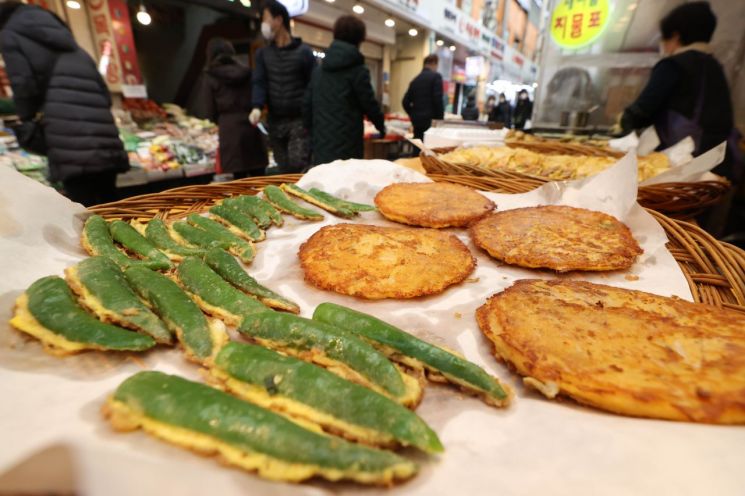
In fourth place was Kkochijeon, with about 320 kcal per 100g. Fifth was Japchae (about 310 kcal per 100g), and sixth was Donggeurangttaeng (about 309 kcal per 100g).
The foods ranked seventh to tenth have less than 300 kcal per 100g, but they can also easily cause weight gain if overeaten. From seventh place, the order is Bulgogi (about 270 kcal per 100g), Dwaejigalbijjim (Pork Galbijjim) (about 250 kcal per 100g), Tteok Mandutguk (Rice Cake and Dumpling Soup) (about 210 kcal per 100g), and Three-color Namul (about 142 kcal per 100g).
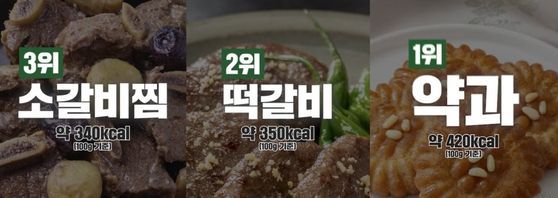 Top 3 High-Calorie Foods to Be Careful of During the Lunar New Year Holiday Released by Seoul Asan Medical Center. Seoul Asan Medical Center SNS.
The nutrition team at Seoul Asan Medical Center explained, "Lunar New Year foods are delicious but mostly high in calories," adding, "Especially Jeon (Korean pancakes) and Galbijjim contain a lot of oil and sugar, causing a calorie explosion."
To avoid the high-calorie bomb of holiday foods, they suggested ▲using an air fryer instead of deep-frying various types of Jeon ▲reducing sugar in Galbijjim dishes and using vegetables or fruits ▲reducing the amount of rice cakes and dumplings in Tteok Mandutguk and adding mushrooms and zucchini ▲eating vegetables like namul first during meals to increase satiety ▲serving food on individual plates and eating slowly ▲burning accumulated calories through light exercise after the Lunar New Year and recovering the body with a low-sodium, vegetable-centered diet.
© The Asia Business Daily(www.asiae.co.kr). All rights reserved.
![Clutching a Stolen Dior Bag, Saying "I Hate Being Poor but Real"... The Grotesque Con of a "Human Knockoff" [Slate]](https://cwcontent.asiae.co.kr/asiaresize/183/2026021902243444107_1771435474.jpg)

















