Impact of High Exchange Rate and Rising Oil Prices Combined
The weekly average prices of gasoline and diesel at domestic gas stations have risen together for 15 consecutive weeks. This appears to be due to the combined effects of a high exchange rate trend and continuous increases in oil prices.
According to the Korea National Oil Corporation's oil price information system OPINET on the 25th, the average gasoline selling price at gas stations nationwide for the fourth week of January (19?23) recorded 1,726.2 KRW per liter, up 20.1 KRW from the previous week. The region with the highest price is Seoul, which reached 1,800.5 KRW per liter, up 26.7 KRW from the previous week.
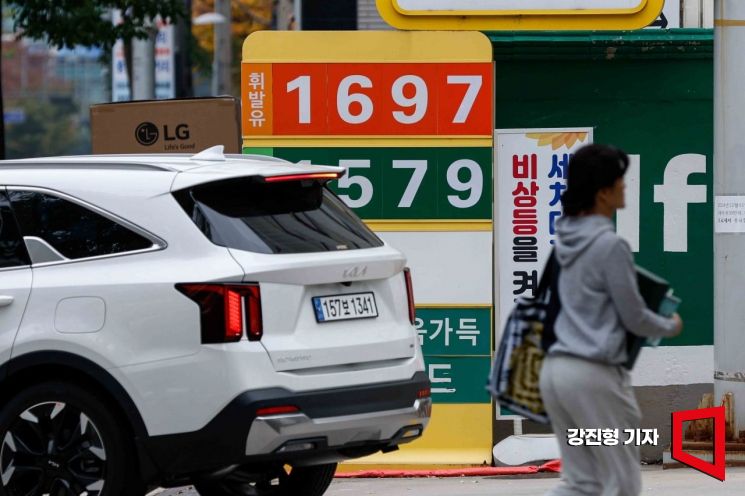 Starting today, as the reduction in the fuel tax decreases, gasoline prices have increased by 42 won per liter and diesel by 41 won per liter. On the 1st, a gas station in Seoul is selling gasoline at 1,697 won per liter and diesel at 1,579 won per liter. Photo by Kang Jin-hyung
The average gasoline price in Seoul entering the 1,800 KRW range is the first time in about 1 year and 2 months since November 6, 2023 (1,802.69 KRW).
The lowest price region, Daegu, also rose by 23.0 KRW to 1,701.6 KRW, surpassing 1,700 KRW for the first time since October 23, 2023 (1,700.48 KRW). The cheapest brand was Altteul Gas Station, with an average price of 1,695.7 KRW per liter.
The average diesel selling price increased by 28.4 KRW to 1,585.4 KRW per liter. Although international oil prices fell this week due to US President Trump's announcement of policies to promote oil production, concerns over the possibility of strengthened oil sanctions limited the decline.
Dubai crude oil, the benchmark for imported crude oil prices, was $82.7 per barrel, down $0.5 from the previous week. International gasoline prices fell by $2.7 to $83.8, and international automotive diesel prices dropped by $1.2 to $97.5. Changes in international oil prices are typically reflected in domestic gas station prices with a lag of about 2 to 3 weeks.
An official from the Korea Petroleum Association predicted that fuel prices will continue to rise until next week, which includes the Lunar New Year holiday, due to the upward trend in international oil prices. However, they assessed that "due to the exchange rate and international product price declines that occurred this week, the rate of increase may slow down or turn into a decline in early February."
© The Asia Business Daily(www.asiae.co.kr). All rights reserved.