As soon as U.S. President Donald Trump took office, he issued multiple executive orders to halt refugee admissions, prompting Afghan nationals who risked their lives to assist U.S. troops during the Afghanistan war to express feelings of betrayal. They claimed that despite helping the U.S. and becoming targets of the Taliban, America has effectively turned its back on them.
On the 24th (local time), the British BBC broadcast reported this under the headline, "Afghan Refugees Feel Betrayed by Trump's Order Blocking Entry to the U.S."
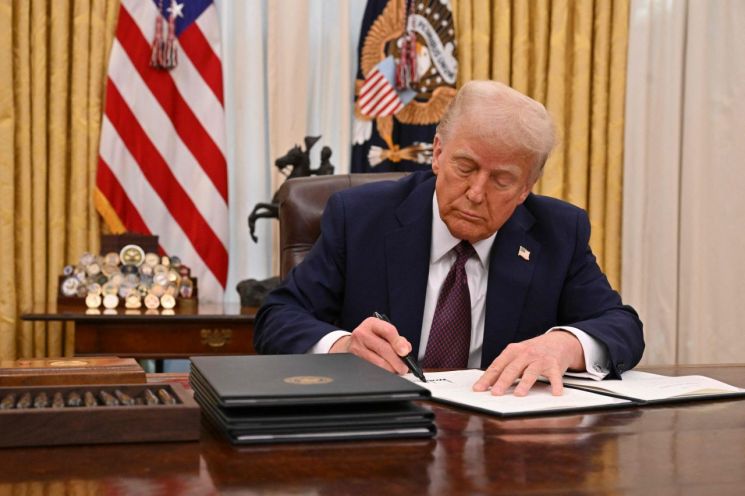
According to the report, the executive order signed by Trump included suspending refugee resettlement programs, delaying the processing of Afghan refugee entry applications, and canceling flights. This executive order applies without exception, even to families of U.S. military personnel.
The issue is that many locals who assisted U.S. forces during the nearly 20-year Afghanistan war following the September 11, 2001 attacks became targets of the Taliban.
Some of these individuals escaped to the U.S. during the urgent withdrawal of U.S. troops in August 2021, but many remain in hiding locally or reside in surrounding areas such as Pakistan, waiting solely for U.S. asylum approval. Families who could not escape with Afghan national collaborators are reportedly in the same situation, waiting for recognition as refugees.
BBC estimated that the number of applicants whose asylum approval process is already in its final stages ranges from 10,000 to 15,000.
In this context, President Trump’s immediate suspension of all procedures upon taking office effectively shattered their hopes.
Although the Taliban officially claim to have pardoned all U.S. military collaborators, the United Nations estimates that threats continue, with hundreds of collaborators reportedly killed.
Afghans who spoke to the BBC under pseudonyms uniformly expressed despair, saying, "The U.S. has turned its back on us."
'Abdullah,' who worked as a U.S. military interpreter and evacuated with his parents while leaving his sister behind in Afghanistan, currently serving as a U.S. airborne soldier, lamented, "It seems the U.S. does not understand what I have done for this country. This is betrayal."
At that time, his sister was left behind because she did not receive her passport in time for the flight, but she recently passed the physical examination and interview required for U.S. resettlement.
He said he called his sister as soon as he heard about the executive order and recalled, "She was crying, having lost all hope," blaming himself for his sister becoming a target of the Taliban because of him.
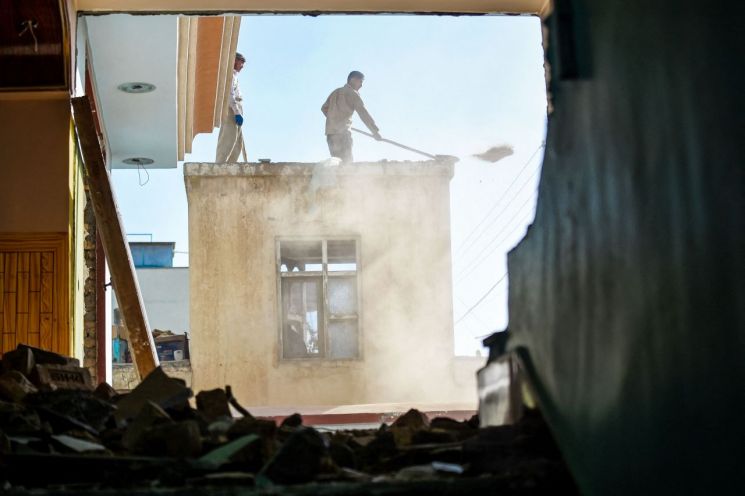
'Babak,' a collaborator who assisted with Taliban and Islamic State (IS) airstrikes during the Afghanistan war, received a sponsorship certificate for refugee application from the U.S. Air Force but has yet to set foot on American soil and continues to live in hiding in Afghanistan indefinitely. He told the BBC, "We risked our lives to help with operations but ended up in grave danger. Even the one ray of hope we clung to has vanished. They did not just break their promise to us. They abandoned us."
© The Asia Business Daily(www.asiae.co.kr). All rights reserved.
![Clutching a Stolen Dior Bag, Saying "I Hate Being Poor but Real"... The Grotesque Con of a "Human Knockoff" [Slate]](https://cwcontent.asiae.co.kr/asiaresize/183/2026021902243444107_1771435474.jpg)
















