Incheon, Sejong, and Chungnam Recorded the Highest Net Inflow Rates
Housing (34.5%) and Family (24.7%) as Main Reasons
As the number of people who bought houses and moved their residences increased last year, the number of domestic movers in South Korea turned to an upward trend for the first time in four years.
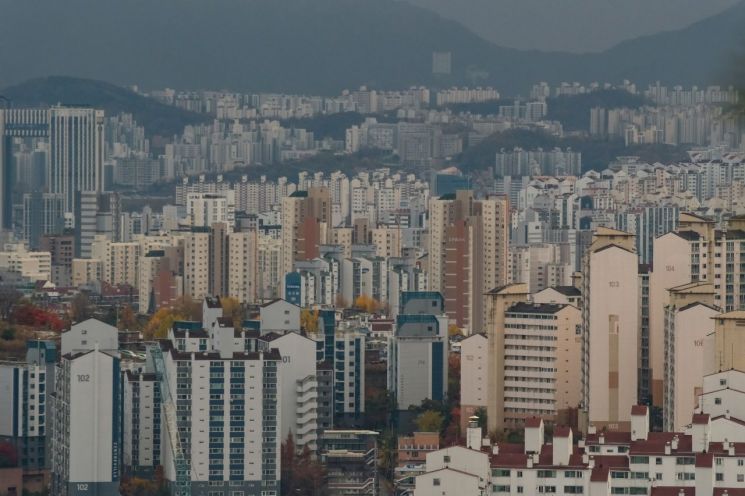
According to the "2024 Domestic Population Movement Statistics Results" released by Statistics Korea on the 24th, the number of movers nationwide last year was 6,283,000, an increase of 2.5% (155,000 people) compared to the previous year. After the number of movers increased by 8.9% (631,093 people) in 2020, it showed a declining trend every year but rebounded last year.
The population movement rate, which is the number of movers per 100 people, was 12.3% last year, up 0.3 percentage points from the previous year. The intra-provincial movement rate was 8.1%, and the inter-provincial movement rate was 4.3%, rising by 0.3 percentage points and 0.1 percentage points respectively.
By age group, the movement rates were high among those in their 20s (23.9%) and 30s (21.0%), and low among those in their 60s (7.1%), 70s (5.0%), and 80 and above (5.5%). Compared to the previous year, the movement rates were highest in the order of those in their 20s, 30s, and under 10 years old.
Last year, the net inflow rates within provinces were highest in Incheon (0.9%), Sejong (0.7%), Chungnam (0.7%), Gyeonggi (0.5%), and Chungbuk (0.2%). On the other hand, 12 provinces including Gwangju (-0.6%) and Jeju (-0.5%) experienced net population outflow as the number of people moving out exceeded those moving in. In particular, Incheon showed net inflow across all age groups. Seoul has experienced net population outflow for 35 consecutive years from 1990 to last year.
By region, the Seoul Metropolitan Area had a net inflow of 45,000 people, and the central region had 16,000 net inflow. Conversely, the Honam region had a net outflow of 18,000 people, and the Yeongnam region had 40,000 net outflow. In the Seoul Metropolitan Area, the net inflow was highest among those in their 20s, while those aged 40 and above showed net outflow. Other age groups showed a trend of net inflow.
Dividing the country into 228 cities, counties, and districts, 80 of them showed net inflow, while 148 showed net outflow. The highest net inflows were in Daegu Jung-gu (9.2%), Gyeonggi Yangju-si (7.6%), and Gyeonggi Osan-si (5.2%). The areas with the highest net outflows were Seoul Yongsan-gu (-4.3%) and Gyeonggi Uiwang-si (-2.9%).
Compared to the previous year, the number of movers increased last year due to housing reasons (34.5%) and family reasons (24.7%). The proportion of movers due to job reasons (21.7%) decreased compared to the previous year. By region, Incheon, Gyeonggi, and Chungbuk had many net inflows due to housing reasons. Chungnam had many due to job reasons, and Sejong had many due to family reasons.
© The Asia Business Daily(www.asiae.co.kr). All rights reserved.
![Clutching a Stolen Dior Bag, Saying "I Hate Being Poor but Real"... The Grotesque Con of a "Human Knockoff" [Slate]](https://cwcontent.asiae.co.kr/asiaresize/183/2026021902243444107_1771435474.jpg)















