The First Agenda Item: Exemption of License Fees for Disaster Areas
Preventing User Harm and Disciplining Law-Breaking Companies
Opposition Pressure Continues... Warning: "Do Not Act Recklessly"
With the Constitutional Court's dismissal of the impeachment petition, Lee Jin-suk, Chairperson of the Korea Communications Commission (KCC), has returned to her position after about six months. Starting formal work on the 23rd, the Chairperson held a written plenary meeting today (24th) and approved the exemption of TV license fees for 49 special disaster areas.
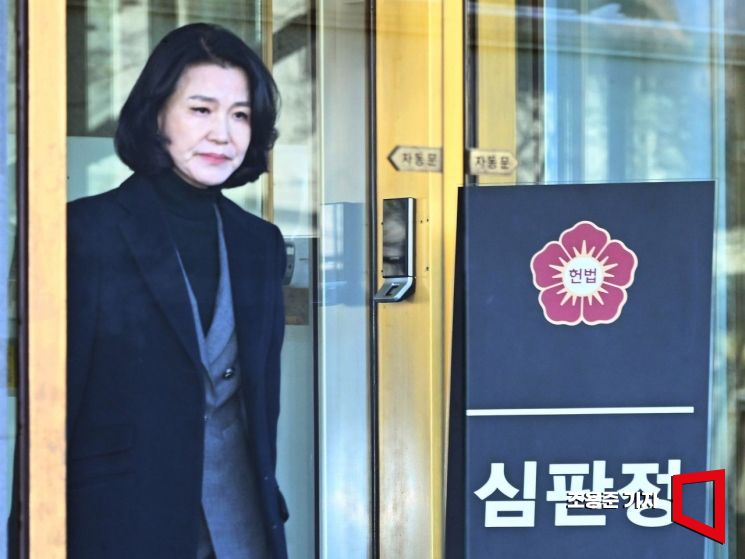 Chairperson Lee Jin-sook of the Korea Communications Commission, who returned to duty after the Constitutional Court dismissed the impeachment motion, is leaving the grand courtroom after the verdict on the impeachment trial of the Communications Commission Chairperson held at the Constitutional Court in Jongno-gu, Seoul on the 23rd. Photo by Jo Yong-jun
Chairperson Lee faces a backlog of tasks, including sanctions against big tech companies like Netflix and Google, preventing user harm after the abolition of the Mobile Device Distribution Improvement Act (DanTongBeop), and establishing protection measures for artificial intelligence (AI) users. Attention is focused on whether the KCC, which must respond to the rapidly changing broadcasting and telecommunications market, can perform its role independently from the political turmoil.
KCC Staff: "We couldn't even impose a fine of 100 won during that time"
The KCC is a collegial administrative body working to respond to changes in the broadcasting and telecommunications market and to uphold the public responsibility of broadcasting and user benefits.
Ideally, all five standing commissioners participate in deliberations and decisions, but with three seats vacant that are recommended by the National Assembly, the commission has been operating with a 'two-person system' for deliberations and decisions. After the impeachment trial, Chairperson Lee, believing the legitimacy of the two-person system was recognized, is expected to hold plenary meetings sequentially to handle important agenda items. A KCC official lamented, "While Chairperson Lee was absent, we could not even revise enforcement ordinances related to KCC laws or impose a fine of just 100 won on companies that violated the law."
The first agenda item handled was the exemption of license fees for special disaster areas. For areas declared special disaster zones due to last year's heavy rain and heavy snow damage, license fees for TV receivers will be exempted for two months in places where damage was confirmed. A total of 49 locations in 32 local governments, including Pyeongtaek City in Gyeonggi Province and Yeongdong County in Chungbuk Province, were covered. After handling the agenda, Chairperson Lee said, "It was very regrettable that the prompt support for license fee exemption for last year's affected residents was delayed due to the impeachment trial," adding, "We will continue to resolve public difficulties through faster and more efficient administration."
Regulatory Measures Needed to Prevent Digital User Harm
One urgent task facing the KCC is the final approval of the 68 billion won fine imposed in October 2023 on Google and Apple for forced in-app payments. The KCC judged that Google and Apple abused their dominant market position by forcing specific payment methods and unfairly delaying app reviews, violating the Telecommunications Business Act.
Investigations into whether Netflix, TVING, and other online video services (OTT), as well as Google YouTube, violated the Telecommunications Business Act are also expected to be announced soon. At that time, YouTube raised its premium price by 43%, and Netflix effectively increased fees by stopping new subscriptions to the basic plan; the legality of these actions is being determined.
After the abolition of the Mobile Device Distribution Improvement Act in July, the KCC must also prepare amendments to the enforcement ordinance of the Telecommunications Business Act to prevent user harm. With the abolition of the act and the liberalization of subsidy payments, there is a risk of discrimination where some people buy the same phone cheaply while others pay more. The KCC faces the task of monitoring this and encouraging price competition among mobile carriers. The KCC has also been unable to grant re-licenses to terrestrial broadcasters, leading to accusations of 'illegal broadcasting.' The 2024 re-license targets include 12 companies (146 broadcasting stations) such as KBS1 DTV and MBC DTV.
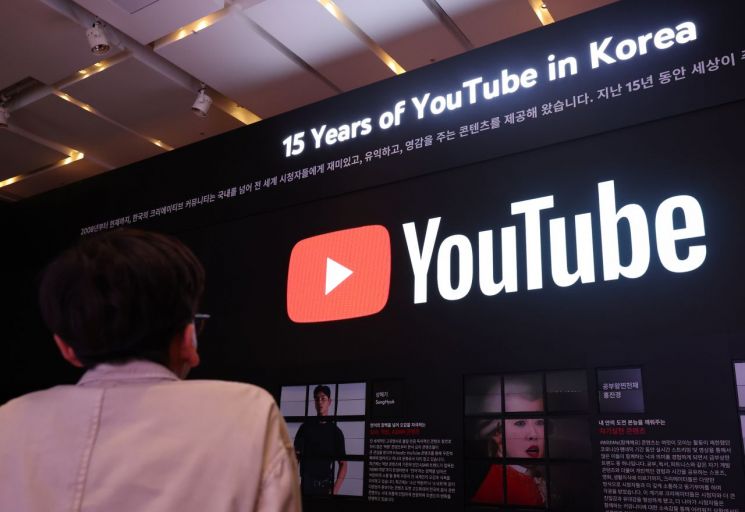
On her way to work the day before, Chairperson Lee first visited the ‘New Technology User Protection Innovation Division,’ which handles AI-related tasks, and greeted the staff. She encouraged them, saying, "Thank you for your hard work," and "Since it’s new technology, there are many young employees. Let's gradually greet each other." This division was expanded and newly established in December last year to prevent user harm arising from the development of digital new technologies and services such as AI.
The KCC has announced that one of its major tasks this year is to establish a 'Comprehensive Plan for AI User Protection.' It also plans to promote the enactment of AI Service User Protection Laws and guidelines. Recently, it created an online portal for public AI damage reports and tips and established a damage relief system. Additionally, it plans to consider setting AI usage standards to prevent broadcasting accidents when AI-generated content is applied to live broadcasts in the future.
Experts: "Supplementary Legislation Needed" Opposition Party Warns "Do Not Act Recklessly"
Experts expressed concerns about political risks even if the KCC's operations normalize. Moon Hyung-nam, professor at Sookmyung Women's University’s Department of Global Convergence, said, "With Chairperson Lee’s immediate return to work, the normalization of the KCC is expected," and predicted, "Major issues such as terrestrial broadcaster re-licensing reviews and fines against overseas big tech companies will be handled quickly." However, he added, "The opposition party will continue to criticize various KCC decisions, likely intensifying conflicts between ruling and opposition parties," and "The ruling party will emphasize stable operation of the KCC."
An anonymous industry insider with over 20 years in telecommunications said, "Although the impeachment was dismissed, similar situations are likely if the government changes in the future," and "Separate legislation seems necessary to prevent the KCC from being operated like a one-person system dominated by the ruling party."
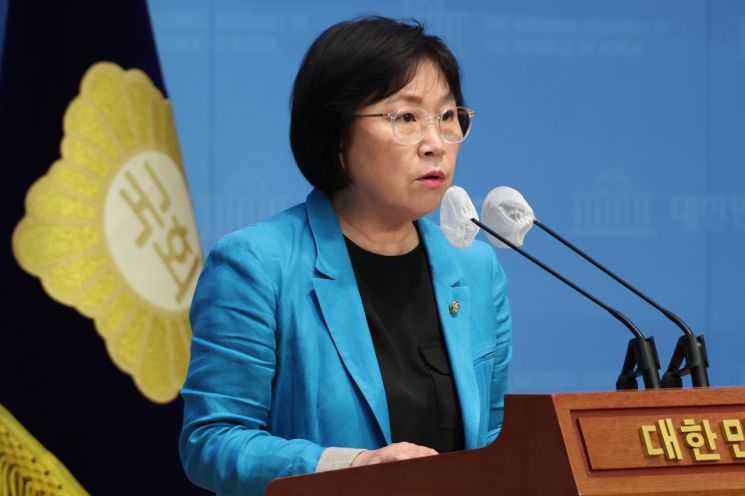
Previously, at the Constitutional Court, four justices voted to dismiss the petition and four voted to accept it, resulting in a deadlock. However, since at least six justices must agree to uphold impeachment, Chairperson Lee’s impeachment was ultimately dismissed. The opposition party, which had appealed the unfairness of the KCC’s 'two-person system' amid repeated impeachment attacks, continued to use this '4-4' decision as grounds to check attempts at broadcasting control.
On the 23rd, members of the National Assembly’s Science, Technology, Information and Communications Committee from the Democratic Party and the Justice Innovation Party issued a statement saying, "The Constitutional Court’s 4-4 decision is not a pardon for broadcasting control," and warned, "Chairperson Lee, who is returning to duty, should not act recklessly." They added, "If Chairperson Lee again undertakes illegal duties with only two commissioners, as with last year’s public broadcaster board appointments, she will be held strictly accountable."
Kim Hyun, the Democratic Party’s floor leader for the committee, told Asia Economy in a phone interview regarding the full composition of the KCC, "Even if the opposition party recommends standing commissioners, the president has repeatedly failed to appoint them," and said, "We will not be fooled by such tactics again."
© The Asia Business Daily(www.asiae.co.kr). All rights reserved.
![Clutching a Stolen Dior Bag, Saying "I Hate Being Poor but Real"... The Grotesque Con of a "Human Knockoff" [Slate]](https://cwcontent.asiae.co.kr/asiaresize/183/2026021902243444107_1771435474.jpg)

















