Infants and Young Children, the Main High-Risk Group for RSV
Beyfortus Now Available for All Infants and Young Children
Improved Convenience: Number of Injections Reduced from Five to One
RSV Vaccine for Adults Expected to Launch Around Mid-Year
As Respiratory Syncytial Virus (RSV) spreads, a preventive antibody injection for all infants and young children will be launched next month.
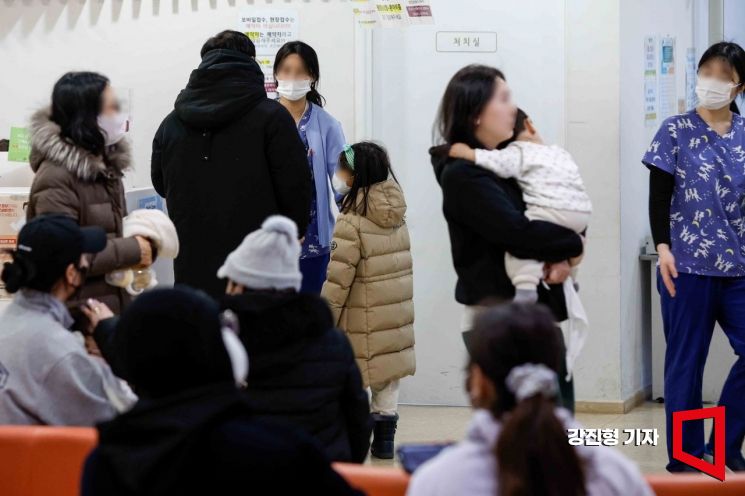 On the 13th, when influenza, COVID-19, and respiratory syncytial virus (RSV) were simultaneously spreading, causing an emergency in respiratory health management, a pediatric specialty hospital in Seongbuk-gu, Seoul, was crowded with children and their guardians. Photo by Kang Jin-hyung
According to the pharmaceutical and bio industry on the 24th, the global pharmaceutical company Sanofi will launch the RSV preventive antibody injection for infants and young children, 'Beyfortus,' in early next month.
Unlike vaccines, preventive antibody injections directly inject antibodies that fight antigens such as viruses into the body, allowing antibodies and antigens to battle. The effect appears immediately but has the drawback of lasting only a few months. It is mainly used when immediate effects are needed, such as for newborns and high-risk groups. Vaccines take several weeks or more to show effects but last for years.
Beyfortus is a preventive antibody injection that can be administered to all infants and young children experiencing their first RSV season (October to March) after birth. It is characterized by being available to all newborns and infants during the season regardless of underlying diseases. Previously, RSV preventive antibody injections were only available for infants such as premature babies and those with congenital heart disease.
Beyfortus maintains preventive effects for up to five months with a single dose. Only one injection during the season can cover the entire season. Existing injections required monthly administration five times during the epidemic period. With the launch of Beyfortus, it is expected that infection prevention effects will be significant in postpartum care centers and similar facilities.
Beyfortus has already been approved and administered in 52 countries overseas. For example, the autonomous community of Galicia in Spain currently supports free administration of Beyfortus to all newborns and infants. According to an interim analysis from Galicia, hospitalization due to RSV in infants under six months who received the injection decreased by 82% compared to those who did not receive it. This result was published in the medical journal The Lancet.
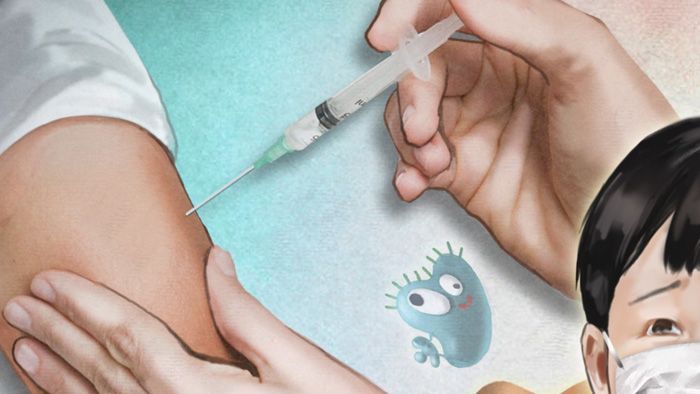
The launch of Beyfortus has attracted attention amid the spread of RSV. According to the Korea Disease Control and Prevention Agency (KDCA) on the 20th, the number of patients hospitalized with RSV in 221 medical institutions nationwide during the second week of January (5th?11th) this year was 477. It is the second most common respiratory infection after influenza (1,627 patients).
RSV is an acute respiratory infection caused by the Respiratory Syncytial Virus belonging to the Pneumoviridae family. Along with influenza and COVID-19, it is classified as a Class 4 legally designated infectious disease. Common symptoms include runny nose, sore throat, cough, and sputum, with nasal congestion, hoarseness, and wheezing sounds such as "ssik-ssik" and "geureureung-geureureung" caused by narrowing inside the bronchi. However, it is difficult to distinguish from other respiratory diseases due to similar symptoms.
The main high-risk groups for RSV infection are ▲infants and young children ▲elderly aged 60 and over ▲patients with chronic heart and lung diseases. Special caution is needed for infants and young children. Although all age groups can be infected, the infection rate is higher in infants and young children. Moreover, infants have smaller diameters of bronchioles and airways compared to adults, making sputum discharge difficult and causing more severe symptoms. About 90% of children experience primary infection (first infection) within two years after birth, and 20?30% of these progress to bronchiolitis (inflammation of small airways in the lungs) and pneumonia. In severe cases, intensive care treatment may be required, or it can be fatal.
Professor Yoon Ki-wook of Seoul National University College of Medicine said, “RSV is a major cause of hospitalization in infants under one year old and poses a significant disease burden, so it has received great attention in countries where it was first launched. Especially, many countries such as the United States and Spain have introduced Beyfortus into their national immunization programs to ensure that no infant is left out and all can be protected against RSV with national support.”
He added, “In this era of low birth rates, I hope active vaccination and support will be carried out so that our precious children in Korea can grow up healthy.”
Meanwhile, an RSV vaccine for adults is also expected to be launched around mid-year. Currently, there is no vaccine available for adults in Korea. GlaxoSmithKline (GSK)’s 'Arexvy' received product approval from the Ministry of Food and Drug Safety on the 24th of last month but has not yet been launched. The medical community expects it to be available around June or July this year.
Currently, RSV vaccines approved by the U.S. Food and Drug Administration (FDA) include GSK’s Arexvy, Pfizer’s 'Abrysvo,' and Moderna’s 'Mresbia.' In Korea, UbioLogics is conducting Phase 1 clinical trials domestically for its RSV vaccine candidate 'EuRSV.' SK Bioscience is developing an RSV vaccine candidate using messenger RNA (mRNA) technology, aiming for commercialization by 2029.
© The Asia Business Daily(www.asiae.co.kr). All rights reserved.
![Clutching a Stolen Dior Bag, Saying "I Hate Being Poor but Real"... The Grotesque Con of a "Human Knockoff" [Slate]](https://cwcontent.asiae.co.kr/asiaresize/183/2026021902243444107_1771435474.jpg)
















