Full Inspection of 254 Companies by June
Fixed Salary System Introduced, but "Modified Daily Quota" Prevails
Seoul Applies for Regulatory Sandbox Pilot to Ministry of Land, Infrastructure and Transport
Seven out of ten corporate taxi companies in Seoul are not complying with the full management system and the fixed salary system. Based on the observation that the salary system is not being properly implemented in the field, the Seoul Metropolitan Government is planning to launch a pilot project to test a new wage structure.
According to the Seoul Metropolitan Government on January 23, the city has been conducting on-site inspections of all 254 taxi companies from the end of 2023 through June of this year to check compliance with the full management system. The city explained that, so far, about 70% of the roughly 200 companies inspected have violated the full management system and are operating a so-called "modified daily quota system."
The full management system prohibits companies from deducting from drivers' salaries if the company's revenue falls short of a set standard amount, in exchange for drivers being assigned taxis without having to pay a daily quota. The fixed salary system guarantees taxi drivers a fixed wage for 40 hours of work per week. Although a law revision in 2019 set a phased nationwide introduction within five years-originally set for August last year-the implementation was postponed for two years by bipartisan agreement. Seoul has been implementing the fixed salary system since 2021.
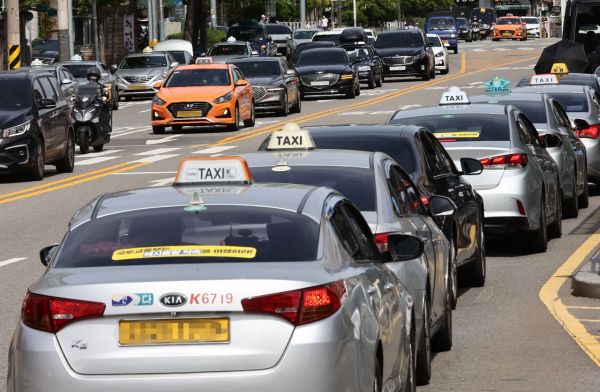
Under the previous daily quota system, the quota was set at a level that drivers could not meet even if they worked the prescribed hours (40 hours per week), which became a problem. In situations where drivers could not meet the quota despite working, the shortfall was deducted from their fixed salary, reducing their income. In contrast, under the fixed salary system, drivers are guaranteed a fixed wage, and if transportation revenue exceeds the standard amount, the company and the driver share the excess as a form of "performance bonus." The fixed salary system was introduced to provide more stable working conditions.
The problem, however, is the use of loopholes. Companies have been setting the standard revenue so high-by adding various excessive criteria-that drivers cannot reach it even by working the required hours. If transportation revenue falls short of this amount, companies are operating a so-called "modified daily quota system" by deducting the shortfall from drivers' wages. The Seoul Metropolitan Government imposes fines on companies that deduct from drivers' wages for not meeting the standard revenue, but it is difficult to catch violations because unofficial wage agreements exist between management and labor. At a forum on "Revitalizing Corporate Taxis and Improving Wage Systems" held the previous day, Ahn Kijeong, a research fellow at the Seoul Institute, stated, "Due to the modified daily quota system, the actual income of transportation workers has fallen by more than 30% compared to when the daily quota system was applied in 2019."
The corporate taxi industry is also facing a deepening downturn. The number of corporate taxi drivers dropped from 41,783 in 2010 to 20,077 as of March last year, nearly halving. Taxi operation rates also plummeted from 76% in 2010, to 50% in 2019, and to 34% last year. The aging of drivers is also accelerating, with the proportion of drivers aged 60 or older rising from 18.6% in 2010 to 69.7% last year.
In response to these issues, the city has applied to the Ministry of Land, Infrastructure and Transport for a "regulatory sandbox demonstration exemption" to experiment with a new wage structure. If the demonstration exemption is approved, the city plans to apply four wage models-agreed upon by Seoul's taxi labor and management-to actual taxis for a certain period to evaluate their effectiveness. The pilot will be conducted with up to 1,000 participants over approximately two years. Son Hyungkwon, Director of Taxi Policy at the Seoul Metropolitan Government, stated, "No matter how well-intentioned a policy is, if circumstances change and it no longer fits reality, and if stakeholders want change, then a good policy may actually become a regulation. We need to boldly attempt change."
The four proposed models are: ▲ a performance-based pay system based on actual operating hours; ▲ a pooled revenue-sharing system; ▲ an autonomous operation taxi system (lease system); and ▲ a part-time work system. The performance-based pay system calculates wage hours based on the actual operating rate, pays a fixed amount accordingly, and provides a performance bonus based on the labor-management revenue-sharing ratio if transportation revenue exceeds the standard. The pooled revenue-sharing system divides total transportation revenue between labor and management according to an agreed ratio. The autonomous operation taxi system is a "lease system" in which drivers pay a monthly rental fee of 2 million won, as well as fuel and insurance costs, and keep all remaining revenue as income. The part-time work system introduces a part-time wage system, which was difficult to implement under the 40-hour fixed salary system.
"Let's Find the Right Model Through Experimentation" vs "Undermining Existing Law" ... Labor Side Voices Concerns

At the forum, taxi labor unions expressed a variety of opinions. They first called for thorough supervision of the pilot project. Jung Jigu, head of the Seoul branch of the Democratic Taxi Workers' Union Federation, emphasized, "If things go wrong, the wage system of the taxi industry could completely collapse. If the Seoul Metropolitan Government implements this policy, there must be clear guidance, supervision, and corresponding measures."
Oh Bonghun, secretary general of the Seoul branch of the National Taxi Workers' Union Federation, said, "Although the law guarantees the right to rest, in reality, when drivers take annual leave or holidays, all kinds of allowances are deducted, making it difficult to take time off. We need to create working conditions where older drivers can continue to work. By experimenting with multiple wage models in the field, we may be able to find a model that suits taxi workers, so I support this pilot project."
The Public Transport Workers' Union, however, argued that the experiment with a new wage system would undermine the current law that introduced the fixed salary system. They pointed out that the Seoul Metropolitan Government's pilot project lacks innovation and should not be subject to the regulatory sandbox, and that applying the four models could worsen working conditions for transportation workers.
© The Asia Business Daily(www.asiae.co.kr). All rights reserved.
![Clutching a Stolen Dior Bag, Saying "I Hate Being Poor but Real"... The Grotesque Con of a "Human Knockoff" [Slate]](https://cwcontent.asiae.co.kr/asiaresize/183/2026021902243444107_1771435474.jpg)












