KEA Releases February BSI Forecast
87.0 Recorded...Below 100 for 2 Years and 11 Months
Non-Manufacturing Sector Outlook "Cloudy" for First Time Since July 2020
Business Sentiment Worsens Amid High Exchange Rates and Management Uncertainty
The sentiment of our companies regarding market conditions has been frozen for 2 years and 11 months, marking the longest period on record.
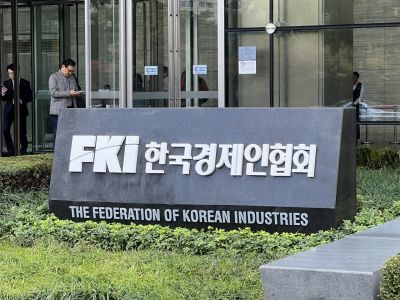
The Korea Economic Association (KEA) announced on the 22nd that the Business Survey Index (BSI) forecast for February, surveyed among the top 600 companies by sales, was recorded at 87.0.
The BSI is an indicator reflecting the perceived business conditions by companies. A value above the baseline of 100 indicates a positive outlook compared to the previous month, while a value below 100 indicates a negative outlook.
The BSI has remained below 100 for 35 consecutive months since falling below the baseline in April 2022 (99.1).
In particular, companies expected the non-manufacturing sector (81.4) to be hit harder than the manufacturing sector (93.0). Although the manufacturing BSI forecast rebounded by 8.8 points from the previous month, the non-manufacturing sector fell by 3.5 points, marking its lowest level since July 2020. By detailed industry, all seven sectors including Information and Communication (56.3), Construction (76.2), Wholesale and Retail (83.3), Electricity, Gas, and Water (84.2), Leisure, Accommodation, and Food Service (85.7), Transportation and Warehousing (91.7), and Professional, Scientific, and Business Support Services (92.9) were expected to experience worsening business conditions.
This is the first time since July 2020 that all non-manufacturing sectors have a negative outlook. KEA analyzed this as a result of prolonged domestic demand stagnation and weak consumption.
In manufacturing, General and Precision Machinery Equipment (126.3) and Electronics and Communication Equipment (105.3) were expected to perform well, while Pharmaceuticals, Non-metallic Materials and Products, and Automobiles and Other Transportation Equipment hovered around the baseline. The remaining five sectors were expected by companies to experience deteriorating business conditions.
The BSI by survey category showed negative outlooks across all sectors: domestic demand at 86.2, investment at 87.9, profitability at 90.7, employment at 91.5, financial conditions at 92.7, exports at 97.5, and inventory at 102.5. An inventory value above the baseline of 100 indicates excessive stock, which is negative. Notably, domestic demand recorded its lowest level in 4 years and 6 months since August 2020 (82.7), and investment hit its lowest in 4 years and 5 months since September 2020 (84.6). However, KEA noted that exports rose by 7.3 points from the previous month, approaching the baseline, which is encouraging.
Lee Sang-ho, Head of the Economic and Industrial Division at KEA, stated, "With high exchange rates, rising oil prices, and increasing uncertainty in domestic and international business environments, corporate sentiment is deteriorating significantly. If this poor sentiment persists, real economic activities such as investment and employment could be excessively contracted." He added, "It is necessary to promptly pass non-contentious livelihood and corporate support bills to promote consumption and investment, and to refrain from legislative discussions that hinder corporate vitality, such as amendments to the Commercial Act."
© The Asia Business Daily(www.asiae.co.kr). All rights reserved.
![Clutching a Stolen Dior Bag, Saying "I Hate Being Poor but Real"... The Grotesque Con of a "Human Knockoff" [Slate]](https://cwcontent.asiae.co.kr/asiaresize/183/2026021902243444107_1771435474.jpg)
















