"Positive Economic Outlook for the New Year... Concerns Over Some Immigration and Tariff Policies"
Fed Officials: "Progress in Slowing Inflation"
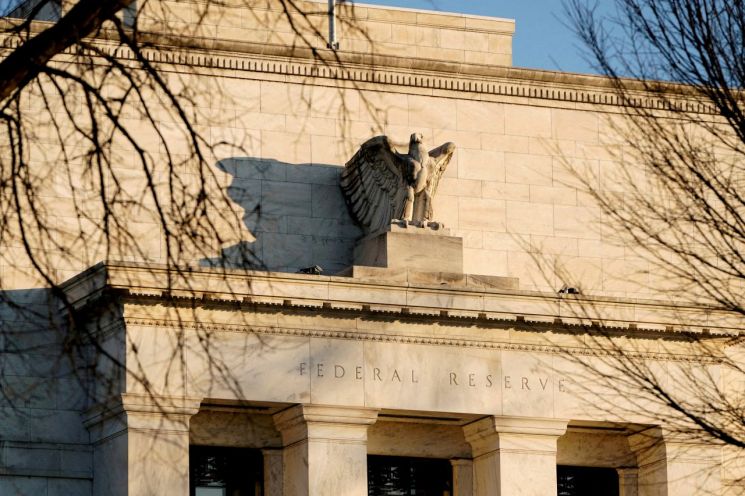
U.S. manufacturers have begun stockpiling inventory in anticipation of tariff hikes initiated by Trump, according to the January Beige Book on economic conditions released by the Federal Reserve (Fed) on the 15th (local time). While the economic outlook for the new year is positive, there were also concerns about policy changes from the second Trump administration set to take office on the 20th.
The Fed assessed the U.S. economic situation at the end of last year, stating, "Manufacturing activity slightly declined, and many manufacturers in various regions are stockpiling inventory in anticipation of tariff rate increases."
Regarding the economic outlook for 2025, optimistic responses outnumbered pessimistic ones. However, some regions expressed concerns that changes in immigration and tariff policies could negatively impact the economy.
Overall economic activity showed slight to moderate growth across the U.S. Consumer spending moderately increased at the end of November and December last year, and most regions reported strong year-end sales exceeding expectations.
Prices were generally assessed to have risen moderately. Prices are expected to continue rising in 2025, with some viewing that high tariffs could contribute to price increases.
The Beige Book is an economic conditions report compiled by the 12 Federal Reserve Banks across the U.S., which gather recent economic trends by contacting banks, businesses, and experts in their respective regions. It is released two weeks before the Federal Open Market Committee (FOMC) meeting that decides monetary policy. This report was released ahead of the FOMC meeting scheduled for the 28th-29th.
The Consumer Price Index (CPI) data for December last year, released by the U.S. Department of Labor on the same day, showed a 2.9% increase year-over-year and a 0.4% increase month-over-month, meeting market expectations. These rates are slightly higher than the November figures (2.7% and 0.3%, respectively). The core CPI, which excludes volatile energy and food prices, rose 3.2% year-over-year and 0.2% month-over-month. Compared to the previous month’s increases of 3.3% and 0.3%, this indicates a slowdown.
Fed officials unanimously forecast progress in the slowing of inflation. However, they did not express opinions on further interest rate cuts.
John Williams, President of the New York Fed, said, "The process of inflation slowing is still ongoing, but it may take more time to consistently achieve the 2% inflation target."
Thomas Barkin, President of the Richmond Fed, described the December CPI data as "continuing the narrative that inflation is slowing toward the target level."
Austin Goolsbee, President of the Chicago Fed, also positively evaluated the inflation slowdown, stating, "I am optimistic that growth will continue in 2025 and that the economy will achieve a soft landing."
Shima Shah, Chief Global Strategist at Principal Asset Management, said, "For the Fed, this is not sufficient to trigger a rate cut in January," but added, "If the CPI remains low next month and employment indicators weaken, rate cuts could be reconsidered in March."
According to the Chicago Mercantile Exchange (CME) FedWatch, the federal funds futures market on the day reflected a 97.3% probability that the Fed will hold rates steady at the FOMC meeting on the 28th-29th. The probabilities of rate holds in March and May are 71% and 53.8%, respectively.
© The Asia Business Daily(www.asiae.co.kr). All rights reserved.
![Clutching a Stolen Dior Bag, Saying "I Hate Being Poor but Real"... The Grotesque Con of a "Human Knockoff" [Slate]](https://cwcontent.asiae.co.kr/asiaresize/183/2026021902243444107_1771435474.jpg)















