Emphasizing Cost-Effectiveness and AIoT Connectivity
"Additional Benefits Worth 320,000 KRW"
Attention on Whether It Will Be a 'Catalyst' in the Mobile Market
"We want to showcase all of Xiaomi's artificial intelligence-based Internet of Things (AIoT) products to Korean users, not limited to specific product lines."
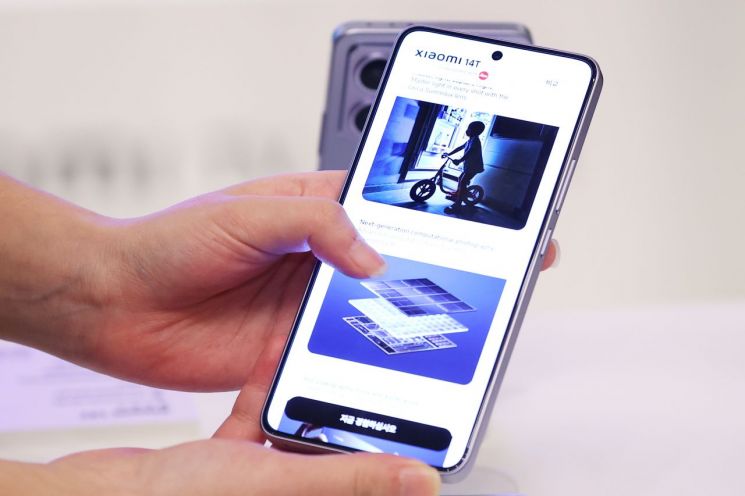 On the 15th, at the Four Seasons Hotel in Jongno-gu, Seoul, an official is examining the Xiaomi 14T, the first smartphone introduced in Korea, during Xiaomi Korea's first press conference since its establishment. Photo by Yonhap News
Xiaomi Korea, the Korean branch of Xiaomi, held its first press conference on the 15th at the Four Seasons Hotel in Jongno-gu, Seoul, unveiling a variety of product lines. Johnny Wu, president of Xiaomi Korea, introduced, "It is designed so that smartphones and various smart home devices are organically connected and operate together to make users' daily lives more convenient."
Xiaomi showcased products in five categories: △smartphones △TVs △wearable products such as watches and earbuds △robot vacuum cleaners △portable batteries. They announced that sales would begin sequentially from today through the official website, Coupang, Naver, and other platforms.
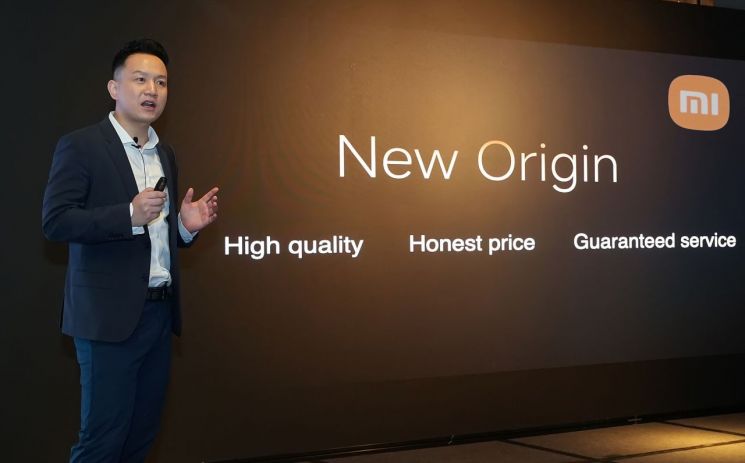 Johnny Wu, President of Xiaomi Korea, is making a presentation at a press conference on the 15th. Photo by Xiaomi
Johnny Wu stated, "We will deeply understand users and provide products and services that truly empathize with their lifestyles," adding, "We plan to strengthen service capabilities and build partnerships with Korea's industry leaders in various ways."
Collaboration with Leica, Google... Introducing Affordable AI Phones
Xiaomi emphasized 'cost-effectiveness' and 'connectivity' as its strengths. The first product introduced was the premium smartphone 'Xiaomi 14T,' which features a camera co-developed with the German luxury camera brand Leica and incorporates Google's artificial intelligence (AI) technology.
The triple camera system equipped with Leica optical technology provides vivid colors even in dark environments and helps ordinary users create cinematic videos through 'Movie Mode.' Various AI functions such as real-time translation, voice-to-text conversion, and automatic editing of recorded videos to assist in short-form content creation are also included.
Although it is a high-spec AI phone, the price is reasonable. Kiko Song, head of marketing for Xiaomi East Asia, emphasized, "The Xiaomi 14T is sold in Europe for 649 euros (approximately 970,000 KRW), but it was launched in Korea at 599,800 KRW." Additionally, they offer benefits worth about 320,000 KRW, including YouTube Premium, Spotify Premium, and 100GB of Google One storage.
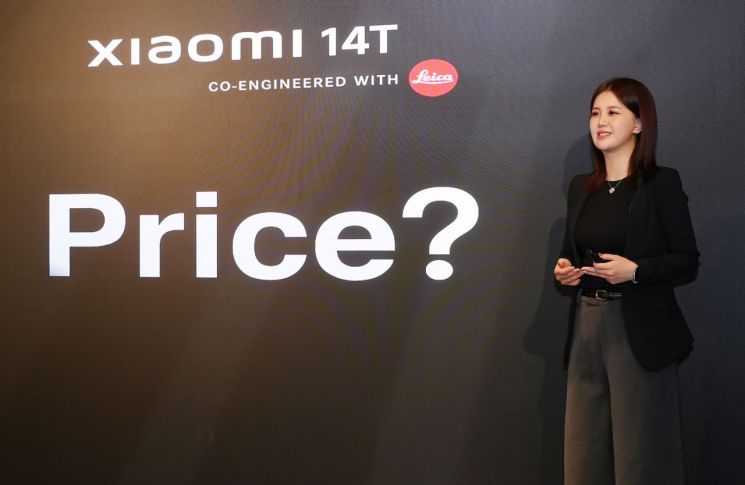
It is noteworthy whether Xiaomi, armed with cost-effectiveness, can play the role of a 'catalyst' in the domestic market, which is practically divided between Samsung Electronics and Apple. Xiaomi's entry into Korea could also serve as an opportunity for increased competition in the mobile communication market, alongside government policies promoting budget phones and the abolition of the Mobile Device Distribution Improvement Act.
Considering Offline Store Locations... "Enhancing Security"
Not only smartphones but also products such as the 'Redmi Watch 5' priced in the 100,000 KRW range, TVs capable of streaming Google TV, and the remotely controllable robot vacuum cleaner X20 Max (749,000 KRW) stood out. Xiaomi's strategy for entering the Korean market is to connect various AIoT products to make users' daily lives smarter and more convenient.
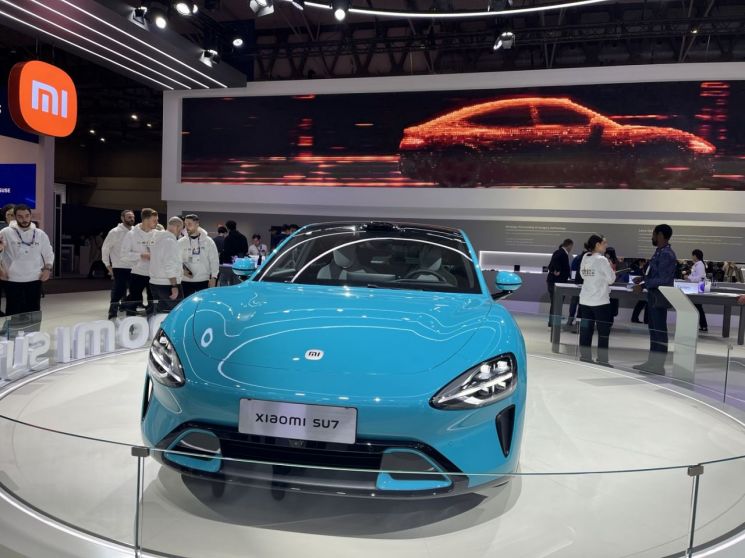
Under the strategy of 'Human x Car x Home,' Xiaomi is building the next-generation smart ecosystem and currently operates a global AIoT platform connecting over 860 million smart devices worldwide.
They also plan to secure offline spaces for product experience. Johnny Wu said, "We are carefully considering locations for offline stores where users can experience Xiaomi products," adding, "These stores will operate as spaces where product experience, purchase, and after-sales service are all provided in one place." He expressed his ambition by saying, "Korean users' feedback is passionate and sophisticated, and we will provide products and services that meet their lifestyles and expectations."
When asked about the intention to launch Xiaomi electric vehicles in Korea, he replied, "We currently have three types of vehicles. From a business strategy perspective, we plan to focus 100% on the Chinese market for the next three years." He added, "Half of our total sales come from the global market, and we operate in over 100 countries. Based on this, we expect to expand when we officially enter the global market."
Xiaomi also showed efforts to dispel concerns about cybersecurity. Through its proprietary operating system, HyperOS, it strengthens security not only for smartphones but also for all connected devices. Most AI functions operate on-device within the device itself. The servers processing user data are located in Singapore and are not transmitted to China, they explained.
© The Asia Business Daily(www.asiae.co.kr). All rights reserved.



















