"Jeonse Fraud Damage Still Ongoing," Dex Reveals
Unresolved Despite Having Guarantee Insurance
Broadcaster Dex revealed that he has been going through a difficult time as the jeonse fraud he confessed to in the second half of 2023 has not been resolved even after nearly a year and a half. On the 13th, Dex said in an update video posted on his YouTube channel 'Dex 101' that the jeonse fraud damage is still ongoing. Dex expressed, "Since there are things currently in progress, I will cover them soon," adding, "It became somewhat of an issue, but I am going through the same procedures and timeframes as others who have suffered from jeonse fraud. It is very long and difficult."
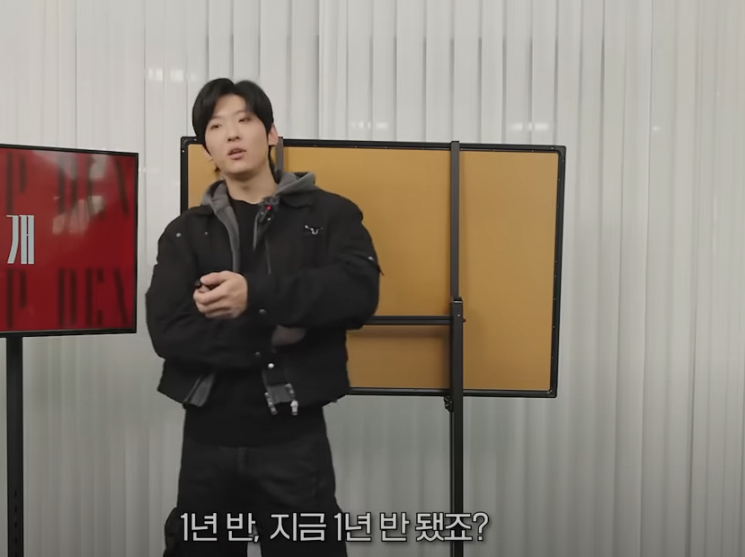 Broadcaster Dex revealed that he has been going through a difficult time as the jeonse fraud he confessed to in the second half of 2023 has not been resolved even after nearly a year and a half. YouTube channel 'Dex 101'
In July 2023, Dex personally confessed to being a victim of jeonse fraud through his YouTube channel, and later appeared on several variety shows, revealing, "I secured a house by borrowing 90% of the 270 million won jeonse deposit," and "During the jeonse period, the landlord changed, and I only became aware of it after being contacted by the bank." He further explained, "When I contacted the new landlord due to water leakage in the house, he told me to cover the repair costs myself and get reimbursed from the real estate agency, but the agency disappeared," adding, "That’s when I sensed something was wrong." He continued, "I traced the real estate agency’s address and found it was in a different area, not Incheon where I had signed the contract," revealing, "It was a ghost real estate agency," which shocked many.
He said, "The new landlord was a gap investor," and added, "He only lent his name and received money." Dex stated his intention not to leave the house until he recovers his deposit. However, he later found out that the sale price of the house was about half of the jeonse deposit. Regarding this, Dex’s lawyer appeared on his YouTube channel and explained, "He was severely shortchanged," describing it as a so-called 'empty can jeonse,' meaning the deposit is higher than the building’s price, making it an empty can."
Risk of Losing Jeonse Deposit... Last Year’s Record High in Leasehold Registration Applications
In Dex’s case, it is known that he took out a loan for the jeonse deposit and purchased guarantee insurance recommended by a bank employee. However, like many other victims of jeonse fraud, he has not been able to recover his deposit. Meanwhile, last year, the number of tenants who failed to recover their jeonse deposits and applied for leasehold registration orders at the court reached an all-time high. Although the number of applications from tenants in Seoul and Incheon decreased, applications nearly doubled in local areas such as Busan and Gwangju. The reversal of the jeonse market in local areas, appearing with a time lag compared to the metropolitan area, indicates the severity of jeonse fraud damage there.
 Among experts, there is an opinion that to fundamentally solve the problem of Jeonse fraud, it is necessary to make the registration of leasehold rights or Jeonse rights mandatory. Leasehold registration is a system that specifies on the certified copy of the register that the tenant has an unreturned deposit claim if the deposit is not returned after the lease contract ends. Asia Economy
Among experts, there is an opinion that to fundamentally solve the jeonse fraud problem, it is necessary to make leasehold registration or jeonse right registration mandatory. Leasehold registration is a system where tenants who have not received their deposit back after the lease contract ends can indicate on the official registry that there is an unpaid deposit claim. To safely recover the deposit, tenants must maintain their opposability and priority repayment rights, which disappear if they move out. If tenants register the leasehold right when they cannot recover the deposit, these rights are maintained even if they move.
Jeonse right registration records on the certificate of registered matters that the tenant has paid the jeonse deposit and is occupying the landlord’s house. If jeonse right registration is in place, tenants can recover their deposit before junior rights holders or other creditors. In situations where tenants cannot recover their deposit, they can transfer the house to a secured auction without separate litigation procedures. However, jeonse right registration requires the consent of both landlord and tenant and involves considerable costs, so it has not become widespread. The number of real estate properties (based on collective buildings) applying for jeonse right registration has been decreasing, with 52,363 cases in 2022, 44,766 in 2023, and 43,885 last year.
© The Asia Business Daily(www.asiae.co.kr). All rights reserved.


















