Draft Enforcement Decree of the "National Resource Security Special Act"
Approved at Cabinet Meeting
The government has decided to establish a basic resource security plan and an implementation plan every five years, which will serve as the fundamental framework for future resource security policies. The government will conduct a national resource security diagnosis and evaluation to assess the comprehensive crisis response capabilities at the national level, incorporate the results into the basic plan, and issue alerts if a crisis occurs or is anticipated.
The Ministry of Trade, Industry and Energy announced that the draft enforcement decree of the "National Resource Security Special Act," which includes these provisions, was approved at the Cabinet meeting on the 14th.
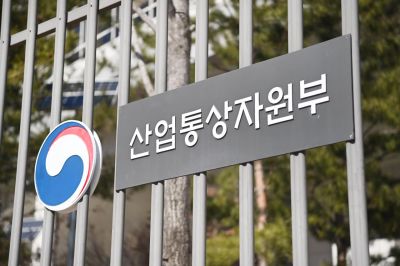
This enforcement decree was promoted to stipulate the matters delegated by the "National Resource Security Special Act," which is set to take effect on the 7th of next month. The decree includes ▲ the composition and operation procedures of the resource security control tower ▲ the operation method of the early warning system for resource security crises ▲ the supply and demand management method for key resources ▲ and the response measures for resource security crises.
First, the basic resource security plan and implementation plan will be established every five years. The Resource Security Council, which serves as the control tower to deliberate and decide on the national resource security policy direction, will be composed of vice-ministerial officials from related ministries such as the Ministry of Economy and Finance, Ministry of Foreign Affairs, and Korea Customs Service. Additionally, the decree provides the basis for designating energy and resource public institutions such as Korea National Oil Corporation, Korea Gas Corporation, and Korea Energy Agency as resource security dedicated agencies responsible for resource security-related tasks.
Furthermore, the national resource security diagnosis and evaluation, which is conducted directly by the government to assess the comprehensive crisis response capabilities of the early warning system for resource security crises, will be regularly performed in the year prior to the establishment of the basic plan. The timing for the first basic plan has not yet been determined. However, since the enforcement decree stipulates that the national resource security diagnosis and evaluation must be conducted in the year before the basic plan is established, there is a possibility that the first basic plan will be established next year.
The enforcement decree allows for the issuance of resource security crisis alerts in four stages?'Interest,' 'Caution,' 'Alert,' and 'Severe'?considering the severity and ripple effects of the crisis when a resource security crisis occurs or is anticipated. Specific issuance criteria will be set by a separate notice currently under administrative notice. In the case of petroleum, the stages are classified as follows: ▲ 'Interest' for instability in major oil-producing countries and the Organization of the Petroleum Exporting Countries (OPEC), concerns about transportation disruptions, etc. ▲ 'Caution' for increased instability and expected disruptions in domestic crude oil imports ▲ 'Alert' for intensified instability and actual disruptions in domestic crude oil imports ▲ 'Severe' for worsened conditions and serious disruptions in domestic crude oil imports.
Along with this, energy and resource public institutions such as the Korea National Oil Corporation and Korea Gas Corporation are defined as mandatory stockpiling institutions during peacetime, and the scope of stockpiling institutions that are subject to additional or new stockpiling obligations temporarily during emergencies, as well as the stockpiling quantities per institution, will be separately notified. The enforcement decree also stipulates that to strengthen Korea's self-supply capacity for key resources, a plan for establishing a recycling industry cluster will be formulated, and based on this, recycling industry clusters can be designated.
An official from the Ministry of Trade, Industry and Energy said, "With the enforcement decree of the National Resource Security Special Act approved at the Cabinet meeting, it is expected that Korea's resource security crisis preparedness and response system will be significantly strengthened."
© The Asia Business Daily(www.asiae.co.kr). All rights reserved.
![Clutching a Stolen Dior Bag, Saying "I Hate Being Poor but Real"... The Grotesque Con of a "Human Knockoff" [Slate]](https://cwcontent.asiae.co.kr/asiaresize/183/2026021902243444107_1771435474.jpg)















